
Inspire 3 Surveying Tips for Urban Coastlines
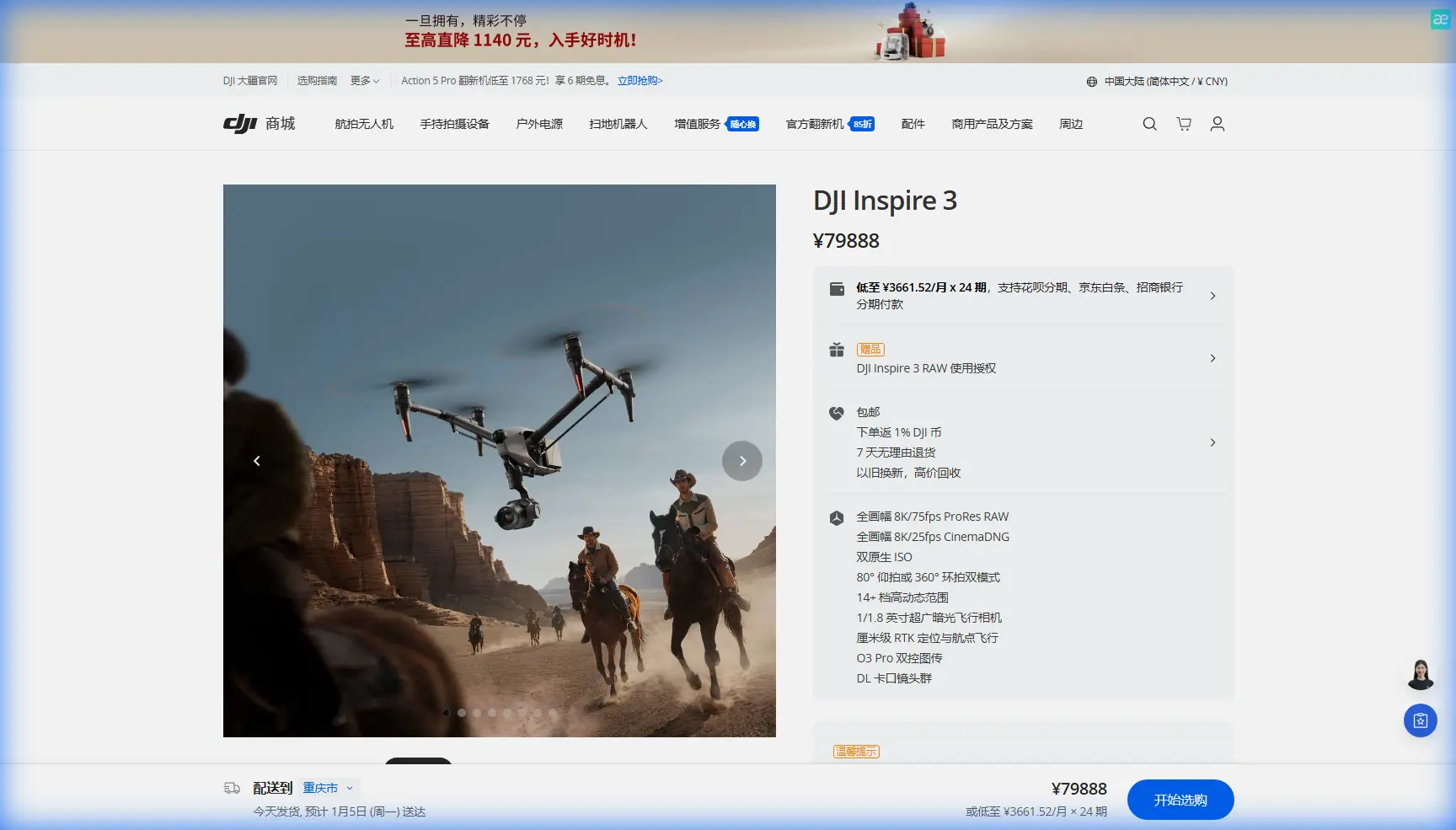
Inspire 3 Surveying Tips for Urban Coastlines: A Field Method That Holds Up in Real Conditions
META: Practical Inspire 3 workflow for urban coastline surveying, with mission planning, photogrammetry, transmission security, battery strategy, and wildlife-safe flight tactics.
Urban coastline surveying looks simple on a map. In the field, it is anything but simple.
You are dealing with reflective water, sea haze, concrete canyons, moving vessels, radio noise, birds, tide timing, and a client who expects survey-grade outputs instead of beautiful footage. The DJI Inspire 3 can do serious work in this environment, but only if you fly it like a survey platform rather than a cinema machine with mapping ambitions.
I have seen crews make the same mistake again and again: they bring the Inspire 3 to the shoreline, trust default flight behavior, and hope the aircraft’s sophistication will smooth out environmental chaos. Coastal work does not reward hope. It rewards discipline, redundancy, and a workflow tuned to the physics of water, wind, and urban interference.
This guide is built for one scenario: surveying coastlines in urban environments with the Inspire 3. Not beaches in isolation. Not broad inland corridors. Tight coastal infrastructure, sea walls, marinas, promenades, mixed land-water edges, and all the complexity that comes with them.
Start with the real mission, not the aircraft
Before battery prep or lens choice, define what the survey actually needs to capture.
Urban coastline jobs usually split into four categories:
- shoreline change documentation
- infrastructure inspection along the water’s edge
- photogrammetric reconstruction of coastal assets
- thermal-assisted anomaly detection near outfalls, embankments, or energy infrastructure
Each category changes how you fly. If the objective is photogrammetry, overlap and ground control discipline matter more than cinematic smoothness. If the objective is identifying a thermal signature near a stormwater discharge, flight timing and environmental contrast matter more than broad-area speed.
That distinction sounds obvious, but it affects every operational choice after that.
Build your photogrammetry plan around edge conditions
Coastlines break mapping assumptions because they are all edges. Water meets rock. Rock meets concrete. Concrete meets shadow. Shadow meets reflective glass. The Inspire 3 can support strong image collection for photogrammetry, but urban shoreline capture demands tighter controls than open terrain.
Use Ground Control Points, and place them where the scene transitions are hardest to resolve. A lot of teams cluster GCPs on easy flat surfaces such as parking areas and walkways, then wonder why the reconstructed seawall geometry drifts. Put control where it will actually constrain the model: near retaining walls, pier transitions, stepped revetments, and elevation changes along the waterfront.
If your deliverable needs reliable surface reconstruction, avoid treating the water boundary as meaningful geometry. It is usually a visual boundary, not a stable photogrammetric one. The shoreline itself may move with tide, wake, and wind over the duration of a mission. Your plan should anchor the model to fixed built structures, not transient water texture.
For dense urban coastlines, I prefer shorter lines and more deliberate crosshatch coverage over long efficient passes. That is less elegant operationally, but it produces better reconstruction where vertical surfaces and narrow corridors dominate the site.
O3 transmission matters more at the waterfront than most crews expect
One reason the Inspire 3 remains viable for technical field work is its O3 transmission system. On paper, people tend to reduce transmission specs to image quality and range. In urban coastal operations, that misses the operational value.
Waterfront environments generate a messy radio picture. You may have marinas, security systems, telecom clutter, road traffic, vessels, commercial buildings, and open reflective surfaces all interacting with the link. Stable transmission is not just about keeping the live view pretty. It affects crew confidence, route adherence, and your willingness to maintain controlled offsets around structures.
If your link becomes inconsistent near cranes, ferry terminals, or high-rise shoreline developments, operators start making small compensations. Those compensations are where survey quality erodes. Altitude varies. Lateral spacing shifts. Confidence in repeatability drops.
The Inspire 3’s O3 transmission gives you a stronger base to work from in these noisy zones, but it is not immunity. Treat waterfront RF as a mission variable. Conduct a short link check at the launch site, then another at the first edge of structural clutter. Do not assume the open takeoff area represents the signal environment over the full route.
For teams handling sensitive infrastructure, the aircraft’s AES-256 support also deserves attention. Security often gets reduced to an IT checkbox, but for coastal work around ports, utilities, or municipal assets, protected transmission is operationally relevant. It helps you meet stricter data-handling expectations without bolting on awkward workarounds mid-project.
Battery strategy is not a footnote on coastal jobs
The Inspire 3’s hot-swap batteries are one of its most practical field advantages, especially when tide windows are narrow and site access is inconvenient.
Urban shorelines are full of logistical drag. You may have limited launch zones, pedestrian traffic, timed access restrictions, and changing weather rolling off the water. When you lose time during battery turnover, you are not just losing convenience. You may be losing light consistency, tide consistency, or clearance from a temporarily accessible area.
Hot-swap capability helps preserve mission continuity. That matters when you are trying to maintain comparable image conditions across multiple sorties for a single stitched model. Coastal photogrammetry suffers quickly when sun angle shifts and reflective surfaces change character between flights.
My rule is simple: break the mission into battery-sized blocks before arriving on site. Do not improvise partitioning once airborne. Assign each block a coverage objective, expected reserve threshold, and handoff sequence. Then rehearse battery exchange as if it were part of the capture plan, because it is.
Thermal work along coastlines needs timing discipline
If your urban coastal survey includes thermal signature work, the Inspire 3 should be treated as part of a wider sensing strategy rather than a magic detector.
Thermal interpretation near water is notoriously vulnerable to bad timing. The sea acts like a massive temperature moderator. Concrete, steel, drainage structures, and shallow water margins all absorb and release heat differently. What looks like a meaningful anomaly at one hour can flatten or invert later.
The right use of thermal signature analysis in this environment is comparative, not speculative. You are looking for departures from the expected thermal behavior of adjacent materials and flows. This is especially useful around outfalls, compromised surfaces, retained moisture zones, or electrical assets near the coast.
The operational takeaway is straightforward: plan flights around thermal contrast windows, not crew convenience. If your target is a suspected discharge path, pre-brief what “normal” should look like for that material and time of day. Otherwise you risk collecting dramatic-looking thermal imagery that explains nothing.
Wildlife is not a side issue
Most urban survey crews think of wildlife as a rural concern until the first aggressive bird pass.
On one waterfront inspection, an Inspire 3 route I had planned along a sea wall crossed near a nesting area used by oystercatchers. The aircraft never made contact, but the birds reacted fast and decisively once the route angled toward their territory. That changed the mission in real time. We widened standoff, raised the lateral offset from the wall, and delayed one low-altitude leg until the birds settled away from the line of flight.
That kind of encounter is not unusual. Urban coastlines often host gulls, terns, cormorants, and other species that are very comfortable around concrete infrastructure but far less tolerant of aircraft movement near nests or feeding areas. The Inspire 3’s sensors help with obstacle awareness, but they do not replace wildlife judgment. Sensors can help the aircraft navigate physical proximity issues. They do not interpret territorial behavior.
Operationally, this matters for two reasons:
- wildlife reactions can force route changes that compromise overlap if you have not built contingency spacing into the plan
- sudden avoidance maneuvers near walls, railings, or masts can disrupt data consistency even if the aircraft remains safe
The fix is pre-mission habitat awareness. If there is any sign of nesting activity, redesign the line before takeoff rather than testing the site’s tolerance with the aircraft.
BVLOS conversations need reality, not wishful planning
Urban coastline operators often ask whether the Inspire 3 can support BVLOS-style workflows for long linear assets. The useful answer is not a simple yes or no.
Technically, a capable platform and strong transmission make the concept tempting. Practically, urban coastlines are among the least forgiving places to think loosely about BVLOS. You have dense structures, moving public spaces, marine traffic, variable RF conditions, and wildlife. Any BVLOS framework has to be built around local regulation, detect-and-avoid requirements, airspace structure, and an actual safety case.
In other words, do not let the aircraft’s capability write your operational doctrine. Let the mission, regulations, and risk environment do that.
Where teams get value today is by designing VLOS operations that borrow BVLOS discipline: segmented routes, communication checkpoints, pre-defined lost-link actions, and clear criteria for aborting legs when the environment changes. That mindset improves safety and data quality whether or not the operation ever extends beyond visual line of sight.
A practical Inspire 3 urban coastline workflow
If I were setting up a repeatable field method for this platform, it would look like this:
First, survey the site on foot or by vehicle before launch. Confirm where public movement, vehicle access, birds, antennas, and reflective surfaces will create friction. Coastlines punish assumptions made from satellite imagery.
Second, establish GCPs with purpose. Use them to constrain difficult geometry, not just to satisfy process. A badly distributed control network gives false confidence because the model may look clean while still drifting where it matters.
Third, test O3 transmission in the launch area and the first structurally complex segment. If the signal behavior changes once the aircraft enters the waterfront corridor, redesign before collecting the full data set.
Fourth, divide the site into sortie-sized capture blocks. Use hot-swap battery capability to preserve timing and visual consistency, especially if tide position or low-angle light is part of the logic.
Fifth, separate visible-spectrum mapping from thermal signature collection unless there is a strong reason to combine them in one pass. The ideal geometry flight is not always the ideal thermal flight.
Sixth, brief contingency actions for birds and unexpected marine traffic. Not broad safety statements. Actual route alternatives.
That is the difference between a mission that looks organized and one that produces usable deliverables.
Where the Inspire 3 is genuinely strong
The Inspire 3 earns its place in urban coastline work when the team needs a fast-deploying aircraft with high-end control, dependable transmission behavior, secure communications, and efficient battery turnover. Those are not glamorous qualities, but they are the ones that keep difficult surveys on schedule.
Its real value is not that it makes coastal surveying easy. It does not. Its value is that, in a chaotic environment, it gives an experienced crew enough control to stay methodical.
That becomes especially clear on mixed missions where photogrammetry, infrastructure review, and selective thermal signature analysis all need to happen in one field window. Add O3 transmission resilience, AES-256 for sensitive operations, and hot-swap batteries for continuity, and the aircraft starts to make practical sense as a serious urban shoreline tool rather than a platform forced into the role.
If you are building an Inspire 3 workflow for this kind of job, the smartest move is not buying more complexity. It is tightening the procedure around the environment you actually fly in. If you want to compare mission design options for your shoreline project, send the site details through this quick field contact: https://wa.me/example
Surveying a coastline in a city is never just a flying problem. It is a timing problem, a geometry problem, a signal problem, and sometimes a bird problem. The Inspire 3 can handle the aircraft part. The rest is on the operator.
Ready for your own Inspire 3? Contact our team for expert consultation.