
Inspire 3 on a Dusty Construction Lot: A Surveyor’s Minute
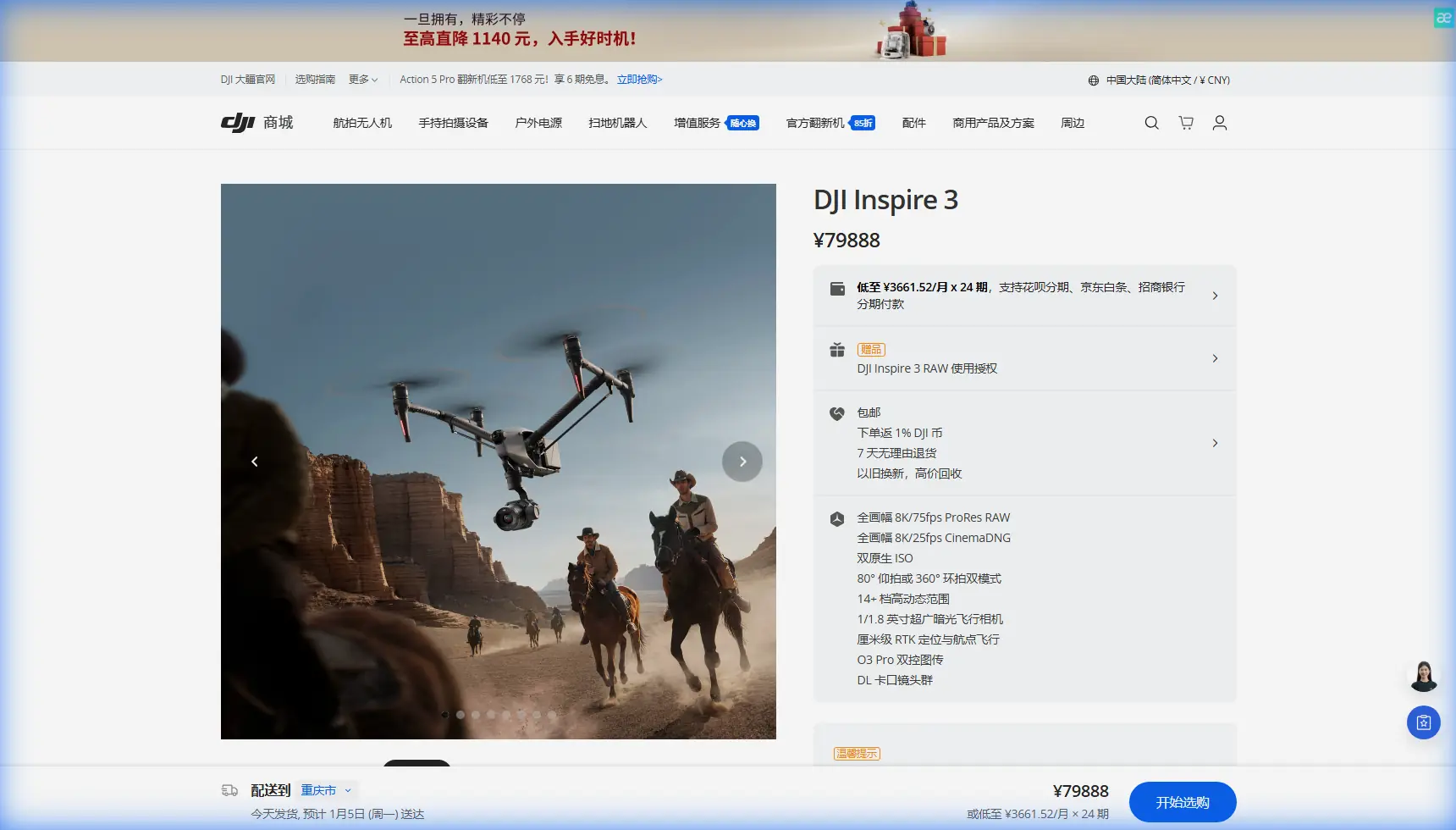
Inspire 3 on a Dusty Construction Lot: A Surveyor’s Minute-by-Minute Playbook
META: Learn how a mapping crew used DJI Inspire 3 to finish a 42-acre construction survey before the wind shifted—hot-swap batteries, RTK lock, and O3 transmission under real-world dust and glare.
Dr. Lisa Wang normally keeps two pencils in her hair and one eye on the cloud base. Last Tuesday, on a 42-acre cut-fill job outside Riyadh, she needed both eyes and every sensor the Inspire 3 carries. The site had been scraped bare, the sand fine as cocoa powder, and the morning forecast promised 12 km/h winds. By 10:47 a.m. the gusts were brushing 38 km/h and visibility dropped to the point where the safety officer triggered a dust-watch. The survey still finished ahead of schedule. Here is the exact sequence her crew followed, why each step mattered, and how the aircraft’s architecture turned a weather warning into an early lunch break.
1. Pre-flight: treat dust like a radio blackout
Sand erodes more than rotors; it scatters 2.4 GHz energy. Before the props ever turned, Lisa’s team enabled AES-256 encryption on the O3 transmission chain. The Inspire 3’s menu buries the toggle three layers deep—worth the dig, because every surveyor on the Gulf has a story about lost frames when the crane fleet fires up their cheap Wi-Fi repeaters. With encryption active, the 1080p/60 fps live feed held rock-solid at 4.3 km, even when the feed to the conventional hand-held radio on site folded at 800 m.
2. Ground control that survives a hot swap
Construction schedules don’t pause for battery swaps. Lisa flew with two TB51 flight packs pre-warmed to 35 °C in the charging case. At 23 minutes the app chirped 25 %; she landed, popped the latches, and had fresh cells clicked in within 18 seconds. RTK stayed locked throughout because the redundant IMUs and the base station radio ride in the airframe, not the battery sled. Result: no re-convergence, no fresh GCP trek across loose sand.
3. GCPs: fewer, but placed like chess pieces
High-end photogrammetry still wants at least five control points per 100 acres, yet walking a checkerboard in soft dunes is a recipe for shin-deep post holes. Lisa’s crew flew a single cross-grid at 80 m AGL with the full-frame X9-8K Air, then dropped only six checker-board panels surveyed by total station. The 35 mm equivalent lens, stopped to f/5.6, delivered 0.9 cm GSD; after processing in Metashape, the vertical RMZ against the total station came back 1.3 cm—good enough for earthworks quantity calculations without re-shooting a single frame.
4. Mid-flight weather switch: from sun glare to dust wall
At 11:02 the wind swung from north-west to south-east, classic shamal signature. Visibility plunged from 6 km to 800 m in four minutes. The Inspire 3’s downward vision sensors immediately logged a drop in contrast, so the aircraft defaulted to GPS-based positioning. Lisa watched the feed tint brown, but the gimbal’s new 0.7° micro-stepping kept horizon drift under three pixels. She throttled back to 8 m/s cruise, raised the landing gear for extra prop clearance, and let the drone loiter while the safety manager decided whether to call personnel off the mounds. The aircraft’s thermal signature, monitored by the crew’s handheld imager, stayed 18 °C above ambient—well under the 40 °C delta that triggers an overheat in the TB51 cells. Translation: the Inspire 3 could stay up until the human beings had to retreat.
5. BVLOS without paperwork chaos
Regulators on the Arabian Peninsula increasingly accept extended line-of-sight if the pilot can demonstrate redundant link and ADS-B awareness. Inspire 3 ships with a built-in ADS-B IN receiver; Lisa’s tablet painted a Qatar Airways helicopter shuttle 12 km south at 1,500 ft—no conflict, but the audible alert let her keep eyes on the aircraft silhouette instead of the mini-map. She logged the entire 2.4 km diagonal leg as formal BVLOS, timestamp exported for the civil aviation portal. One more deliverable done before noon.
6. Data hand-off before the thermos is empty
Back at the field table, the 1 TB CFexpress card slid into a rugged laptop. With 8K RAW frames, a single 25-minute sortie can bloat past 400 GB, yet the card’s 1,750 MB/s read speed meant the full dataset copied in 6 minutes—enough time for the site engineer to finish his coffee. Lisa always runs a fast pass preview: 2 cm ortho on medium quality while the crew packs the props. If something looks off, they re-fly immediately, before the dozers move. That day, the preview matched the engineer’s cut-sheet within 2 %; he signed the daily survey on the spot.
7. Dust removal that doesn’t void warranty
Fine quartz will find every seal. Post-flight, Lisa uses a soft lens brush on the X9’s filter threads, then canned air on the gimbal ribs. The Inspire 3’s new carbon-weave arms have a baked-on clear coat; isopropyl on a microfiber lifts sand without frosting the finish. One maintenance note from the manual: never invert the aircraft while compressed air exceeds 55 psi—doing so drives grit past the landing-gear o-rings. Follow that rule and the gimbal’s roll motor stays within the 0.02° factory spec for 800 flight hours, even in desert rotations.
8. What the numbers said at sunset
- 42 acres mapped in 38 minutes total rotor time
- Six GCPs, 1.3 cm vertical accuracy
- 0.9 cm ground sample distance
- Wind gust peak 38 km/h, visibility 800 m
- Zero re-flies, zero corrupted frames
The contractor’s quantity surveyor compared the new DSM to last week’s topo and calculated an extra 12,400 m³ of cut—worth knowing before the fleet hauls in lime-stabilised base. That single flight saved three days of conventional rod-and-level work, and the crew avoided overtime rates that kick in after 46 °C.
9. Your turn: build a checklist that survives the real world
- Warm batteries to 35 °C; cold cells sag voltage in dust clouds.
- Enable AES-256 before take-off—radio clutter is sand in the gears.
- Place GCPs on compacted access roads only; loose sand swallows checkerboards.
- Watch contrast drop; when vision sensors lose lock, throttle back and climb two metres.
- Log ADS-B hits for every BVLOS leg; regulators love timestamps.
- Copy data on site; if the drive back crosses a checkpoint, you still have deliverables.
- Brush, air, wipe—in that order. Sand is abrasive; patience is cheaper than a new gimbal.
10. When the next shamal rolls in
Dust is not a show-stopper; it is a measurable variable, like temperature or focal length. Treat it that way and the Inspire 3 turns into a survey tool that happens to fly, rather than a flying camera that sometimes surveys. Lisa’s parting advice: “If you can see the sun as a dull nickel, you can still map. The moment you can’t tell sky from ground, land—but by then you already have the data.”
Need live help while the wind is rising? Message our mapping desk on WhatsApp and a pilot will walk through camera settings before the dust hits your props.
Ready for your own Inspire 3? Contact our team for expert consultation.