
Inspire 3 for Mountain Field Surveying: A Practical Expert
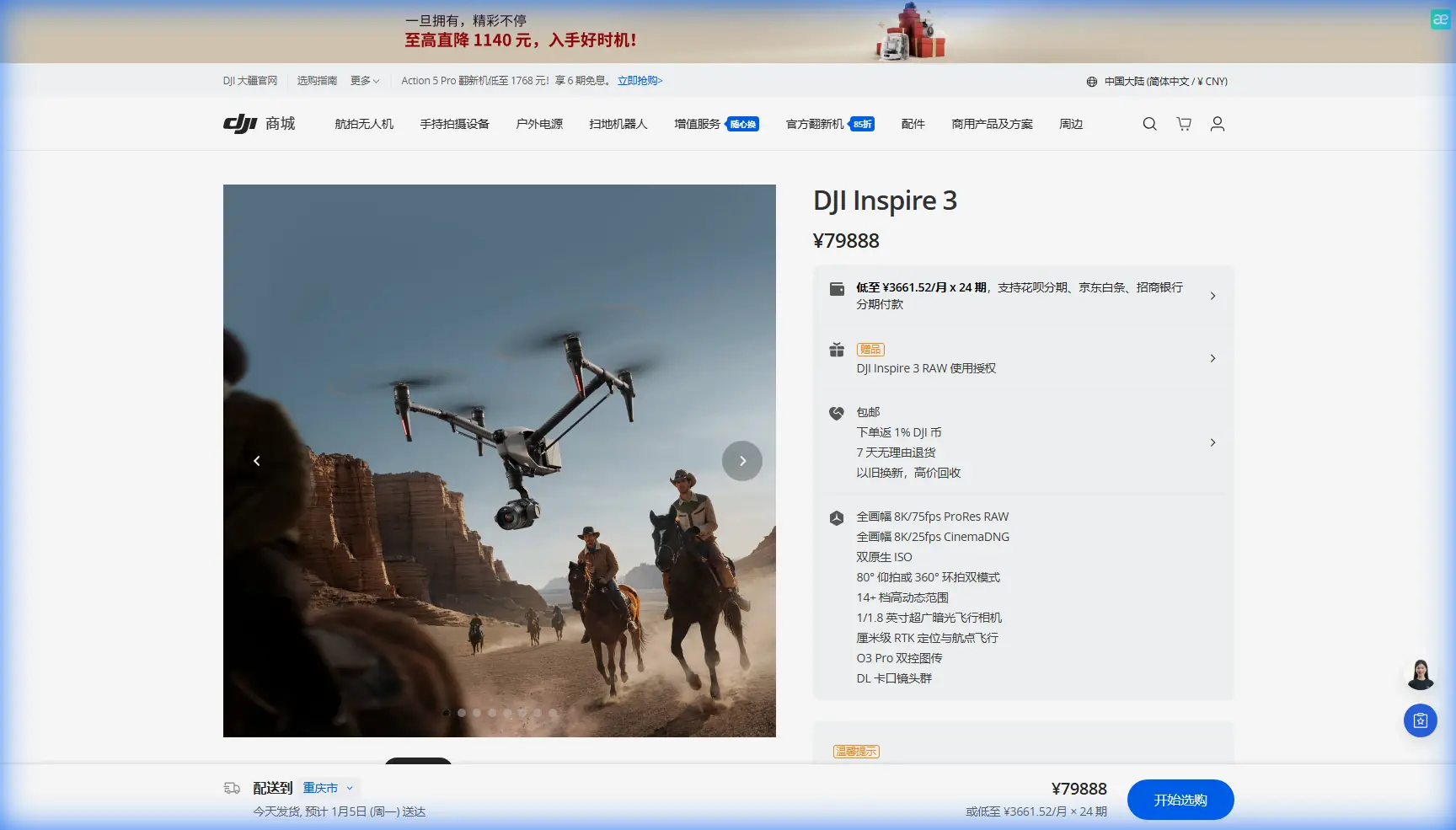
Inspire 3 for Mountain Field Surveying: A Practical Expert Guide from the Flight Line
META: Expert how-to guide to using Inspire 3 for mountain field surveying, with practical workflow advice on photogrammetry, transmission reliability, battery strategy, and secure operations.
I still remember a mountain field job where the terrain looked manageable on a map and completely different from the launch point. Terraced slopes broke line of sight. Wind changed by elevation. The crew spent more time moving the ground station than collecting usable imagery. That kind of day teaches you a blunt lesson: in mountain surveying, the aircraft is only one part of the system. Transmission stability, battery handling, route planning, and data discipline decide whether the mission actually works.
That is where the Inspire 3 becomes interesting for field teams working beyond flat farmland. Not because it solves every problem by itself, but because it reduces friction in the places mountain survey work usually gets messy.
This guide is built around that reality: how to use Inspire 3 well when surveying fields in mountainous terrain, and why certain technical disciplines matter more there than they do on easy ground.
Start with the mountain, not the drone
A field in the mountains is rarely one field in operational terms. It is a patchwork of elevation changes, exposure differences, shadows, access constraints, and radio obstacles. Even if your deliverable is a straightforward orthomosaic or a basic terrain model, your workflow has to account for the fact that the aircraft will be climbing and descending relative to both takeoff point and ground.
That matters for three reasons.
First, image geometry changes faster in broken terrain. If you fly a simple flat-grid mission without thinking about relief, your effective ground sampling distance can drift enough to complicate photogrammetry.
Second, transmission reliability becomes part of flight safety and mission efficiency. Mountain shoulders, tree lines, and cut slopes can interfere with signal paths in ways you do not notice until the aircraft turns behind a ridge.
Third, battery planning is no longer just about total flight time. Altitude transitions, wind exposure, and repeated repositioning between launch sites can quietly destroy your schedule.
The Inspire 3 fits this environment best when you treat it as a professional capture platform inside a disciplined survey method, not as a one-button mapping shortcut.
Why transmission reliability matters more in mountain agriculture
The marketing conversation around transmission systems often stays abstract. On real mountain jobs, it is not abstract at all.
O3 transmission is valuable here because field teams need stable command and monitoring links when terrain keeps trying to interrupt them. In hillside agriculture, you may be flying along terraces, orchard bands, irrigation cuts, or long contour-following property edges. The aircraft can remain physically close while still moving into poor signal geometry relative to the pilot.
A more robust transmission link does two practical things.
It reduces unnecessary pauses and aborts. When crews lose confidence in the link, they start flying conservatively in the wrong way: more stops, more re-angles, more repositioning, and more battery waste.
It also improves data consistency. A clean live feed helps the pilot and payload operator confirm overlap, angle control, and coverage while the mission is underway rather than discovering gaps back at base.
If your operation has client sensitivity around land boundaries, crop health records, or infrastructure layouts, the AES-256 security layer also has operational significance. Survey teams are routinely capturing more than pretty aerial views. They may be documenting irrigation assets, access tracks, retention ponds, or planting patterns that a landowner would not want casually exposed. Secure transmission is not just a technical checkbox; it is part of professional data stewardship.
Photogrammetry in steep terrain: the part people underestimate
Many mountain field teams say they are “just doing a map,” but steep agricultural terrain exposes every weakness in a loose photogrammetry workflow.
With Inspire 3, the aircraft is capable enough that your bottleneck usually becomes mission design and control quality rather than raw platform performance. If you want survey-grade outputs or at least highly dependable agronomic reference imagery, focus on these five points.
1. Build your mission around elevation variation
Do not assume one altitude works for the entire area. On mountain fields, a single-height mission can create inconsistent image scale from one slope face to the next. If your software supports terrain awareness, use it. If not, break the site into logical blocks by elevation band or slope orientation.
This produces cleaner tie points and lowers the chance that one section of the project ends up soft or geometrically unstable.
2. Use GCPs where the terrain is trying to fool you
Ground control points matter even more when the land is uneven and visual features repeat. Terraced farming, row structures, and similar-texture vegetation can mislead automated processing. A well-placed GCP set anchors the project when natural features are not distinctive enough.
In mountain fields, I prefer control distribution that reflects relief, not just site perimeter. Put points at meaningful elevation changes, not only around the outside edge.
3. Think about sun angle before takeoff
Mountain shadows are not a cosmetic issue. They can wipe texture out of portions of a field while leaving adjacent slopes overexposed. That inconsistency hurts processing and can distort any attempt to compare crop condition visually across the site.
Plan for a capture window that minimizes hard contrast on the key slopes you need to analyze. Sometimes the best answer is not the earliest possible flight, but the time when the terraces or orchard rows have enough uniform light to preserve detail.
4. Fly enough overlap to survive terrain complexity
Steep terrain is unforgiving. If you are used to standard overlap values on flat ground, mountain fields often demand more margin. That extra overlap gives the processing engine more ways to resolve elevation changes and texture interruptions from vegetation shadows.
5. Separate inspection tasks from mapping tasks
This sounds simple, yet crews still try to do both in one pass. If the goal is photogrammetry, fly for repeatable geometry. If the goal is identifying drainage issues, stressed planting zones, or edge erosion, schedule a dedicated inspection pass.
The Inspire 3 is at its best when you let each mission profile do one job well.
A note on thermal signature in field work
Thermal signature analysis can be useful in civilian field operations, but only when the sensor workflow and survey objective are aligned. If your mountain agriculture task involves irrigation leaks, drainage anomalies, or differential moisture behavior near retaining structures, thermal interpretation can add context that visible-light mapping misses.
The mistake is treating thermal as a universal layer that automatically improves every survey. It does not. Thermal outputs are heavily affected by time of day, recent weather, slope exposure, and surface material differences. On mountain fields, those variables stack up quickly.
So if thermal is part of the plan, treat it as a separate data product with its own flight timing and interpretation rules, not as an afterthought attached to your mapping sortie.
Hot-swap batteries are not just convenient here
On flat jobs, people describe hot-swap batteries as a timesaver. In the mountains, they are closer to an operational stabilizer.
A mountain survey day often includes repeated short windows of usable weather and awkward launch positions. You may have to move between field access roads, terrace edges, or ridge-adjacent clearings. Every battery change that forces a cold restart or lengthy interruption increases the risk of losing your ideal light, your wind window, or your carefully matched mission sequence.
Hot-swap battery handling matters because it helps preserve continuity. You can keep aircraft turnaround tight, maintain crew focus, and finish adjacent blocks under similar conditions.
That consistency directly benefits photogrammetry. It also lowers the temptation to rush the final sortie because the weather is turning.
My advice: treat battery rotation as part of your capture quality plan, not only as flight logistics. Label pairs clearly. Track cycle behavior. Keep them thermally managed. In the mountains, battery discipline is a survey-quality issue.
What civilian operators should learn from recent drone misuse headlines
A recent BBC-reported case involving HMP Manchester said drones were being used to bring drugs into the jail, within a broader report describing violence against both prisoners and staff. For civilian operators, that story has nothing to do with field surveying as a mission type, but it has everything to do with how the public increasingly interprets drone activity.
That public perception changes the way professional crews should operate near sensitive infrastructure, populated corridors, and visible agricultural communities.
Here is the operational significance.
When people hear “drone,” they do not always separate a legitimate survey crew from a bad actor. In mountain farming regions, that can affect how landowners, workers, and nearby residents respond to your presence. Professional teams need clean permission protocols, clear site communication, and secure handling of imagery and telemetry. This is where features like AES-256 transmission security matter in a very practical civilian sense: they support trust, data protection, and operational professionalism at a time when drone misuse is making headlines for the wrong reasons.
It also reinforces the importance of flight discipline around restricted or sensitive areas. Even if your work is purely agricultural, your planning needs to show that you understand how serious the airspace and ground-side implications can be.
If you need a field-ready checklist for setting up a compliant mountain survey workflow, I often share one directly with teams here: message me on WhatsApp.
Why classical aircraft design principles still matter to drone survey work
This may sound academic until you are halfway through a mountain mission with changing winds and inconsistent terrain clearance.
The reference material from the civil aircraft design manuals highlights several core ideas that still matter in a modern UAV workflow: closed-loop design, linear simulation, model simplification, and the use of test data in performance calculations. Another section points to basic flight performance equations, the speed-altitude envelope, and even weight change and fuel consumption equations in manned aircraft contexts.
You do not need to become an aeronautical engineer to benefit from that logic. The lesson is that reliable flight performance is never magic. It comes from understanding how the aircraft behaves as a system.
For Inspire 3 operators, two of those ideas are especially relevant.
Closed-loop thinking
The manual’s emphasis on closed-loop design is a useful mental model for survey crews. In practice, it means you do not separate planning, sensing, piloting, and review into isolated steps. You monitor results during the mission and adjust while the system is still in operation. In mountain fields, that could mean recognizing early that a slope sector is showing poor texture due to shadow and immediately scheduling a revised pass before leaving the site.
Performance data over assumptions
The aerodynamic design reference also emphasizes using test data and basic flight performance calculations. Operationally, that means your mountain survey plans should be based on observed aircraft behavior in altitude, wind, and payload conditions similar to the job at hand. Do not rely on generic endurance expectations or broad transmission assumptions copied from easier sites.
This is one reason experienced crews tend to produce better mapping with the same aircraft. They build their mission around demonstrated performance, not brochure-level expectations.
A practical mountain field workflow with Inspire 3
Here is the workflow I recommend for most mountain agriculture and land survey scenarios.
Pre-site planning
Review elevation spread, likely launch areas, access roads, and radio obstruction risks. Mark any ridgelines or tree masses that could affect O3 link quality.
Control strategy
Set GCPs with relief in mind. Include vertical distribution, not just edge coverage.
Mission split
Create separate missions for orthomosaic capture, oblique context imagery, and any thermal signature work. Do not blend them unless the output requirement truly allows compromise.
Weather and light gate
Watch not only wind speed but also slope-specific light. Mountain shadows move faster than most teams expect in usable survey terms.
Battery staging
Use a rotation plan that supports block-to-block consistency. Hot-swap efficiency is most valuable when it protects your light window.
In-mission verification
Use the live feed actively. Check overlap confidence, shadow encroachment, and sector completeness before leaving each block.
Post-flight review on site
Open sample image groups before packing down. If one terrace band or downslope edge looks weak, refly immediately. That is almost always cheaper than returning later.
The real advantage of Inspire 3 in this environment
The Inspire 3 is not the only aircraft that can survey mountain fields. Its real advantage is that it reduces the number of small operational breakdowns that usually compound on difficult terrain.
Stable transmission helps maintain confidence and continuity. Secure links support professional handling of sensitive land data. Hot-swap batteries preserve weather and light windows. And when paired with disciplined photogrammetry, the platform becomes a much more reliable tool for mountainous agricultural work than crews often achieve with a looser setup.
That is the part many buyers miss. The value is not in one spectacular feature. It is in how the aircraft supports a repeatable, lower-friction survey system when the terrain is doing everything it can to interrupt you.
If you are surveying fields in the mountains, that difference shows up in cleaner datasets, fewer return trips, and a workday that feels controlled instead of improvised.
Ready for your own Inspire 3? Contact our team for expert consultation.