
Inspire 3 Surveying Tips for Fields in Low Light
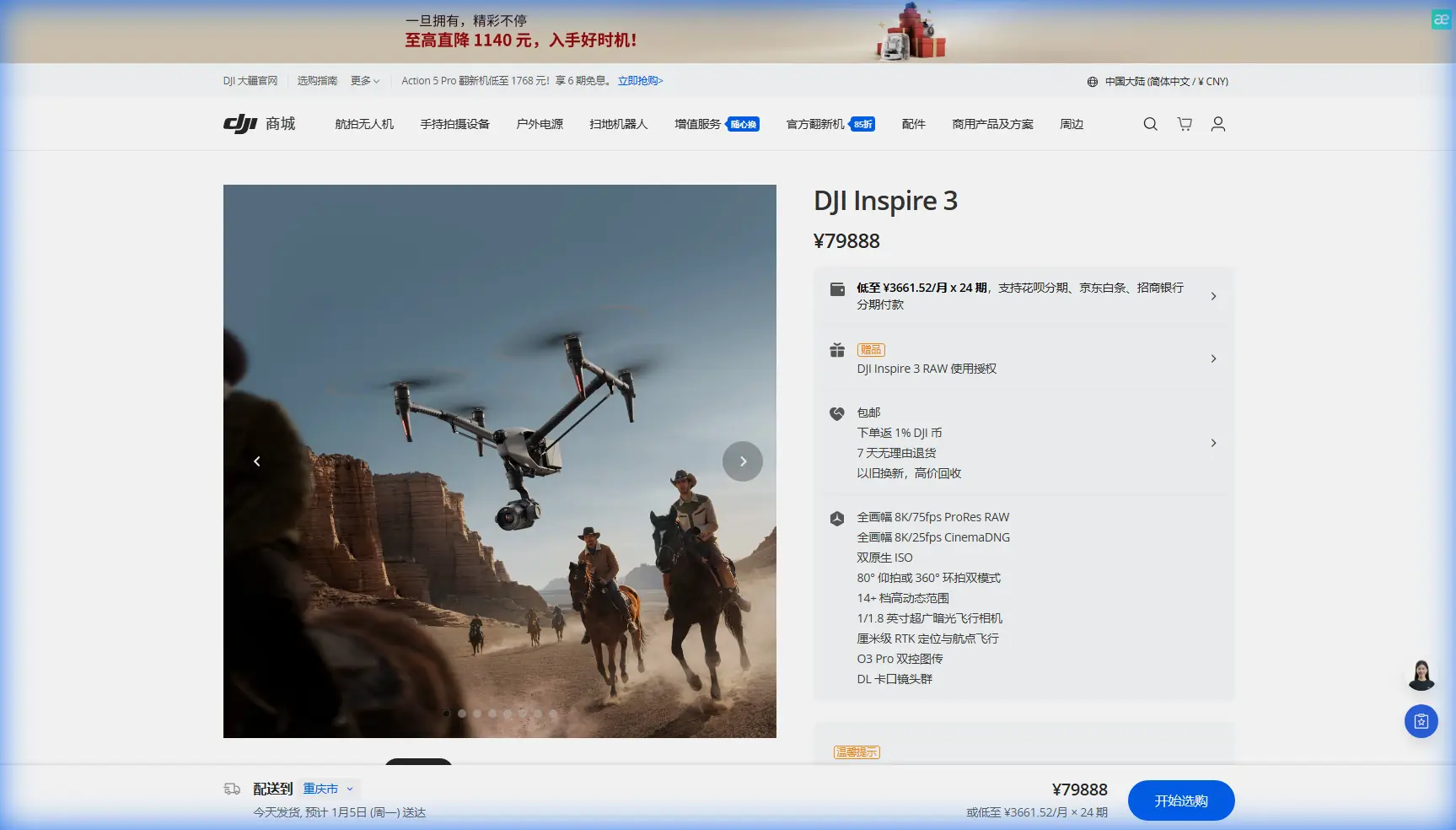
Inspire 3 Surveying Tips for Fields in Low Light: What Actually Matters in the Last Hour of Daylight
META: Practical Inspire 3 surveying tips for low-light field work, with expert guidance on stability, transmission, battery strategy, photogrammetry discipline, and why material tolerances matter.
Low-light field surveying exposes every weak point in an aerial platform. Tiny vibrations become soft edges in orthomosaics. Marginal links become interrupted runs. Battery changes eat into the narrow window when light is still usable. If your goal is dependable data rather than just a dramatic sunset flight, the Inspire 3 stands out for reasons that go beyond headline specs.
I’ve spent enough time around professional UAV workflows to know that low-light agricultural and land survey missions are rarely lost because of one catastrophic failure. They are usually compromised by smaller things: slight deformation in a clear cover, inconsistent damping, a delayed restart after a battery swap, a weak downlink at the far edge of a field, or poor control discipline when trying to preserve overlap as visibility falls off. That is why the best way to think about the Inspire 3 is not as a camera drone with nice features, but as a system built to keep precision intact when conditions get less forgiving.
This article is for operators surveying fields in low light, especially where photogrammetry, repeatability, and clean mission execution matter more than cinematic style.
Why low-light field surveying is harder than it looks
Open fields sound easy. They usually are not.
At dusk or under overcast conditions, surface detail flattens out. Crop rows become less distinct. Edges between paths, irrigation lines, and soil transitions lose contrast. That creates a double problem. First, your live view can become less intuitive for the pilot. Second, your imagery may give photogrammetry software fewer high-confidence matching points, especially if the terrain is visually repetitive.
That means the aircraft has to do more of the work for you. Stable flight matters more. Reliable transmission matters more. Predictable battery planning matters more. And if you are operating on large parcels where you need to maintain confidence from launch point to field boundary, even your encrypted link and control integrity start to matter in a very practical way.
The Inspire 3 is strong here because it combines professional transmission, operational continuity, and a platform design that favors repeatable results rather than casual flying.
The hidden lesson from aircraft design manuals: tolerances shape image quality
A surprising way to understand serious UAV performance is to look at conventional aircraft engineering references.
One source in the aircraft materials handbook discusses modified acrylic plastic sheet thickness-change requirements after aging. The figures are rough in the scan, but several values are still clear: a 0.250-inch sheet is shown with a thickness tolerance around ±0.025, and a 0.312-inch sheet appears with around ±0.030. The same section also references deformation after aging across large panel sizes such as 36 x 60 inches, 60 x 80 inches, and 70 x 100 inches.
Why should an Inspire 3 operator care about something that sounds like it belongs in an aerospace factory?
Because it points to a principle that directly affects airborne imaging: transparent components and structural materials do not stay perfect automatically. They shift with thickness, age, stress, and size. On any precision aerial platform, material stability influences how well housings, covers, mounts, and optical pathways retain alignment over time. In low light, where the margin for image degradation is thinner, that stability matters more than many pilots realize.
You are not flying a giant acrylic-panel aircraft canopy on an Inspire 3, of course. But the engineering logic carries over. If a larger aerospace system has to tightly control thickness change and aged deformation in transparent plastics, then the same mindset matters in smaller professional UAV assemblies where imaging quality depends on exact geometry and vibration behavior. Low-light surveying punishes sloppiness. Stable materials and tight build consistency help preserve sharpness, especially when the shutter is working harder and exposures can be less forgiving.
This is one area where higher-end platforms tend to separate themselves from cheaper alternatives. Competitors may advertise resolution. The better question is whether the aircraft keeps the imaging chain stable enough to deliver that resolution at the edge of daylight.
Another overlooked clue: spring parameters and what they tell us about vibration control
A second aircraft design reference covers stainless-steel wire compression spring parameter series. One table cites Crl2Mn5Ni4Mo3Al stainless steel wire and gives multiple dimension and load relationships. Again, the scan is imperfect, but several numbers are visible, including spring-related values such as 440, 343, 273, 199, 149, and 126 tied to size series, alongside dimensional progressions like 0.50, 0.60, 0.70, 0.93, 1.10, and 1.20.
Operationally, this matters because springs and elastic elements are not abstract mechanical trivia. They are at the heart of how aerospace systems handle shock, isolate vibration, and maintain consistent load behavior. On a drone built for imaging, that translates to one thing quickly: whether the aircraft can keep the sensor payload behaving the same way from one mission to the next.
For Inspire 3 users doing low-light field work, vibration isolation is not just about making footage look smooth. It is about preserving edge detail in stills, reducing micro-blur, and keeping your mapping outputs more consistent. During the brightest part of the day, a drone can sometimes brute-force its way through small imperfections with faster shutter speeds. As light drops, those imperfections become visible.
This is one reason the Inspire 3 tends to excel against less mature survey setups. It is not just the camera or the transmission. It is the quality of the whole airborne mechanical system. When low light narrows your operating envelope, that engineering discipline becomes measurable in the deliverables.
Step 1: Build your mission around overlap, not optimism
Low-light surveys fail when operators try to “get it done quickly” and forget that fading light reduces texture confidence in the data.
With Inspire 3, plan your mission with stronger overlap than you might use in bright midday conditions. If the field has repetitive geometry, bare soil, or uniform crop cover, give your photogrammetry workflow more matching opportunities. This is where GCP strategy also becomes more valuable. Ground control points provide structure when the scene itself offers weak visual differentiation.
The Inspire 3’s professional flight stability helps here, but it does not replace disciplined capture planning. If you are flying near the end of legal light, prioritize the areas with the least surface contrast first. Those are the segments most likely to suffer if the light drops another stop during the run.
Step 2: Use the transmission advantage properly
The context around Inspire 3 often mentions O3 transmission, and for field work, that is not a brochure detail. It affects how confidently you can maintain flight path discipline at the far side of a parcel.
In low light, the pilot’s situational awareness is already slightly degraded. A strong link reduces compound risk. You get steadier live feedback, cleaner command response, and fewer distractions from signal instability when you should be focused on line spacing, turn behavior, and coverage confirmation.
Compared with smaller prosumer competitors, this is one area where the Inspire 3 often feels less fragile operationally. On large fields, that matters. The farther you fly from the launch point, the more every interruption affects overlap and consistency.
If your operation includes sensitive client land data or pre-publication survey work, AES-256 encryption also has practical significance. It is not there for decoration. It supports secure handling of live transmission and mission data in commercial environments where confidentiality may be part of the contract.
Step 3: Treat hot-swap batteries as a data-quality tool
Most pilots think of hot-swap batteries as a convenience. For low-light field surveying, they are more than that.
The best light window near dusk is short. If you land for a battery change and have to fully reboot, reacquire, and reset your workflow, you can lose the exact conditions you were trying to capture. Hot-swap capability helps preserve mission rhythm. That can mean finishing an adjacent block while lighting remains consistent enough to avoid visible variation across stitched outputs.
This becomes even more useful on larger field surveys where one battery set is not enough. Consistent continuity between sorties can reduce the mismatch that sometimes appears when clouds shift or the horizon darkens while you are still flying your grid.
Step 4: Don’t confuse thermal signature with mapping truth
The context around this project includes thermal signature, which is worth addressing carefully.
Thermal data can be extremely useful in agriculture and inspection, especially when identifying irrigation irregularities, drainage problems, stressed vegetation patterns, or heat-retention differences in land features. But thermal should support your interpretation, not replace visible-spectrum photogrammetry where measurement accuracy is the objective.
For Inspire 3 operators, the practical lesson is simple: if the mission is a true mapping or survey run, maintain photogrammetry discipline first. Fly for geometry, overlap, altitude consistency, and GCP alignment. If thermal is part of the workflow through a companion system or parallel operation, treat it as an additional layer for analysis rather than the primary source of measurement control.
Step 5: Be realistic about BVLOS discussions
BVLOS is often brought up in professional UAV circles because field surveying naturally invites longer routes. Still, your actual operating permissions govern what is possible. The Inspire 3’s transmission and professional workflow readiness do not change regulatory boundaries.
What they do change is how well prepared you are for structured operations once approvals, procedures, and safety systems are in place. For lawful civilian survey teams building toward more advanced field coverage programs, the Inspire 3 fits more naturally into that progression than a casual hobby-class aircraft.
Step 6: Fly the aircraft like a survey platform, not a cinema platform
This sounds obvious, but it gets missed.
The Inspire 3 has pedigree in high-end imaging. That can tempt operators to fly it aesthetically rather than methodically. For field surveying in low light, resist that instinct. Smooth cinematic movement is not the same thing as repeatable survey capture.
Use steady headings. Preserve lane spacing. Watch your ground speed as illumination falls. Confirm your image intervals and exposure behavior before you commit to the full block. If the field includes reflective water, plastic mulch, or wet soil, expect contrast shifts near sunset and adjust your capture logic accordingly.
And if you are building a repeatable workflow for clients, document everything. Low-light success is not just about the aircraft; it is about the standardization around it.
Where Inspire 3 clearly beats weaker alternatives
Some competing drones can capture acceptable field images in good conditions. That is not the same as maintaining confidence when the light is marginal and the job still has to get done.
The Inspire 3’s edge is how several professional features compound:
- O3 transmission supports cleaner control and viewing over larger field footprints.
- AES-256 helps align the aircraft with commercial data-handling expectations.
- Hot-swap batteries preserve continuity during narrow light windows.
- High-end platform engineering improves the odds of stable capture when shutter tolerance is tighter.
That last point is where the aircraft-design references are unexpectedly useful. Whether we are talking about acrylic sheet deformation limits after aging or compression spring parameter series in stainless steel, the real takeaway is this: professional aerospace systems win through controlled behavior, not isolated specs. Low-light surveying rewards exactly that.
If you are trying to decide whether the Inspire 3 is excessive for field work, the better question is whether your data quality, repeatability, and client expectations justify an aircraft with fewer compromises. For many serious survey teams, the answer is yes.
A practical low-light checklist for your next field mission
Before launch:
- Set stronger overlap than your bright-day default
- Verify GCP placement and visibility
- Check exposure settings with actual field contrast, not just the takeoff area
- Confirm transmission environment across the full parcel
- Plan battery swaps to preserve lighting continuity
During flight:
- Watch for loss of visible surface texture as the light drops
- Keep turns disciplined to protect edge coverage
- Monitor image consistency, not just flight completion
- Avoid pushing speed to compensate for time pressure
After flight:
- Review a sample set before leaving the site
- Look for softness, missed texture zones, or stitching-risk areas
- Separate thermal interpretation from photogrammetric measurement logic
- Document field conditions for the next repeat mission
If you need a second opinion on mission planning or workflow setup, you can reach out here: message James directly.
The Inspire 3 is at its best when you use it as a precision field instrument. Low-light surveying is where that becomes obvious. Not because the aircraft magically defeats bad conditions, but because it gives a disciplined operator more control over the variables that actually decide whether a survey is usable.
Ready for your own Inspire 3? Contact our team for expert consultation.