
Inspire 3 for Field Survey in Complex Terrain
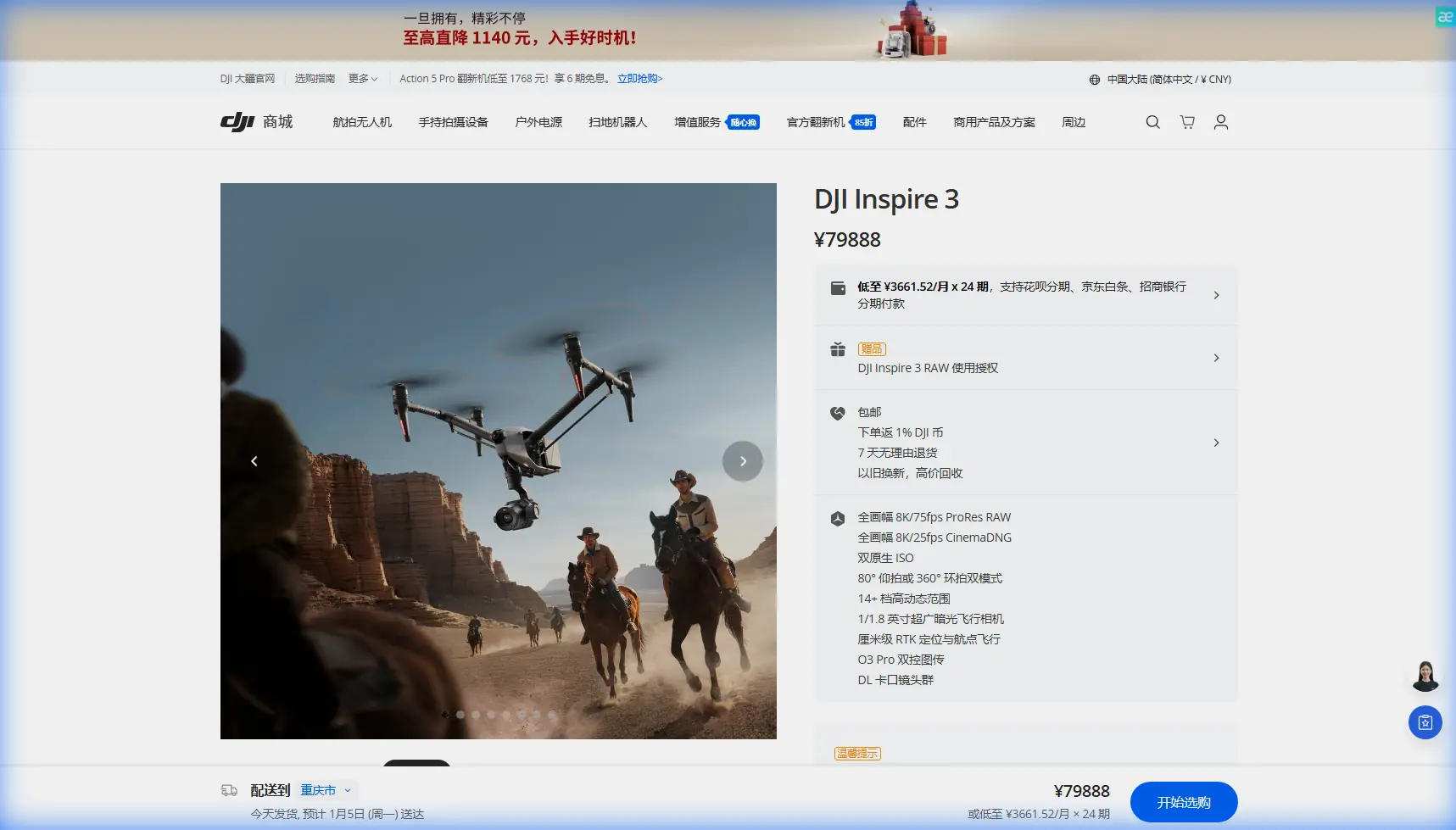
Inspire 3 for Field Survey in Complex Terrain: A Practical Expert Tutorial
META: Learn how to use Inspire 3 for surveying fields in complex terrain, with expert guidance on EMI handling, antenna setup, thermal workflow logic, photogrammetry accuracy, and efficient battery planning.
Surveying agricultural land in broken terrain is where a drone either proves itself or wastes your day.
Flat acreage is forgiving. Hills, tree lines, irrigation hardware, ravines, cutbanks, and uneven radio conditions are not. If you are planning to use the Inspire 3 in this kind of environment, the question is not whether it can fly the job. It can. The real question is how to build a workflow that keeps image quality, transmission stability, and mission continuity intact when the terrain starts working against you.
I’ve seen many operators focus heavily on sensor specs and overlook the quieter factors that determine whether a field survey is clean enough to process into dependable outputs. Transmission discipline. Battery timing. Antenna orientation. Ground control layout. Even the logic behind how aircraft materials and control systems are designed at the aviation level tells us something useful about field operations with a professional UAV.
This tutorial is built around that idea: use the Inspire 3 intelligently, not just capably.
Start with the mission profile, not the aircraft menu
For complex-terrain field work, separate the mission into three layers before takeoff:
Photogrammetry objective
Are you mapping drainage, crop stress patterns, boundary geometry, terraces, or elevation change?Environmental constraints
Terrain masking, reflective metal infrastructure, tree belts, power lines nearby, and changing wind over ridges.Operational continuity
How you will maintain link quality, preserve overlap, rotate batteries, and recover from signal degradation without breaking the dataset.
The Inspire 3 is often discussed for cinema, but in a field-survey context its real strength is that it gives a disciplined operator enough control to maintain high-quality capture under pressure. That matters when you are trying to collect imagery suitable for photogrammetry or thermal comparison over irregular land.
Why transmission behavior matters more in rough fields
In open farmland, operators can get lazy. In complex terrain, that laziness shows up immediately as weak control link, inconsistent telemetry, and interrupted passes.
If you are relying on O3 transmission, terrain shape is often the hidden problem. A field can look open from your launch point while still producing micro-shadowing in low areas or behind ridges. Add electromagnetic interference from pumps, solar infrastructure, fencing, nearby buildings, or utility corridors, and the link can become unstable just as the aircraft reaches the edge of useful line of sight.
That is where antenna adjustment becomes practical, not theoretical.
Handling electromagnetic interference with antenna adjustment
When the downlink starts fluctuating, many pilots look first at distance. In field survey, I often look first at geometry.
If you suspect EMI or terrain-related signal weakening:
- Reposition yourself rather than just increasing altitude blindly.
- Keep the controller antennas oriented to present the strongest face toward the aircraft, not the tip.
- Rotate your body and controller together as the aircraft moves laterally across the slope.
- Avoid standing next to vehicles, steel gates, generator trailers, or utility cabinets.
- If possible, move to a point with cleaner line of sight over the depression or ridge rather than launching from the most convenient roadside spot.
This sounds basic. It is not. Small antenna-angle corrections can stabilize a mission enough to preserve overlap consistency across a whole block.
For operators planning BVLOS-style workflows where regulations and approvals permit, link management discipline becomes even more critical. You should never treat transmission as a background feature. In uneven farmland, it is part of your data-acquisition strategy.
A useful lesson from manned-aircraft design: control precision is built on actuator logic
One of the reference materials behind this article comes from a civil aircraft design handbook discussing active control and fly-by-wire system requirements. The excerpt includes actuator and control-surface relationships, with one table showing functional stroke values such as 37.96 mm and 72.16 mm, and another section listing stabilizer-related positional increments up to 13.85°.
Those numbers are from a much larger aircraft context, but the operational lesson translates well to the Inspire 3: stable flight performance depends on precise, repeatable control responses, not just raw power.
Why does that matter in field surveying?
Because when you are flying mapping lines over broken terrain, tiny deviations accumulate. A platform that responds predictably during pitch changes, crosswind corrections, and speed transitions is far more likely to deliver usable overlap and sharper image sets. That becomes especially relevant on slope-following runs where the aircraft is continuously making small attitude corrections. In practical terms, smoother control behavior means fewer blurred images, more reliable tie points, and less suffering during processing.
Put simply: survey success is often won in the margins.
Another aviation lesson that applies directly: material behavior affects reliability
A second reference comes from an aircraft design handbook section on process requirements and aluminum alloy state selection. On its face, it looks far removed from drone operations. It isn’t.
The source notes that for good heat-treatment results, aluminum alloy maximum section thickness should be controlled within process limits, and if the raw stock exceeds the allowed value, it should ideally be rough-machined before heat treatment to reduce the section size. It also states that all machined parts should undergo heat treatment before final machining.
That is not trivia. It reflects a core engineering truth: structural performance depends not only on material choice, but on how the part is processed before it ever reaches service.
The same source identifies 2024 alloy as a medium-strength general-purpose material with high toughness and strong resistance to crack propagation, used in structural skin applications. It also notes that 2219 alloy is suited to 104 to 216°C service environments where strength, stability, and toughness are required.
Operationally, why should an Inspire 3 user care?
Because serious field operators should think beyond flight features and remember that aircraft reliability is rooted in controlled engineering decisions. When you fly long survey days in hot environments, conduct repeated transport cycles, and depend on precise gimbal and airframe behavior, manufacturing discipline matters. You may never see the alloy callout on your aircraft, but the industry lesson is clear: durable performance comes from systems designed with structural behavior, thermal response, and processing sequence in mind.
For the field user, the takeaway is practical: inspect your equipment as if structural integrity matters, because it does. Watch for hard-case transport damage, repeated vibration exposure, and any mounting irregularity that could affect calibration or image geometry.
Building a photogrammetry workflow that suits the Inspire 3
If your goal is survey-grade or near-survey-grade mapping, the aircraft is only one component. The workflow has to be coherent.
1. Define your accuracy target before choosing flight settings
Do not launch with a vague plan to “map the field.”
Ask:
- Is this for relative terrain modeling?
- Are you tracking drainage changes over time?
- Are agronomists comparing canopy patterns between blocks?
- Are boundaries or volumetrics part of the deliverable?
Your answer determines altitude, overlap, GCP density, and whether thermal signature analysis is useful alongside RGB capture.
2. Use GCPs where terrain distortion is likely
Complex terrain is exactly where operators overestimate what onboard positioning alone can deliver.
Ground control points matter more when:
- the field has elevation breaks,
- there are irregular edges with vegetation,
- access roads cut across grade transitions,
- or the client expects repeatable geospatial comparison over time.
A clean GCP layout can rescue a project from subtle warping that would otherwise hide in the orthomosaic until someone tries to measure from it. If the site is large, break the area into logical terrain zones rather than dropping control only around the perimeter.
3. Protect overlap on slopes
In flat-country missions, standard overlap planning is often enough. In hilly fields, it can fail quietly.
When the drone maintains a simple flight plane while the ground rises and falls beneath it, apparent scale changes can reduce effective sidelap and frontlap in key sections. If the terrain is severe enough, increase overlap beyond your flat-ground default and consider segmented mission planning based on elevation bands.
This is where Inspire 3’s stable control behavior and robust transmission become genuinely useful. Reliable passes matter more than headline specs.
Thermal signature work: when and how it helps
Not every agricultural survey needs thermal. Some absolutely benefit from it.
Thermal signature patterns can help reveal:
- irrigation irregularities,
- drainage retention zones,
- plant stress trends,
- and thermal contrast around infrastructure or disturbed soil.
But thermal work only becomes useful when captured consistently. Time of day, wind, recent weather, and sun loading all affect interpretation. If you are comparing thermal datasets over time, treat each mission like a measurement event, not a casual flyover.
The Inspire 3 conversation often centers on image quality generally, but for field analysis the key issue is consistency. If the aircraft allows you to repeat route geometry, maintain stable flight, and manage battery swaps without long delays, your thermal comparisons become more meaningful.
Hot-swap batteries and why they matter in survey continuity
This is one of those features people mention casually and then underuse strategically.
Hot-swap batteries are not just about convenience. In field surveying, they help preserve mission rhythm.
That matters because:
- changing light alters imagery,
- wind shifts can affect attitude and groundspeed,
- and a long interruption increases the chance that later passes won’t match earlier ones cleanly.
With a disciplined battery routine, you can pause, replace power quickly, and get back into the block with less drift in lighting and operational conditions. On a large field with mixed topography, that can be the difference between one consistent dataset and two awkward halves.
My advice is simple: plan battery changes around natural mission boundaries. Do not stretch a segment just because you think you can squeeze it in. Finish a terrain section, swap cleanly, relaunch with a fresh block plan.
Field positioning: launch site choice is part of data quality
A lot of survey issues begin before takeoff.
Choose your launch point based on:
- line of sight to the most terrain-obstructed portion of the field,
- RF cleanliness,
- safe recovery options,
- and efficient walking access if you need to move for better transmission geometry.
The “best” takeoff spot is often not the closest spot to the vehicle. It is the one that gives you cleaner control conditions over the hardest portion of the mission.
If you want a second set of eyes on mission planning for difficult sites, you can send the terrain layout here: share the site details directly.
A practical mission sequence for complex fields
Here is the sequence I recommend when using Inspire 3 for demanding agricultural terrain:
Pre-mission
- Review topography, not just boundaries.
- Mark likely EMI sources.
- Decide where GCPs need to be based on grade breaks.
- Set battery swap points in advance.
- Choose a launch position with the best compromise between visibility and RF performance.
On site
- Confirm antenna orientation before departure.
- Fly a short verification leg toward the most obstructed sector.
- Watch link behavior early rather than waiting for a warning deep into the mission.
- Reposition the pilot station if signal quality is inconsistent.
During capture
- Maintain conservative overlap for slopes.
- Keep speed consistent through uneven air.
- Break the mission into terrain-aware blocks.
- Log any interruptions so the processing team understands where light or geometry changed.
Post-flight
- Review image consistency before leaving.
- Check whether low-angle sectors have enough tie-point-rich detail.
- Confirm GCP visibility in the image set.
- Flag any section where transmission instability may have coincided with unusual aircraft behavior.
What separates a good Inspire 3 survey operator from a frustrated one
The difference is usually not flying skill alone.
It is whether the operator understands that the aircraft is part of a larger measurement system. A professional survey result comes from the interaction of control stability, radio discipline, terrain-aware planning, structural reliability, and processing logic.
That is why the aviation references behind this article are more relevant than they first appear. The civil-aircraft control data reminds us that precision depends on repeatable actuator behavior. The manufacturing guidance on aluminum heat treatment and alloy use reminds us that reliability begins long before flight, in how components are designed and processed. One source cites 2024 alloy for high toughness and crack-growth resistance in structural applications; another shows control-system design built around exact movement relationships down to 37.96 mm of actuator function stroke. Different contexts, same lesson: dependable performance is engineered, not improvised.
For an Inspire 3 user surveying fields in complex terrain, that engineering mindset should shape every mission.
Do not just ask whether the drone can capture the area. Ask whether your workflow preserves link quality under EMI, whether your GCP plan respects terrain variation, whether your battery swaps protect dataset continuity, and whether your flight lines reflect the ground below rather than the map on your screen.
That is how you get output worth trusting.
Ready for your own Inspire 3? Contact our team for expert consultation.