
Inspire 3 Field Report: Surveying Mountain Fields Without
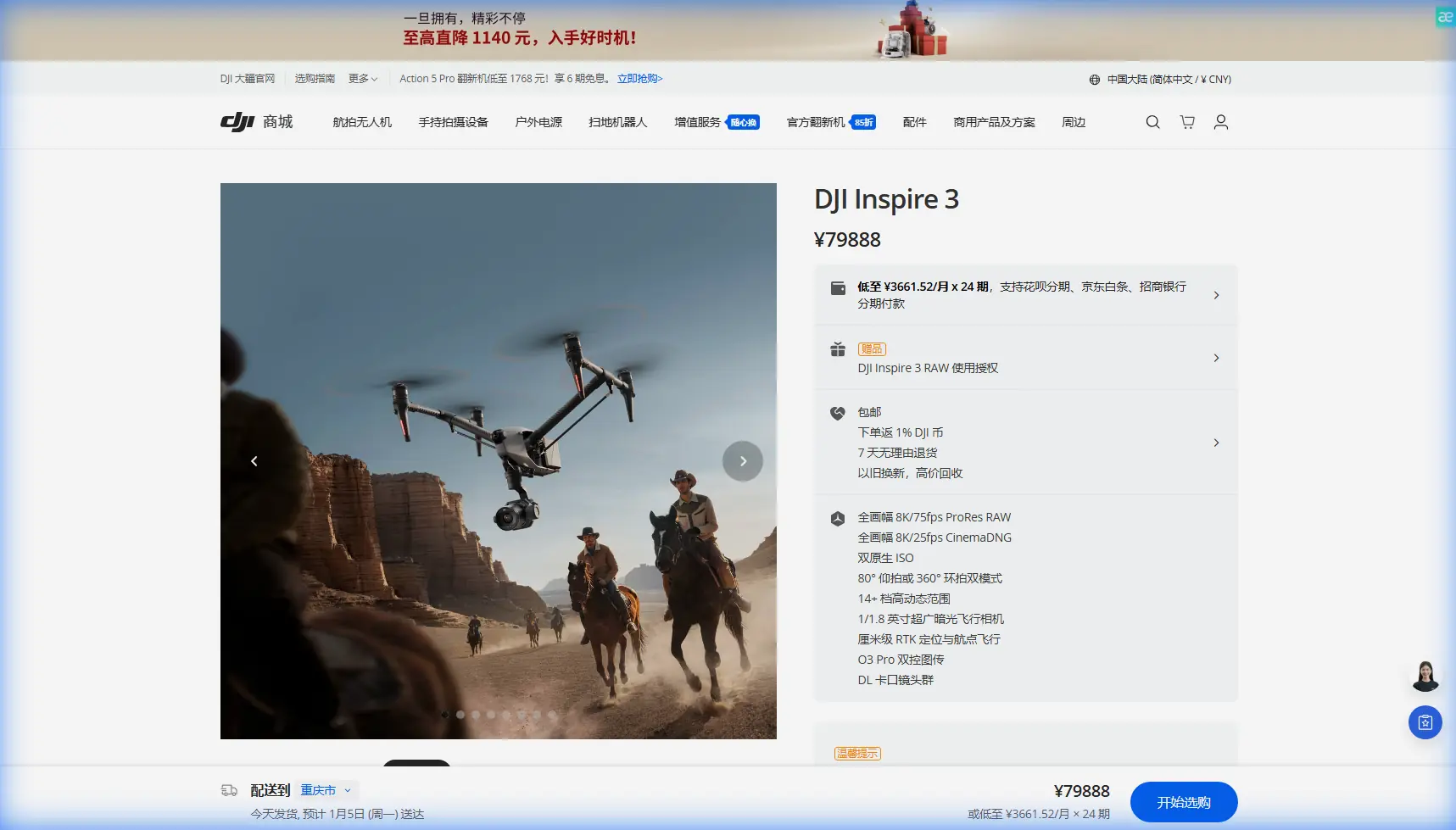
Inspire 3 Field Report: Surveying Mountain Fields Without Letting Small Failures Snowball
META: A field-tested Inspire 3 article for mountain field surveying, covering pre-flight cleaning, O3 transmission, hot-swap batteries, photogrammetry workflow, and why aircraft-grade system details matter in thin-air operations.
I’ve spent enough time around survey crews in upland farmland to know that mountain work punishes shortcuts. The terrain breaks line of sight. Dust collects where operators forget to look. Temperature shifts change battery behavior faster than many teams expect. And when a mapping mission depends on repeatable data capture rather than cinematic luck, the Inspire 3 has to be treated less like a flying camera and more like a precision aircraft.
That mindset is the difference between a clean photogrammetry set and a day wasted on inconsistent overlap, unstable links, or a preventive maintenance issue that should have been caught before takeoff.
For this field report, I want to focus on a mountain agriculture scenario: surveying stepped fields and uneven parcels with the Inspire 3. Not a brochure view of the aircraft. A practical one. The goal is to show how a disciplined workflow—from one overlooked cleaning step to transmission planning and energy management—keeps the aircraft reliable when geography starts working against you.
Start with the step many crews skip: cleaning before inspection
On paper, pre-flight sounds routine. In practice, mountain field surveys often start in a hurry. The vehicle is parked on a dirt shoulder. Cases are opened in windblown grit. A previous landing site may have been dry soil, cut grass, or loose gravel. Operators check props, battery seating, and mission settings, then move on.
That sequence is backward.
Before inspecting obstacle sensing windows, landing gear interfaces, camera mounts, and battery contacts, clean them. Not casually. Deliberately. A thin film of dust can mask the very issues you are trying to detect, especially around safety-critical surfaces and connectors. If you rely on visual sensing, precision landing references, or stable gimbal behavior in tight terrain, contamination is not cosmetic. It is operational.
This matters even more in mountain agriculture because field edges are rarely sterile environments. You may launch near fertilizer residue, pollen, irrigation spray, or fine silty soil. Each one behaves differently. Some cling to housings. Some migrate into seams. Some reduce visibility on sensors just enough to trigger inconsistent behavior rather than obvious failure. That is the worst category because crews start troubleshooting software when the root cause is physical.
A proper cleaning-first pre-flight has another benefit: it forces slower observation. You notice hairline cracks. You notice a prop with leading-edge wear. You notice debris around cooling paths. That pause pays for itself.
Why Inspire 3 fits difficult field geometry
The Inspire 3 makes sense in mountain survey work not because the environment becomes easy, but because the platform is built for controlled, repeatable flight under more demanding conditions than casual drone jobs. Uneven topography creates sharp elevation changes across short distances. One part of a field may sit on a bench while the next drops into a terrace or drainage cut. That complicates altitude management, image consistency, and radio performance.
This is where O3 transmission earns its place in the workflow. In mountain terrain, signal quality is never only about distance. It is about obstructions, reflections, and how often the aircraft disappears behind ridgelines, tree rows, retaining walls, or built farm structures. A robust transmission system helps maintain command confidence while the aircraft transitions across broken contours. If you are collecting imagery for photogrammetry, that steadiness matters because mapping quality depends on predictable aircraft behavior at every leg of the route, not just the dramatic moments.
The security side matters too. AES-256 is easy to dismiss as a line-item feature until you’re flying over commercial farmland tied to yield analysis, drainage planning, or land-use records. Survey data is business data. If clients are sharing field boundaries, irrigation assets, or operational layouts, secure transmission is not a luxury feature. It is basic professionalism.
Aircraft thinking beats gadget thinking
One reason I like grounding Inspire 3 practice in actual aircraft design logic is that it changes how crews make decisions in the field. The reference material behind this article comes from aircraft system design, not drone marketing, and that perspective is useful.
One source describes flexible pipe assemblies used to connect two relatively moving pipelines in aircraft hydraulic, fuel, lubrication, and air systems, with operating pressure in the 5 to 21 MPa range. That figure is not about the Inspire 3 directly, but the principle is highly relevant: moving systems need connectors and interfaces that tolerate vibration, motion, and repeated operational cycles without losing integrity.
For drone teams, the lesson is simple. Every interface on the aircraft deserves respect. Battery contacts. Gimbal locks. prop attachments. Landing gear mechanisms. Cable and port covers in ground systems. In mountain survey work, repeated setup and teardown on uneven ground creates exactly the kind of small-motion wear that gets ignored until it creates intermittent faults. Thinking in aircraft terms means you stop treating those points as accessories and start treating them as system boundaries.
That mental shift changes maintenance quality overnight.
Thin air is not abstract when you’re climbing to work
The second aircraft reference is about oxygen system design for crewed aircraft. Again, not a drone specification, but the altitude thresholds are revealing. The material states that for special-mission and training aircraft, oxygen supply is required when cabin altitude exceeds 3048 m (10,000 ft), with stricter needs at higher altitudes. It also notes design flow figures such as 13.5 L/min in NTPD conditions for standard breathing demand.
Why bring that into an Inspire 3 article?
Because mountain surveying teams often underestimate what altitude really changes. The aircraft does not need oxygen, but the environment still imposes thinner air, altered thermal behavior, and reduced margin in propulsion performance. Cooling, battery discharge, climb efficiency, and human decision-making all get less forgiving as elevation rises. That 3048 m threshold is a useful reminder that “high enough to matter” arrives earlier than many field crews think.
For operators surveying mountain fields, the operational significance is direct:
- Battery planning must be more conservative.
- Climb segments should be minimized in mission design where possible.
- Hovering to solve preventable setup mistakes becomes expensive.
- Crew fatigue and concentration drift become real contributors to flight risk.
If your launch point is already elevated and the work area rises beyond it, you should build the mission backward from energy reserves, not forward from ideal coverage.
Hot-swap batteries are a workflow advantage, not just a convenience
In photogrammetry, consistency is king. Light changes. Wind changes. Shadow angles shift across terraces. If a battery change forces a long reset cycle, you lose more than time. You lose continuity. That is why hot-swap batteries matter on the Inspire 3 in real survey operations.
On a mountain site, the value is even clearer. You can keep the aircraft active through quicker turnarounds while preserving mission momentum. Ground crews can replace packs with less disruption and continue collecting data before cloud cover or slope shadows change the scene too much.
Still, the feature only helps if battery discipline is solid. In upland agriculture, crews often use vehicles as mobile staging areas, and temperatures inside those vehicles can diverge sharply from ambient conditions. Packs need to be monitored as energy assets, not treated interchangeably. I recommend logging not just cycle count and charge state, but the environmental pattern of the day: morning chill, midday heat, gust front timing, and how long each battery spent exposed before launch. Those notes explain a surprising number of performance differences later.
Photogrammetry in mountain fields: build for repeatability
Mountain parcels create one of the hardest settings for agricultural photogrammetry because the ground is never behaving like a flat map. You need enough overlap to preserve reconstruction quality on terraces, retaining edges, irrigation channels, and embankments. You also need reliable GCP placement if the deliverable requires tighter geospatial confidence.
The Inspire 3 becomes useful here when paired with disciplined planning rather than broad assumptions. A few field-tested priorities:
1. Design altitude relative to terrain, not just launch point
If one side of the mission area rises significantly, a single fixed altitude can create inconsistent ground sample distance and overlap. Use terrain-aware planning when available, or split the site into elevation bands.
2. Place GCPs where the topography tells the truth
Flat access roads are convenient, but they do not always constrain the solution where the terrain changes hardest. Put GCPs near elevation transitions, terrace corners, and visually distinct edges that survive across lighting variation.
3. Watch for thermal signature distortions in mixed surfaces
Even if the primary mission is visible-spectrum mapping, temperature variation across stone walls, wet soil, plastic mulch, and crop cover can produce local air instability later in the day. That affects image sharpness more than many teams expect. If thermal signature analysis is part of the broader site workflow, those surface differences become even more informative.
4. Don’t let transmission confidence distort route choice
Pilots sometimes bias mapping lines toward visually comfortable flight paths rather than optimal coverage because the terrain feels constricting. With O3 transmission, you can plan more intelligently—but still within line-of-sight and local regulatory requirements unless you are specifically authorized for BVLOS operations. The key is to separate emotional comfort from communication performance.
BVLOS talk needs realism
The term BVLOS gets thrown around too loosely in drone discussions. In mountain field work, the temptation is obvious. One valley turn and the aircraft is functionally hidden. But operational ambition should not outrun authorization, detect-and-avoid requirements, or actual risk controls.
What the Inspire 3 does offer is a stronger foundation for structured operations in difficult terrain: reliable link performance, stable mission execution, and data security. That can support advanced workflows where regulation and site controls allow it. It does not erase the need for proper approvals or airspace discipline.
For most readers surveying fields in mountain environments, the smarter immediate gain is not chasing BVLOS labels. It is improving route segmentation, observer positioning, and takeoff location selection so the mission stays efficient and compliant.
One field habit that reduces avoidable incidents
Here’s a practical sequence I ask teams to adopt before every mountain survey deployment with the Inspire 3:
- Uncase the aircraft away from spinning dust and vehicle exhaust.
- Clean sensing windows, camera surfaces, landing interfaces, and battery contact areas.
- Inspect props and attachment points only after cleaning.
- Confirm battery seating and record pack identity.
- Verify mission profile against terrain elevation, not just map shape.
- Test control and video link quality before committing to the full route.
- Rehearse lost-link and return logic with the actual topography in mind.
That second step changes the rest of the list. You inspect better. You trust your observations more. And you avoid the strange half-faults that consume time on site.
If your crew is building or refining an Inspire 3 mountain survey workflow, you can send your mission profile questions here: message Dr. Lisa Wang’s field desk.
What separates good Inspire 3 field work from expensive rework
The best Inspire 3 operators in agricultural survey do not sound dramatic on site. They look methodical. They respect the aircraft’s systems. They understand that rough terrain turns tiny oversights into larger problems. And they know that data quality starts long before the first image is captured.
That is why the aircraft-design references behind this discussion are more useful than they may appear. A flexible connector rated for 5–21 MPa exists because motion and pressure punish weak assumptions. Oxygen design thresholds like 3048 m exist because altitude changes what bodies and machines can tolerate. Translate those ideas into drone operations and you get a better field standard: respect interfaces, plan for altitude, reduce contamination, protect continuity, and never confuse successful takeoff with successful surveying.
For mountain fields, the Inspire 3 is not just a platform for capturing images. It is a system that rewards crews who think like system operators.
Ready for your own Inspire 3? Contact our team for expert consultation.