
Inspire 3 in Dark Timber: A Field Report on Forest
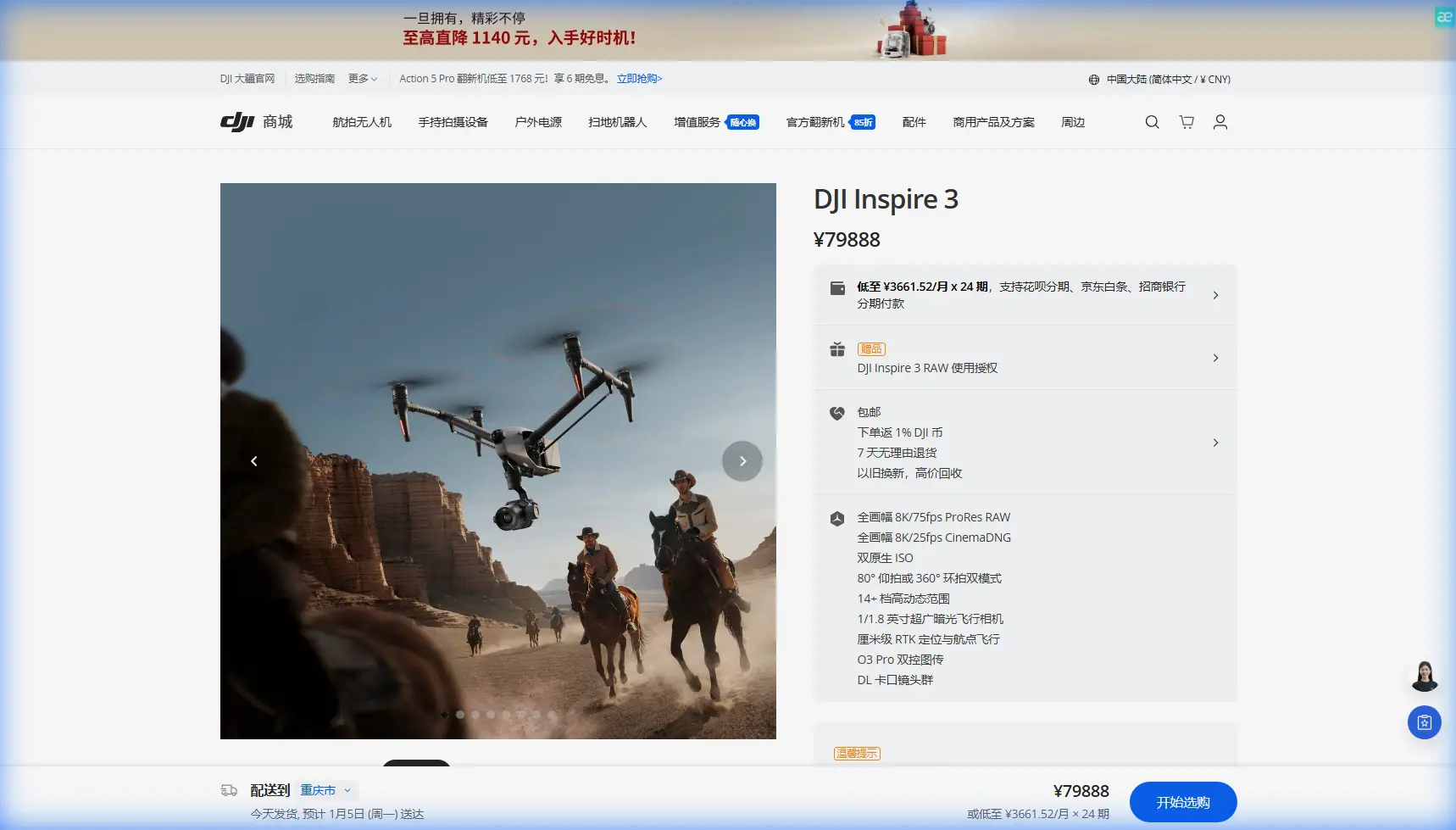
Inspire 3 in Dark Timber: A Field Report on Forest Surveying Before Sunrise
META: Expert field report on using DJI Inspire 3 for low-light forest surveying, including pre-flight cleaning, RTK workflow, battery strategy, transmission reliability, and practical photogrammetry considerations.
I’ve spent enough mornings under a forest canopy to know that low light changes everything. It changes how you judge obstacle clearance, how quickly moisture builds on lenses and sensors, how your batteries behave, and how much trust you place in your aircraft’s positioning and video link. With the Inspire 3, those variables become more manageable, but only if you approach the mission like a surveyor rather than a casual pilot.
This is not a general overview of the aircraft. It is a field-focused look at what actually matters when you’re using an Inspire 3 to survey forests in marginal light, especially during that narrow window before sunrise or just after sunset when contrast is low, shadows are dense, and the terrain can trick both humans and machines.
Why the Inspire 3 makes sense in the woods
Forest work asks a lot from a drone. You need stable flight near irregular vertical structure, reliable transmission in areas where trunks and terrain absorb signal, and image quality that still holds together when the scene is dark and green and visually repetitive. The Inspire 3 stands out here because it combines a professional imaging platform with precise positioning features that reduce uncertainty when the environment is doing its best to introduce it.
Two details matter immediately for this kind of mission.
First, the aircraft supports O3 Pro transmission, which is more than a spec-sheet talking point in a forest. Under canopy edges and in rolling terrain, signal integrity can degrade faster than many pilots expect. A stronger, more resilient transmission system helps maintain command confidence when the aircraft briefly slips behind branches or contour lines. In practical terms, that means fewer moments where the pilot hesitates because the downlink stutters at exactly the wrong time.
Second, the Inspire 3 uses hot-swap batteries. For long survey sessions, especially when you’re operating in cool dawn conditions, this changes your field rhythm. You can keep the aircraft powered during battery replacement, preserving system continuity and reducing the stop-start friction that often breaks concentration during repeated collection runs. In a forest mapping workflow, that continuity has operational value. It shortens turnaround between flight legs and helps maintain mission pace before lighting conditions shift.
The pre-flight step many crews skip
The most underrated safety procedure in low-light forest work is not glamorous. It is cleaning.
Before every early-morning launch, I clean the aircraft’s vision sensors, FPV camera cover, primary payload glass, and any downward sensing surfaces with the same discipline I’d use on a survey prism. Mist, pollen, dust, and tree residue accumulate quickly in wooded areas. In low light, a thin film on a sensor can do more damage than people realize. It affects contrast, can reduce the confidence of obstacle-sensing inputs, and degrades the pilot’s visual interpretation of the live feed when subtle branch detail is already hard to see.
The Inspire 3’s safety systems are only as useful as the quality of the information they receive. If the forward or downward sensing surfaces are smeared, you are effectively asking the aircraft to make decisions with impaired eyesight. That becomes especially relevant at dawn, when diffuse light and dark bark reduce visual separation between obstacles and background.
My routine is simple:
- Inspect all sensor windows with a headlamp at an angle, not straight on.
- Remove moisture first, then particulate matter.
- Check the payload lens last, after the aircraft body is clean, to avoid recontamination.
- Confirm the landing gear and transformation mechanism move freely and show no debris from the previous site.
This takes minutes. It prevents avoidable errors.
Low light changes the survey plan before takeoff
A forest survey in weak light is not just a normal mapping job with a darker histogram. Your mission design needs to reflect what the canopy and understory will do to your imagery.
Photogrammetry in forests is always constrained by occlusion. In low light, it is also constrained by texture quality. If shutter speeds drop too far, branch detail softens and tie points become less reliable. You can still produce useful outputs, but you need to think carefully about flight height, overlap, and the exact deliverable you are chasing.
If the goal is broad canopy assessment or corridor context around timber compartments, the Inspire 3’s imaging capability gives you more room to preserve detail than lighter systems. If the goal is terrain extraction beneath dense leaf cover, no camera drone becomes a magic solution; you are now dealing with a data problem, not a flying problem. That distinction matters because it keeps crews from promising deliverables the physics won’t support.
For low-light forest runs, I usually tighten overlap beyond what an open-field job would require. Repetitive canopy patterns are unforgiving. More overlap gives your photogrammetry software a better chance of finding robust matches where leaves, branches, and shadow gradients all look deceptively similar.
And yes, I still rely on GCPs when the project demands defensible outputs. RTK and high-end onboard positioning are excellent, but forest-edge geometry, uneven light, and partial canopy can all introduce subtle inconsistencies. Ground control remains the discipline check. When clients care about measurement confidence rather than just visual output, GCPs move the conversation from “looks accurate” to “is verifiable.”
RTK matters more than pilots admit
One of the strongest arguments for the Inspire 3 in a survey-adjacent role is precise positioning support. In wooded terrain, where visual references can be weak and repeated flight lines need consistency, RTK helps tighten the entire workflow.
The operational significance is not just final map alignment. It affects the flight itself. Better positional confidence means smoother repeatability on grid legs, more dependable waypoint behavior, and less drift-induced variation when flying in low-contrast conditions. If you are collecting data over multiple mornings because weather and access windows are limited, repeatability becomes a major advantage.
That said, RTK does not replace field judgment. Canopy edges can still interfere with reception, and terrain can complicate base or network reliability. I treat RTK as a precision layer, not a reason to become less careful about takeoff location, sky visibility, or control placement.
O3 transmission under canopy edges
The forest is a cruel place to test transmission systems because it combines obstruction, moisture, and multipath effects in one setting. This is where O3 transmission earns its keep.
A strong link matters for more than convenience. In low-light operations, the live image is often your primary source of short-range situational awareness, especially when the aircraft is flying along a tree line or over uneven ridges. If the feed breaks up as the aircraft crosses a darker stand of trees, your workload spikes immediately. You stop thinking like a survey pilot and start thinking like a recovery pilot.
I’ve found that careful antenna orientation, conservative route planning, and maintaining realistic line-of-sight expectations still matter just as much as the transmission system itself. No protocol turns a dense forest into open sky. But a higher-grade link gives you margin, and margin is exactly what you need when branch contrast is poor and the ground is not easy to read.
For teams planning remote operations or discussing communications workflows, I usually suggest handling those details before the field day begins through direct project coordination on WhatsApp, especially when site terrain and canopy density are likely to affect signal planning.
Security belongs in the conversation too
Survey operators sometimes treat cybersecurity as an office issue, separate from field performance. That is a mistake. The Inspire 3’s AES-256 support matters because environmental and land-management surveys often involve sensitive location data, proprietary research zones, or pre-development site information. Forest work can include conservation boundaries, utility corridors, private timber assets, and ecological monitoring areas that should not be casually exposed.
The operational significance is straightforward: secure transmission and handling reduce risk around image and telemetry flows when crews are working in remote areas with multiple devices, mobile connections, and contractor teams involved. If your workflow includes external monitors, network-assisted services, or rapid handoff to processing teams, encryption and disciplined data handling should be part of the mission plan, not an afterthought.
Battery strategy in cold dawn air
Early forest sorties often begin in cooler air, and cooler air creates a false sense of comfort. The aircraft may perform well, but your available battery confidence can narrow quickly if packs were transported or stored improperly before launch.
The Inspire 3’s hot-swap battery system is not just about convenience; it supports tempo. In low-light windows, useful illumination can improve or deteriorate rapidly depending on canopy thickness and cloud cover. If you have to power down fully between packs, reinitialize, wait on checks, and rebuild momentum, you lose precious conditions. With hot-swapping, you can preserve readiness and keep the aircraft in an operational state while rotating energy sources efficiently.
I still recommend a strict routine:
- Keep packs temperature-managed before use.
- Record cycle consistency across paired batteries.
- Avoid stretching “one more pass” at the end of a mapping leg when the aircraft is already distant and the terrain below offers few clean emergency options.
Forests are poor places to negotiate with battery margins.
Thermal signature: useful, but don’t force it
The phrase thermal signature gets thrown around too casually in forestry circles. Thermal can be valuable in civilian work such as drainage tracing, habitat studies, moisture anomaly detection, or post-disturbance assessment, but the Inspire 3 discussion should stay realistic. If your workflow includes thermal analysis, the key question is not whether heat contrast exists; it is whether that contrast serves the survey objective.
In low light, operators sometimes assume thermal will automatically solve visibility problems. It will not solve photogrammetry, and it will not give you geometric detail equivalent to high-resolution visual mapping. What it can do is complement your mission planning by highlighting differences that visual imagery may miss during dawn operations. Used properly, it adds another layer of environmental interpretation. Used carelessly, it becomes an expensive distraction.
BVLOS talk needs discipline
Because forests often cover large and inaccessible tracts, the term BVLOS inevitably enters the conversation. The aircraft’s connectivity, positioning, and battery workflow can make extended operations more practical, but that does not change the need for regulatory compliance, documented procedures, and risk controls. In civilian forestry, long linear routes and broad blocks are attractive candidates for expanded operating concepts, yet dense vegetation and terrain can increase communication and contingency complexity.
So yes, the Inspire 3 has qualities that support serious operational planning. No, that should never be confused with casual beyond-visual-line-of-sight flying because the aircraft feels capable. Capability is not authorization.
What the final data quality really depends on
People often ask whether the Inspire 3 is “good for forest mapping.” That is too broad to be useful. The better question is: under low-light forest conditions, can it help you collect reliable data for the specific outcome you need?
If your mission is edge-of-canopy documentation, road and track mapping, regeneration monitoring, stand boundary review, or visual asset context in difficult light, the answer can be yes. If your mission requires consistent geometry, then your success depends on overlap discipline, GCP strategy, sensible shutter and speed settings, and whether you resisted the temptation to launch with dirty sensors and optimistic assumptions.
That last part sounds trivial, but it is where many weak datasets begin.
The Inspire 3 rewards crews who run clean field processes. Wipe the sensors. Validate the control. Respect the light. Use O3 transmission as margin, not an excuse. Treat AES-256 as part of project professionalism. Exploit hot-swap batteries to preserve mission continuity, not to rush sloppy turnarounds. And be honest about what photogrammetry can and cannot do beneath a dark canopy.
That is how you get useful work out of the aircraft in the woods. Not from spec-sheet admiration. From discipline at 5:30 in the morning, when your gloves are damp, the landing pad is covered in needles, and the difference between a strong dataset and a compromised one is usually decided before takeoff.
Ready for your own Inspire 3? Contact our team for expert consultation.