
Surveying Urban Forests With Inspire 3 When Conditions Shift
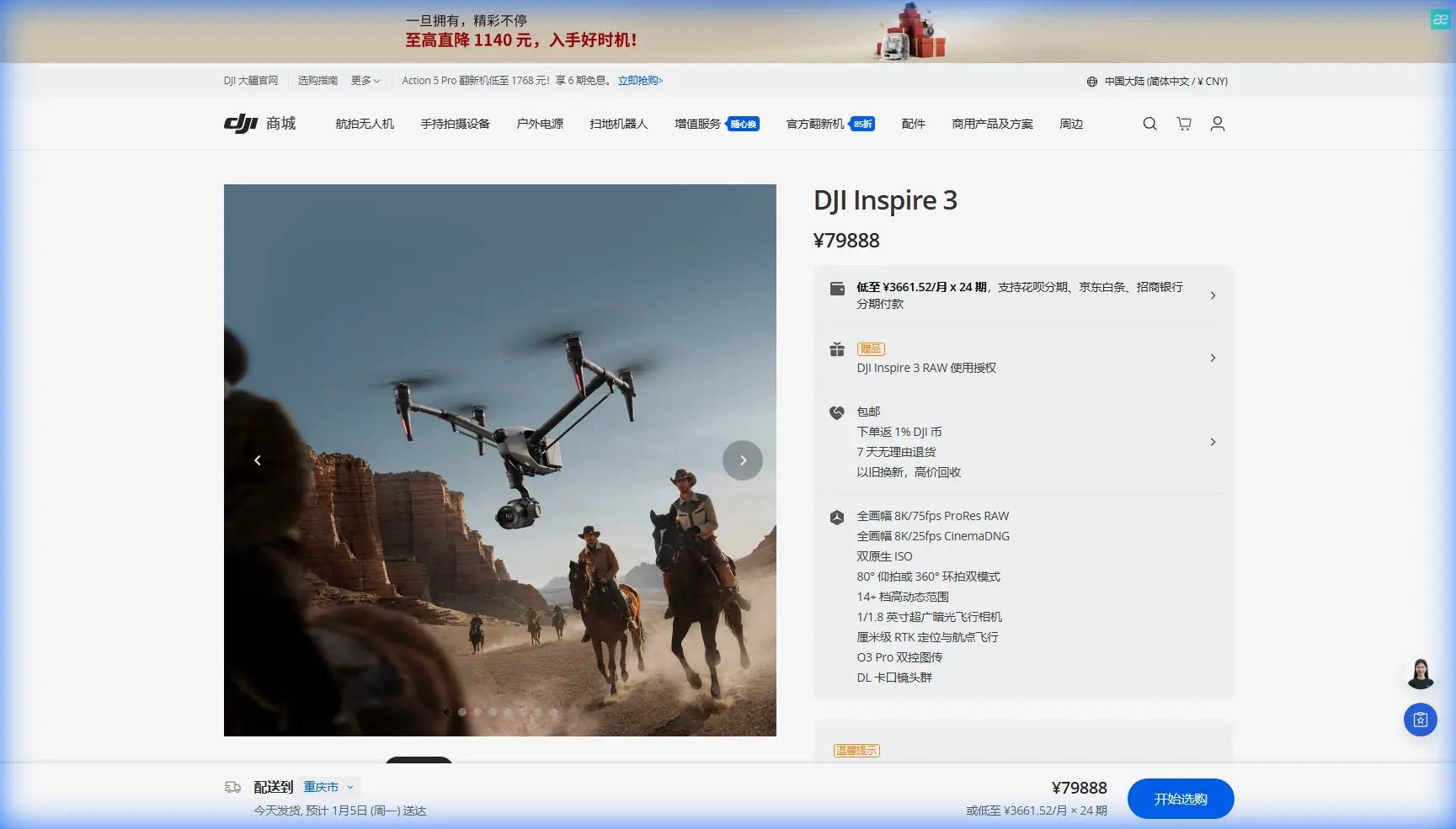
Surveying Urban Forests With Inspire 3 When Conditions Shift Mid-Flight
META: A field-focused Inspire 3 guide for urban forest surveying, covering flight stability, weather changes, transmission reliability, thermal workflow thinking, and why control tuning and material engineering matter in real operations.
Urban forest surveying sounds straightforward until you try to do it between buildings, over mixed canopy, with wind tunneling down streets and light changing every few minutes.
That is where the Inspire 3 becomes interesting—not because it is simply a high-end drone, but because its value shows up when a mapping job stops being clean and predictable.
I have seen this most clearly in city-edge forestry work: parks bordered by concrete, riparian corridors crossing roads, mature tree stands tucked between commercial blocks, and sites where you need photogrammetry-grade consistency without pretending the environment is static. The challenge is not only collecting imagery. It is preserving data quality while the aircraft deals with turbulence, signal complexity, and evolving weather.
For that kind of mission, the Inspire 3 should be understood as a systems platform. Airframe behavior, gimbal stability, transmission integrity, battery workflow, and pilot control logic all shape whether your final orthomosaic or canopy assessment is usable.
The Real Problem in Urban Forest Surveying
Urban forest work introduces a strange mix of open and obstructed conditions. You may launch from a sports field, climb over tree cover, then pass close enough to structures that airflow changes abruptly. Canopy shadows move fast. Reflections from glass and water can complicate visual interpretation. If you are collecting thermal signature data near dawn or late afternoon, environmental drift can start affecting your comparability from one flight line to the next.
Then the weather turns.
On one representative scenario, conditions began with stable air and thin cloud. Mid-flight, wind picked up and shifted direction after the aircraft crossed from open green space toward a denser block of buildings. That kind of change matters. Cross-track consistency starts to suffer first. Yaw corrections become more frequent. Small attitude changes ripple into overlap quality, especially if you are flying repeatable lanes for photogrammetry and planning to tie outputs to GCP-marked checkpoints later.
This is where people often talk only about sensors. That is too narrow. In practice, the aircraft’s underlying control behavior has as much influence on survey reliability as the camera package.
Why Flight Control Details Still Matter on a Premium Platform
Even though Inspire 3 operators are not manually tuning every low-level parameter in the field the way some ArduCopter users might, the reference material offers a useful lens into what stable survey flight really depends on.
One example is tilt stabilization relative to Earth, represented in the source data as MNT_STAB_TILT, with a binary enabled or disabled state. Operationally, that detail highlights something survey crews feel immediately: camera orientation must remain disciplined against aircraft disturbance, not merely against pilot input. In an urban forest workflow, that matters because the useful image is not the one that looked steady on screen; it is the one whose geometry remains consistent enough for reconstruction and measurement.
Another example is motor response shaping. The ArduCopter reference shows MOT_TCRV_ENABLE = 1, meaning linear motor control is enabled, alongside MOT_TCRV_MAXPCT = 93 and MOT_TCRV_MIDPCT = 52. Those numbers are not Inspire 3 settings, but they point to a core operational truth: thrust delivery needs to be predictable across the power band. When wind rises mid-flight, predictable thrust response helps the aircraft make finer corrections instead of oscillating through them. For surveying forests in urban zones, that translates into cleaner track holding, steadier speed, and less attitude noise in the image set.
The same source mentions RC_SPEED at 490 Hz for ESC refresh rate. Again, not a direct Inspire 3 field setting, but highly relevant in principle. A high update rate reflects a control system designed to respond quickly to disturbances. In a mission where the drone leaves a sheltered launch point and enters gusty air over uneven canopy, fast and coherent motor updates are a practical advantage, not a technical footnote.
This is one reason experienced operators treat “smooth flight” as a data-quality issue. The aircraft is not just carrying the sensor. It is part of the sensor system.
Mid-Flight Weather Change: What the Inspire 3 Needs to Handle
Let’s return to the weather shift.
As the wind increased, the first priority was not speed. It was consistency. The Inspire 3 had to preserve enough platform stability to keep the mapping run useful instead of forcing an abort after the first pass. This is where O3 transmission reliability becomes more than a line item on a spec sheet. In mixed urban environments, transmission resilience helps maintain command confidence when the aircraft transitions from open visual space into cluttered radio conditions near structures and canopy edges.
For survey teams operating under controlled workflows, secure communications also matter. AES-256 protection is not just a compliance-friendly phrase. If you are documenting municipally managed land, utility corridors through wooded areas, or commercial developments with retained green space, protecting data links reduces one more layer of operational risk.
Still, the more interesting part is how the aircraft’s design philosophy supports continuity under stress. Stable hover performance, quick response to gusts, and confidence during course corrections allow the pilot to decide whether the mission should continue, pause, or re-route without the drone becoming the weakest link.
That decision process is especially important if you are planning future BVLOS-style workflows where regulatory approval, procedural discipline, and system reliability all have to align. Even in VLOS operations today, crews that fly as if every action must be audit-defensible usually produce better survey data.
What the Material Science Reference Tells Us About Aircraft Trust
The first source looks, at first glance, far removed from drone operations: a handbook section on titanium alloy behavior, specifically solution-aged Ti-1023 alloy forgings. But this reference actually adds something valuable to the Inspire 3 conversation.
The extract describes fatigue crack growth testing using CT specimens in air, with sample dimensions including 80 mm width and 20 mm thickness, and loading conditions that include R = 0.1 and f = 5 Hz. It also references fatigue crack growth curves, the classic da/dN–ΔK relationship. To a survey pilot, that may sound abstract. It is not.
Aircraft that work repeatedly in dynamic environments live and die by structural confidence. Gust loading, acceleration during climbout, braking at the end of a line, repeated transport, setup, and thermal cycling all accumulate. The operational significance of fatigue data is simple: serious airframes come from an engineering culture that studies how materials behave under repeated stress, not just how they look in a brochure.
For Inspire 3 users, that matters in urban forest surveying because these jobs often demand repetition. You may fly the same corridor monthly to track canopy health, storm damage, invasive spread, or drainage changes beneath tree cover. Repeat missions expose equipment to repeat load cycles. Material engineering quality influences long-term alignment, vibration behavior, and trust in the platform after many deployments.
So while the source does not describe Inspire 3 directly, it reinforces a broader truth: robust aerial surveying depends on more than software and optics. It depends on airframe components designed with fatigue resistance and structural reliability in mind.
A Better Workflow for Urban Forest Jobs
The practical workflow for Inspire 3 in this environment should be built around change tolerance.
Start with mission planning that assumes weather may move during the sortie. Set your photogrammetry lines and overlap targets conservatively enough that a moderate increase in wind does not immediately invalidate the block. If the site includes thermal signature collection, separate that objective from pure orthomosaic capture when possible. Thermal work is less forgiving when ambient conditions drift.
Use GCPs where the project demands defensible positional integrity, especially in mixed canopy and built environments where visual reconstruction can become uneven. In urban forestry, GCPs are not just about map accuracy. They also help you verify whether changing light, drift corrections, or perspective inconsistencies compromised the block.
Hot-swap batteries are another quiet advantage here. If the weather stabilizes after a partial mission or you need to pause and relaunch to preserve data quality, fast battery workflow reduces downtime and helps keep lighting conditions closer across sorties. That can make the difference between a seamless dataset and one that requires heavy correction.
How Inspire 3 Fits Thermal and Visual Survey Strategy
Many urban forest assessments now combine visual photogrammetry with thermal interpretation, even if thermal is used selectively rather than continuously. The reason is straightforward: visible imagery shows structure, crown shape, and context; thermal signature analysis can reveal moisture stress patterns, irrigation anomalies in managed landscapes, or surface differences tied to canopy density and ground exposure.
The catch is that thermal data is highly sensitive to environmental change. If wind rises mid-flight, leaf movement increases and surface cooling patterns can shift. That means your aircraft must hold stable enough to avoid compounding environmental noise with platform noise.
This is why the control-system details from the reference material are so useful conceptually. Values like OF_PIT_P 2.5 and OF_RLL_P 2.5 in optical-flow-related pitch and roll control remind us that low-altitude positional behavior depends on disciplined correction loops. In practical terms, a survey aircraft working over fragmented urban forest needs to remain composed near variable textures—grass, canopy, paths, rooftops, bare soil—without wandering or over-correcting.
Even if Inspire 3 users are not tuning optical-flow PID fields by hand, the mission benefit is the same: controlled motion preserves interpretability.
When to Continue and When to Stop
A professional urban forest survey is not judged by whether the aircraft stayed airborne. It is judged by whether the dataset remained defensible.
If weather changes mid-flight, ask three questions:
- Is line integrity still acceptable for the intended photogrammetry output?
- Is attitude correction remaining smooth, or are gusts causing visible instability that will degrade overlap and blur?
- Will continuing create inconsistent lighting or thermal conditions that make the final data less comparable than a segmented reflight?
The Inspire 3 earns its place when it gives you room to make those decisions calmly. Good transmission through O3, secure data handling with AES-256, stable gimbal behavior, and efficient battery swaps all contribute to that decision space.
That is the difference between a drone that merely survives a changing mission and one that supports professional survey judgment.
The Expert Takeaway
For urban forest surveying, Inspire 3 should not be framed as “a camera in the sky.” It is a coordinated flight, imaging, and reliability platform for environments where conditions do not stay fixed long enough to reward simplistic planning.
The reference materials reinforce two lessons that matter in the field. First, flight stability is rooted in control behavior—tilt stabilization, motor linearity, refresh responsiveness, and disciplined correction logic all affect data quality. Second, trustworthy aerial work depends on engineering culture at the structural level, the kind reflected in fatigue testing of materials such as solution-aged Ti-1023 with controlled specimen geometry and cyclic loading analysis.
Those details may live far below the level of a routine mission checklist. But when the wind shifts halfway through a forest survey over a dense urban edge, that hidden layer becomes visible in your results.
If your team is designing a workflow for canopy mapping, thermal signature capture, repeat corridor documentation, or GCP-backed photogrammetry using Inspire 3, it helps to speak with someone who understands both the aircraft and the survey logic behind it. For field workflow questions, mission planning support, or platform fit, you can reach a specialist here: https://wa.me/85255379740
The best Inspire 3 operations are not the ones that look dramatic on screen. They are the ones that bring back stable, interpretable data after the environment stops cooperating.
Ready for your own Inspire 3? Contact our team for expert consultation.