
Inspire 3 for High-Altitude Highway Survey
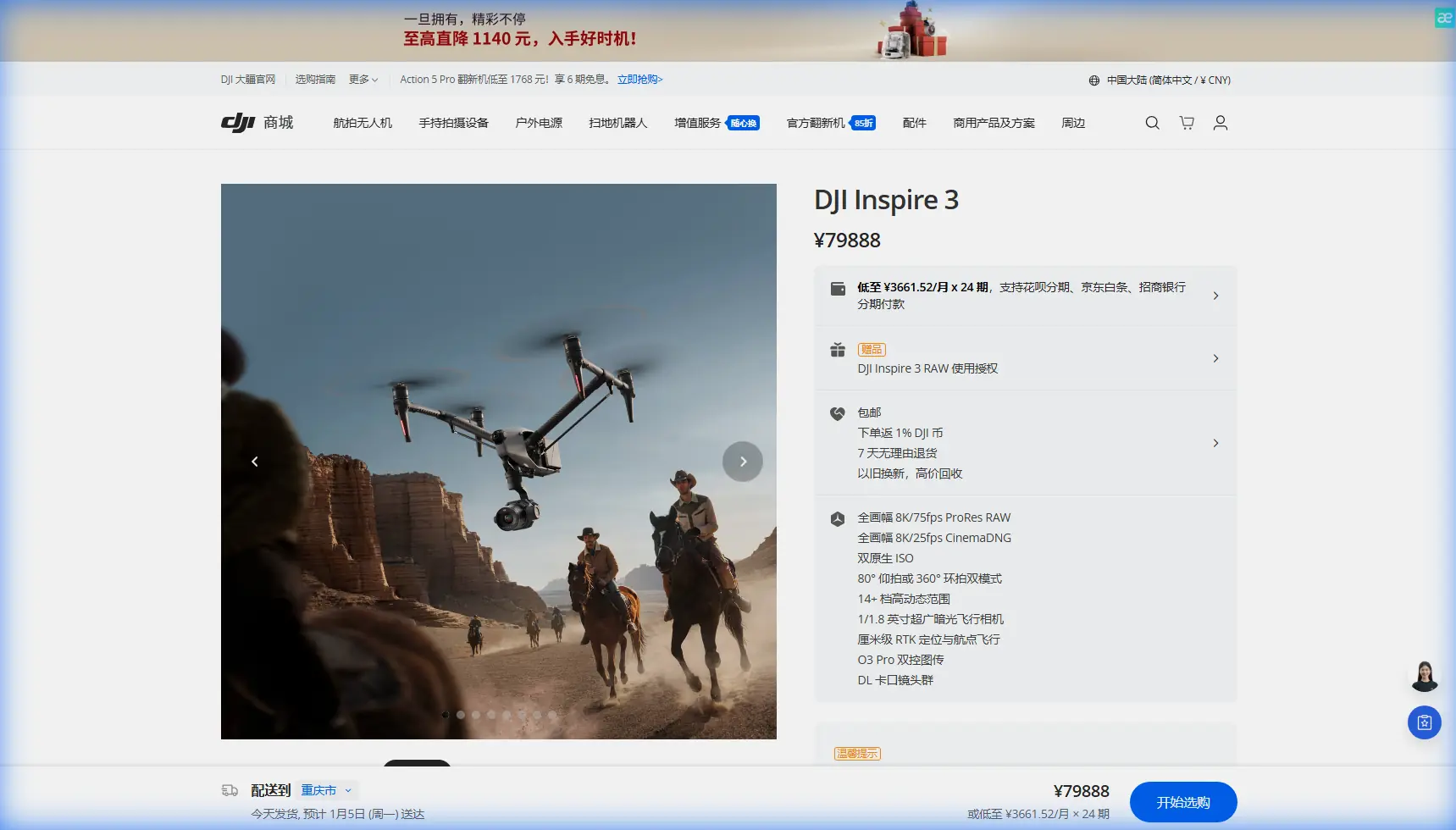
Inspire 3 for High-Altitude Highway Survey: A Field Report on Dust, Data Integrity, and Pre-Flight Discipline
META: Expert field report on using Inspire 3 for high-altitude highway surveying, with practical insight on pre-flight cleaning, dust management, transmission reliability, photogrammetry workflow, and operational safety.
By James Mitchell
High-altitude highway surveying looks clean on a screen. Long alignments. Crisp ortho layers. Elegant corridor models. The field reality is rougher.
You launch near cut slopes, gravel shoulders, exposed aggregate, and truck traffic that keeps lifting abrasive dust into the air. Mornings can be cold, winds can shift fast, and a survey day that starts with straightforward photogrammetry can turn into a contamination problem before the second battery cycle. That is why my strongest recommendation for Inspire 3 crews working highway jobs at elevation is not about camera settings first. It is about a pre-flight cleaning step and the discipline behind it.
This matters more than many teams admit.
The reference material behind this discussion comes from two very different technical domains: a helicopter design text describing sand removal and bypass thinking in air management, and a radio-control manual that explains point-by-point curve setup with five preset positions at 0%, 25%, 50%, 75%, and 100%. On paper, neither document mentions Inspire 3 directly. In practice, both contain lessons that are surprisingly useful when you are flying a high-value mapping platform in dusty mountain road environments.
The pre-flight cleaning step most highway crews rush
Before an Inspire 3 leaves the case at a high-altitude road site, I want the aircraft and payload area checked with the same seriousness a surveyor gives to GCP placement.
Not a casual wipe. A methodical inspection.
Dust in highway corridors is deceptive. Fine particles cling to vent paths, settle around mating surfaces, gather near battery interfaces, and contaminate gimbal and sensor-adjacent areas. Even if the aircraft appears visually acceptable, contamination can affect cooling performance, connector confidence, and long mission consistency. On a platform built for precise aerial work, those small degradations show up later as the things crews hate most: inconsistent behavior between sorties, unexplained thermal load, and avoidable downtime.
The helicopter design reference describes an air-sand separation concept where dust is not merely blocked but actively guided out through a deliberate pathway. It stresses that the arrangement of the separation tubes and the design of the sand discharge channel must be smooth and rational so the particles leave along the most effective route. That principle translates well to field handling of the Inspire 3. You do not “clean” a survey aircraft by smearing dust around its surfaces. You remove contamination by working with airflow paths, gravity, and access order.
In simple terms: clean from the areas that feed sensitive zones outward, not randomly.
On highway projects, my sequence is usually:
- inspect landing gear and lower surfaces first
- check battery contacts and seating areas
- examine vent regions and air inlets visually
- inspect the gimbal mount and lens exterior
- verify no loose particulate remains around seams or recesses
- confirm the launch pad or takeoff surface is not about to re-contaminate the aircraft
That final point is where experienced crews separate themselves. A perfect pre-flight clean is wasted if you launch from loose shoulder gravel or a dust-loaded turnout. Use a clean staging surface. If the site is bad, move it. Survey accuracy starts before the motors spin.
What helicopter sand-management teaches Inspire 3 operators
The most useful idea in the source material is not the hardware itself. It is the systems mindset.
The helicopter document explains that some protective intake systems may use hundreds or even thousands of vortex tubes, and not all of them work equally well because each one experiences a different local environment depending on distance from the engine inlet or exhaust influence. Operationally, that means separation efficiency varies across the system.
Why does that matter to an Inspire 3 crew surveying highways in thin mountain air?
Because the same environmental unevenness exists around your aircraft. Dust loading is not uniform. Cooling is not uniform. Crosswind exposure is not uniform. The side facing road traffic may collect more fine debris than the sheltered side. A takeoff beside a blasted rock face behaves differently from a takeoff on compacted soil. Even within one mission day, the aircraft may experience several distinct contamination environments.
That is why a single yes-or-no cleanliness check is weak. The aircraft needs a zone-based inspection habit.
The helicopter reference also mentions a bypass mechanism designed to open when the sand-protection tubes become largely blocked, allowing air to enter directly. The operational significance is straightforward: when the protective path becomes restrictive, the system needs a fallback to preserve core airflow.
For Inspire 3 operators, the lesson is not to invent modifications. It is to think in terms of contingency. If the environment becomes restrictive to safe or stable flight operations, you do not push through because the route plan looks good on the tablet. You switch modes operationally. That could mean reducing sortie length, increasing cleaning intervals, using more conservative flight profiles, changing launch location, or postponing flights until dust generation falls.
High-altitude highway work punishes rigid crews. Flexible crews keep their data quality.
Curve logic belongs in flight planning too
The second source, the Futaba manual, looks like a world away from a professional cinema and survey aircraft. But one detail is worth stealing conceptually: the use of a controllable curve with five default points—0%, 25%, 50%, 75%, and 100%—and the ability to adjust those points deliberately rather than relying on a flat behavior.
That is excellent operational thinking for Inspire 3 survey planning.
A highway corridor at altitude should not be flown as if every section deserves the same airspeed, overlap strategy, or altitude confidence margin. Your mission behavior should be shaped like a curve, not a straight line. The five-point logic is a practical mental model:
- 0%: launch, hover assessment, systems confidence
- 25%: low-risk climb-out and wind check
- 50%: primary mapping speed in stable corridor sections
- 75%: adjusted profile for exposed ridges, traffic-generated dust, or thermal turbulence
- 100%: full mission pace only where site conditions actually support it
The significance is operational, not theoretical. Instead of asking, “Can the Inspire 3 fly this highway today?” ask, “Which parts of today’s mission deserve different levels of aggression?” That one shift prevents bad decisions.
For photogrammetry, this is especially useful. Corridor mapping often tempts crews to maintain a steady pace from one end to the other. But if a section near an embankment is producing visible particulate or local gusts, your overlap discipline can suffer. When overlap suffers, your reconstruction weakens. Then your GCPs become a rescue tool rather than a quality control anchor.
I would rather see a crew intentionally step down speed or rerun a segment than come back with a beautiful-looking but structurally thin dataset.
Inspire 3 strengths that matter on highway survey jobs
The Inspire 3 is not a generic drone choice for this kind of work. It earns its place when the mission combines long linear coverage, repeatable image quality, and a need for resilient field operations.
O3 transmission matters in highway environments because corridor missions naturally stretch spatial awareness. Even where local regulations and permissions govern the actual flight envelope, dependable downlink performance helps the pilot and payload operator maintain confident situational understanding around terrain changes, roadside obstacles, and moving work vehicles. In mountain roads, the geometry is rarely as simple as the map suggests.
AES-256 transmission security also matters more than people think. Survey data from transport infrastructure projects may include sensitive alignment details, temporary worksite conditions, and geospatial records tied to live construction or maintenance operations. Encryption is not a marketing line in that context. It is part of responsible project handling.
Hot-swap batteries are another practical advantage on high-altitude jobs. When crews are dealing with cold mornings and narrow weather windows, minimizing downtime between sorties is a real productivity gain. But hot-swap convenience should never erase the earlier point: battery areas must stay clean. A fast turnaround is only useful if contact surfaces remain trustworthy. If dust has migrated into the battery seating area, stop and fix it before the next lift.
Thermal signature work can also play a role on some highway projects, especially when teams are assessing surface anomalies, drainage behavior, or adjacent infrastructure conditions under controlled civilian inspection workflows. But thermal interpretation is only as good as platform stability, environmental control, and mission repeatability. If the aircraft is carrying contamination from repeated dusty takeoffs, confidence in subtle readings can degrade for reasons the software will never explain to you.
High altitude changes the tone of every decision
At elevation, there is less margin for laziness.
Air density penalties show up in climb response, cooling behavior, and general power management. Add dust and you create a stack of minor inefficiencies that can become a major operational problem over several sorties. None of these issues needs to be catastrophic to damage the mission. More often, they chip away at consistency.
That is why I treat pre-flight cleanliness as part of airworthiness culture, not housekeeping.
A strong Inspire 3 highway survey workflow at altitude usually includes:
- a clean deployment surface
- a documented aircraft inspection before first launch
- a shortened first sortie used to verify behavior in local conditions
- battery rotation with contamination checks at every swap
- corridor segmentation based on terrain and dust exposure
- immediate image spot checks for blur, coverage gaps, and exposure consistency
- GCP verification before the crew leaves each section
BVLOS planning, where permitted under the proper regulatory framework and operational approvals, raises the stakes even further. Once the mission structure extends beyond simple nearby visual operations, you need confidence that the aircraft’s condition is not being compromised by something as preventable as dust ingestion around critical airflow or connector areas. Regulatory approval does not cancel physics.
A field example: the shoulder that ruined the afternoon
One mountain highway team I advised had no issue with aircraft setup, route logic, or control quality. Their weakness was the launch point. They used a roadside gravel shoulder because it was convenient for vehicle access and line setup.
First sortie looked fine. Second sortie introduced a light but persistent layer of fine dust around the aircraft body and battery bay perimeter. By the third cycle, they were troubleshooting intermittent confidence issues that were not dramatic enough to trigger panic, but were serious enough to undermine the rest of the day. Their dataset became uneven because they kept adjusting field behavior in response.
We changed one thing: launch surface discipline.
The crew moved to a cleaner staging area, added a formal pre-flight and between-flight cleaning check, and treated each battery swap like a controlled inspection point instead of a race. Mission output stabilized. The aircraft did not become magically “more powerful.” The operation became more intelligent.
If your team wants to compare site planning approaches for similar highway jobs, this direct field contact channel is useful: message the operations desk.
The bigger lesson for Inspire 3 operators
What I like about the two source documents is that they reward technical humility.
The helicopter text reminds us that particle management is never accidental. It depends on pathway design, pressure behavior, and fallback thinking. The radio manual reminds us that performance should be shaped deliberately across a curve, not left as a crude on-off state.
Put those together and you get a better Inspire 3 survey philosophy for high-altitude highways:
Keep the aircraft clean in the places that matter most.
Treat dust as an operational variable, not a cosmetic nuisance.
Scale mission behavior to site conditions instead of forcing one uniform profile.
Use the platform’s strengths—O3 transmission, AES-256 security, and hot-swap efficiency—inside a disciplined field workflow, not as substitutes for one.
That is how you protect photogrammetry quality. That is how you keep GCP-backed deliverables trustworthy. And that is how an Inspire 3 becomes not just a capable aircraft, but a reliable surveying instrument in one of the harsher civilian environments it is likely to face.
Ready for your own Inspire 3? Contact our team for expert consultation.