
Inspire 3 for Urban Highway Surveying: What Actually
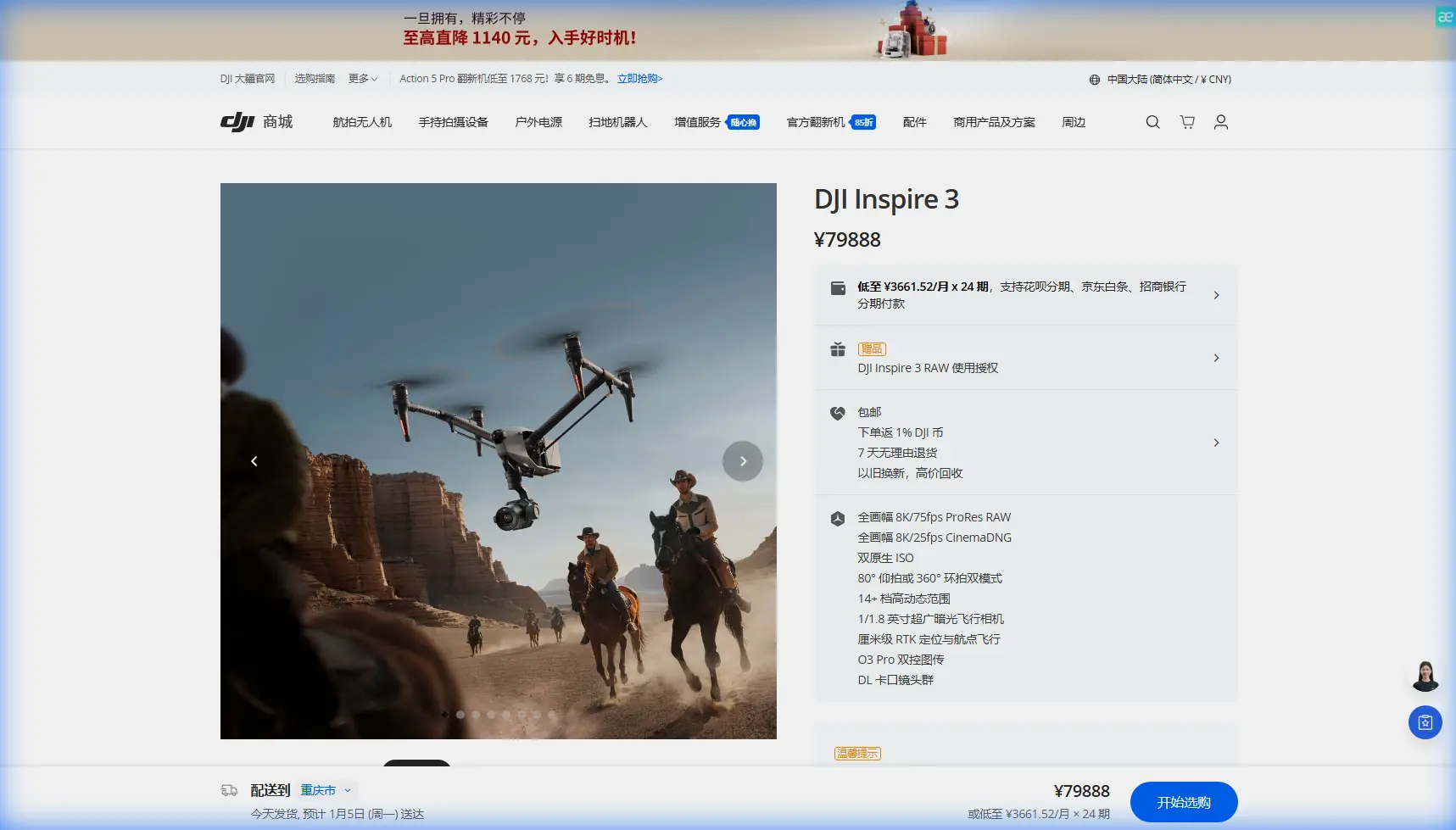
Inspire 3 for Urban Highway Surveying: What Actually Matters in the Field
META: Expert guide to using Inspire 3 for urban highway surveying, with practical advice on interference risk, maintenance access, battery workflow, thermal signature awareness, photogrammetry planning, and reliable field operations.
Urban highway surveying sounds straightforward until the site begins fighting back.
You are dealing with traffic corridors packed with reflective surfaces, dense roadside infrastructure, high RF noise, constrained takeoff zones, and long workdays that punish weak maintenance habits. In that environment, the Inspire 3 is not just a flying camera platform. It becomes part of a larger measurement system, and the quality of your results depends on how well you manage the entire operating chain: signal integrity, payload readiness, battery rhythm, access for maintenance, and data discipline.
That is the lens I use when thinking about Inspire 3 for road corridor work.
The usual conversation around this aircraft gets stuck on creative performance. For urban highway surveying, that is only half the story. The real question is whether the platform can deliver repeatable, interruption-resistant operations when the site is electrically noisy, logistically messy, and unforgiving of downtime.
The real problem in highway survey work: not flying, but continuity
A highway survey mission in an urban corridor rarely fails because the aircraft cannot fly. It fails because something small interrupts continuity.
A connector is difficult to inspect between sorties. A battery cooling cycle is rushed. A data link behaves differently near overhead infrastructure. A team discovers interference only after image quality or telemetry stability has already degraded. A component that should have been easy to replace takes too long because access was not considered in the field setup.
Those are maintenance and systems problems as much as flight problems.
This is where the reference material from broader aviation design practice becomes surprisingly useful. One document emphasizes that equipment performing critical functions must be shown not to suffer adverse effects in a high-intensity radiation field environment. Another point is even more practical: when there is a risk of interference from installed equipment, real-time monitoring of sensitive inputs during ground interaction testing is often enough to identify the source before it becomes a flight issue. That principle translates cleanly to Inspire 3 operations in urban highway corridors.
In plain terms: don’t wait to discover interference in the air.
Why electromagnetic awareness matters more than many survey teams admit
Urban road projects are RF-dense by nature. Communication systems, roadside electronics, utility structures, high-current equipment, and mobile devices all stack together. The helicopter design reference specifically calls out systems that draw 25A or more, high-power communications around 30W or above, radar-type equipment, and data transmission systems as potential interference concerns in aircraft environments. The Inspire 3 is obviously a very different platform, but the operating lesson remains valid.
If you are surveying a highway interchange, toll approach, elevated section, or signal-heavy arterial, your mission planning should include an interference mindset, not just airspace checks.
That means:
- verifying link stability on the ground before launch
- watching control, video, and telemetry behavior in the actual deployment area
- checking whether nearby infrastructure changes O3 transmission quality across different launch points
- logging anomalies immediately rather than treating them as one-off glitches
For surveying teams working with sensitive geospatial deliverables, this matters because weak signal behavior can ripple outward. It can disrupt flight path consistency, delay capture windows, force rushed relaunches, or create uneven overlap in photogrammetry collections.
The reference also points to real-time monitoring of sensitive equipment inputs during interaction testing. Operationally, for Inspire 3 users, the equivalent is to monitor transmission quality, GNSS confidence, image feed stability, and aircraft response before committing to the corridor run. If a site is questionable, I prefer a short low-risk test segment over a full launch into the densest zone.
That is a simple habit, but it saves projects.
Inspire 3 is strongest when treated like a modular field system
Another reference document, this time from civil aircraft interior design, focuses heavily on maintainability. It argues that systems should be designed in modular form, removable quickly with conventional tools, accessible for inspection, and built around interchangeability to reduce maintenance workload and cost.
That sounds abstract until you apply it to a survey team at 6:40 a.m. beside an urban highway.
A productive Inspire 3 crew works the same way:
- modular packing
- standardized media handling
- fast battery rotation
- clearly accessible inspection points
- component-level discipline rather than improvisation
This is one reason the platform suits serious field operations when the team is organized around it. Hot-swap batteries are not just a convenience feature. For highway corridor work, they preserve mission continuity during repeated launches and landings, especially when traffic timing, lighting windows, and road access permissions are tight.
But hot-swap capability only helps if your crew has a battery rhythm.
My field battery management tip: separate “warm,” “ready,” and “recovering”
This is the simplest battery habit I recommend to surveying crews using Inspire 3, and it comes directly from field frustration.
Do not treat all charged batteries as equally available.
Create three states in your case layout or staging table:
- Ready: fully prepared for immediate launch
- Warm: recently installed or conditioned and suitable for the next priority sortie
- Recovering: just removed from aircraft and not to be rushed back into rotation
Why this matters: urban highway work tends to create stop-start tempo. You may pause for traffic conditions, access coordination, or GCP verification. In that environment, crews often grab whichever pack pair is nearest. That is how battery rotation becomes inconsistent, and inconsistent rotation leads to avoidable stress, uneven endurance expectations, and poor sortie planning.
I learned this the hard way on corridor jobs where the team believed the aircraft was the bottleneck. It wasn’t. Battery decision-making was.
A visible three-state system keeps the operation calm. It also makes handoffs cleaner when multiple crew members are moving quickly. On long capture days, calm is an efficiency tool.
Photogrammetry success starts before the aircraft leaves the ground
Survey-grade output from Inspire 3 requires more than stable flying. It requires a repeatable capture geometry that can survive the visual complexity of urban roads.
Highways are difficult photogrammetry environments because they combine:
- lane markings with repetitive texture
- fast-changing shadows from bridges and vehicles
- hard-edged reflective objects
- narrow median or shoulder launch constraints
- mixed elevations near ramps, retaining walls, and overpasses
This is where GCP planning still matters, even when crews are confident in onboard positioning. Ground control points are not old-fashioned. They remain one of the cleanest ways to anchor corridor accuracy, especially in complicated urban geometry where multipath effects and partial sky view can reduce consistency.
The operational significance is straightforward. If your mission area includes flyovers, retaining structures, and frontage-road transitions, your processing reliability improves when GCP placement reflects those elevation and geometry changes instead of treating the corridor as a flat strip. Inspire 3 can collect excellent imagery, but clean photogrammetry depends on ground truth discipline.
I also advise survey teams to think about overlap not as a software requirement, but as an insurance policy against urban unpredictability. A neat mission plan on paper does not account for passing trucks, temporary lane closures, shifting sun angle, or micro-pauses caused by site safety coordination. Build margin into the capture design.
Thermal signature has a place in corridor assessment, but use it with purpose
The source material includes a small but interesting point about heat-seeking technology being used for wildfire work. Strip away the military context and one practical civilian lesson remains: thermal sensing becomes valuable when temperature differences reveal what the eye misses.
For Inspire 3 readers involved in highway surveying, inspection-adjacent tasks often overlap with mapping missions. Thermal signature analysis can support assessments around pavement anomalies, drainage patterns, bridge deck moisture suspicion, utility conflict areas, or post-event documentation where visible-light imagery alone is incomplete.
That does not mean every road survey needs thermal. It means thermal should be deployed when the project question is actually thermal in nature. Too many teams add sensors because the option exists, not because the deliverable demands it.
When thermal is relevant, timing is everything. The most useful temperature contrast may exist in a narrow window tied to surface heating or cooling, not whenever the aircraft is available. Mission scheduling should follow the physics of the site.
Portability still matters, even for a premium aircraft
One news reference describes a large unmanned aircraft that can be disassembled to fit into a shipping container and remain airborne for up to 24 hours. Ignore the platform type and scale; the useful lesson is logistical design. Long-duration or large-scale aerial operations are only practical when transport and deployment are engineered into the workflow.
That same thinking applies to Inspire 3 in a much more civilian, field-ready form.
Urban highway survey teams rarely enjoy spacious staging areas. They work from parking bays, temporary closures, narrow service roads, and shared contractor zones. Equipment that moves cleanly, assembles predictably, and supports quick preflight transitions creates real operational value. The aircraft may not need 24-hour endurance to be effective; what it needs is a system around it that reduces friction every time the crew relocates.
That is often overlooked in content about high-end UAVs. Endurance matters, yes. But on road jobs, deployment efficiency matters almost as much. If you lose 15 minutes on every move because gear organization is weak, your total productive capture time drops hard across the day.
Security and transmission discipline are part of survey quality
Survey data is rarely glamorous, but it is often sensitive. Urban corridor projects can involve planned infrastructure changes, utility mapping, construction staging, or asset documentation that should not be handled casually.
This is where secure transmission and controlled workflows matter. If your Inspire 3 operation relies on O3 transmission and encrypted handling such as AES-256 in the broader workflow, that should be treated as a project governance issue, not a technical footnote. Stable, secure data movement reduces the chance of field confusion, unauthorized access, and version-control mistakes between site capture and office processing.
Again, this is not separate from quality. Weak data governance often shows up later as uncertainty about which sortie, which card, which corrected dataset, or which reconstruction pass is authoritative. The aircraft may perform perfectly while the project still becomes messy.
A practical operating template for urban highway teams
For readers putting Inspire 3 into corridor work, here is the framework I use.
1. Start with a ground-based interference check
Borrow the logic from aircraft electromagnetic interaction testing. Before the main mission, power up in the actual operating area and watch for abnormal behavior in transmission, telemetry, and control response. If the site is electrically noisy, find out while your risk is low.
2. Build your day around battery tempo, not battery percentage
Use the warm-ready-recovering method. Hot-swap batteries increase uptime only when rotation is disciplined. Otherwise they just speed up bad habits.
3. Design GCP placement for geometry, not convenience
Do not cluster points where access is easy if the corridor contains elevation changes, bridges, merges, and retaining structures. Ground control should reflect the shape of the site.
4. Keep the aircraft modular in practice
The maintainability reference stresses accessibility, standard tools, and interchangeability. Translate that into your field kit. Every common inspection or swap task should be possible quickly, cleanly, and without hunting for specialized gear.
5. Use thermal only when the project question justifies it
Thermal signature data can be powerful for certain infrastructure findings, but only when the mission is timed and specified around thermal behavior.
6. Treat data handling as part of flight operations
Transmission stability and secure workflow design deserve the same attention as overlap and exposure settings.
When crews need help, speed of communication matters too
On active survey campaigns, small technical questions can delay a full field day. If your team needs a quick Inspire 3 workflow check before an urban corridor deployment, you can message a specialist directly here and sort out practical issues like mission setup, payload workflow, or battery rotation before they compound on site.
The bottom line for Inspire 3 in highway surveying
Inspire 3 can be a serious tool for urban highway survey work, but only when it is managed as an operational system rather than admired as an aircraft.
The source materials behind this discussion point to two ideas that matter more than they first appear. First, interference awareness is not optional around critical airborne electronics; ground-based monitoring and early detection are part of disciplined aviation practice. Second, maintainability is not a back-office concern; modular design, easy access, and fast serviceability directly reduce downtime in the field.
Those are not abstract engineering concepts. They are daily realities on road survey jobs.
If you apply them well, Inspire 3 becomes more than a capable platform. It becomes reliable under pressure, which is what professional surveying teams actually need.
Ready for your own Inspire 3? Contact our team for expert consultation.