
Inspire 3 for Urban Power Line Surveying
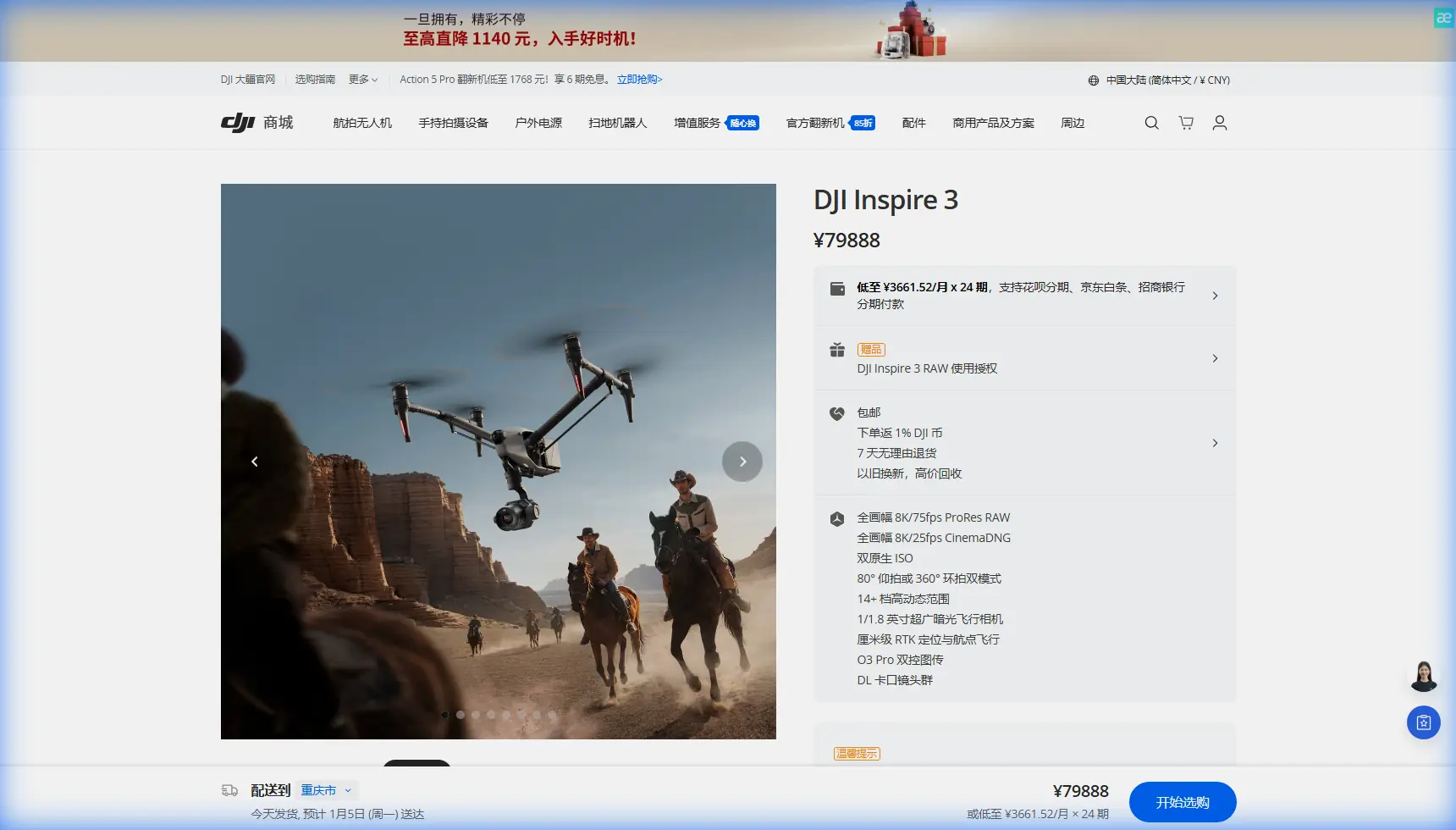
Inspire 3 for Urban Power Line Surveying: A Field Case Study in Safer Pre-Flight Discipline and Cleaner Data
META: A practical Inspire 3 case study for urban power line surveying, covering pre-flight cleaning, control setup, data reliability, transmission security, and operational best practices.
Urban power line surveying exposes every weak habit in a drone workflow.
Not because the route is long. Because the environment is unforgiving. Glass facades throw reflections into sensors. Rooftop HVAC systems distort heat signatures. RF congestion can punish sloppy control links. And when the aircraft is weaving through a corridor of poles, conductors, traffic, and mixed-use buildings, small oversights become expensive very quickly.
That is where the Inspire 3 earns its keep. Not as a glamour platform, but as a disciplined survey tool when the mission is planned around reliability instead of spectacle.
This case study follows a typical commercial scenario: an urban utility contractor using Inspire 3 to inspect overhead distribution lines, document attachment points, and capture imaging for engineering review. The goal was not just to “get footage.” The goal was repeatable, defensible data under real operational pressure.
The mission profile: dense city blocks, narrow margins
The survey corridor covered several downtown blocks with power lines crossing service alleys, road intersections, and building setbacks. That kind of route creates three recurring problems.
First, positioning and image consistency matter more than pilots often admit. Power line documentation is not a one-pass cinematic exercise. Engineers may need comparative images from different dates, and photogrammetry teams need overlap discipline if they want useful reconstruction around poles, transformers, and cable routes.
Second, thermal signature interpretation can get messy in cities. Sun-loaded surfaces, vehicle roofs, and mechanical plant exhaust can pollute the thermal picture. Even when the Inspire 3 mission is built primarily around visual survey capture, teams often operate alongside thermal workflows or compare visible anomalies with heat-related indicators logged by other sensors on adjacent jobs. That means the image acquisition standard needs to stay tight.
Third, communications integrity matters. In an urban survey, signal reliability is not only about maintaining aircraft responsiveness. It is also about preserving confidence in the downlink when multiple stakeholders are watching the feed and making decisions in real time. That is why a platform using O3 transmission and AES-256-secured communications fits the mission better than lighter setups that begin to feel fragile once the RF environment gets crowded.
The overlooked pre-flight step that prevented a bad day
Before batteries were mounted, before route review, before controller checks, the crew did something that sounds almost trivial: they cleaned the aircraft carefully, with special attention to sensor areas, landing gear interfaces, vents, and camera contact surfaces.
That step was not cosmetic. It was operational.
On urban infrastructure jobs, residue builds fast. Dust from masonry, grime from roadside air, fine metallic contamination near older utility hardware, and moisture streaking from transport cases can all interfere with how safety-critical features behave. Even a thin film on vision-related surfaces or mechanical contact areas can create uncertainty the team does not need.
The mission lead’s rule was simple: if a feature contributes to obstacle awareness, landing behavior, propulsion cooling, or imaging accuracy, it gets inspected and cleaned before launch.
For Inspire 3 crews, this matters because urban power line routes compress risk. A sensor that is merely “probably fine” is not fine enough when the aircraft is working near static obstacles and variable urban clutter. Clean surfaces improve confidence in what the aircraft is seeing. Clean mounting points improve confidence in what the camera is recording. Clean venting supports thermal stability over repeated sorties, which is especially relevant when the team is cycling hot-swap batteries to keep the aircraft moving through a long survey window.
That pre-flight cleaning routine took less than ten minutes. It likely saved far more than that.
Why control discipline matters more than most inspection teams think
One of the smartest workflow decisions on this job had nothing to do with the aircraft itself. It was about how the crew thought about input behavior.
The reference material on the Futaba T8FG discusses digital trim memory, including separate and combined mode logic, plus adjustable step values from 1 to 200. On its face, that is RC transmitter housekeeping. In practice, it points to a broader truth that applies directly to Inspire 3 operations: control inputs should be predictable, intentional, and standardized across modes.
Inspection work falls apart when pilots carry hidden setup inconsistencies from one flight profile to another. If trim behavior, response feel, or control sensitivity shifts unexpectedly between modes, repeatable framing becomes harder. That affects everything from conductor clearance images to pole-top asset documentation.
The T8FG reference’s distinction between “COMB” and “SEPAR” modes is useful here as a mindset. Combined behavior supports consistency across selected flight modes; separate behavior allows targeted adjustment when specific modes need their own response profile. Whether or not a team is using that exact controller ecosystem, the operating principle translates cleanly to Inspire 3 field practice:
- standardize what should remain consistent across the mission
- isolate only the variables that genuinely need mode-specific adjustment
- keep control step changes deliberate rather than improvised in the field
That discipline matters during urban line surveys because tiny framing corrections often decide whether an image is engineering-grade or just visually acceptable. A response increment that feels harmless on a general flight can be too coarse when the pilot is trying to hold a precise angle on insulators, crossarms, or attachment hardware against a visually noisy background.
The T8FG document also notes that only trims shown on the main screen can be adjusted without altering the actual trim memory position and that a long press can reset step values. Again, the deeper lesson is not transmitter trivia. It is the value of visible, recoverable control settings. On a commercial Inspire 3 team, every critical operator setting should be easy to verify and easy to restore. Hidden drift in the control setup is one of the most common causes of inconsistent capture quality.
Building the flight around turnaround reality
A lot of survey planning sounds elegant until the aircraft comes down for battery exchange.
This crew designed the day around sustained operation. That is where hot-swap batteries changed the pace of the mission. Instead of treating every landing like a hard stop, they treated it as a quick service interval: battery change, lens/sensor wipe, prop and arm visual check, route segment confirmation, and back into the air.
That cadence is more important in city utility work than in open-area mapping. Urban survey windows are often constrained by traffic patterns, site access coordination, property management permissions, and changing light. A platform that can return to the air quickly helps preserve continuity between adjacent line segments, which improves image consistency and reduces the chance that crews need to revisit a corridor later.
The old helicopter design reference included a detail that is surprisingly relevant here even though it comes from a much larger aviation context. It specifies that a pressure refueling system should be capable of filling the entire aircraft without needing external power, and it emphasizes that refueling time must support the aircraft’s readiness for the next takeoff. That is not directly about drones, of course. But the operational logic is universal: turnaround systems should be designed around rapid return to service, not administrative convenience.
Applied to Inspire 3 field work, the takeaway is clear. Your energy management process should serve mission continuity. Hot-swap battery procedures, charger rotation, battery temperature tracking, and staging layout all need to be arranged so the next launch is smooth, not rushed.
Data quality: visible detail first, model value second
On this urban power line project, the Inspire 3 was not used as a pure mapping drone in the traditional wide-area sense. The team prioritized high-confidence visual records and selective photogrammetry products around specific structures.
That distinction matters.
Many operators try to force every survey into a full reconstruction workflow. In a utility corridor running through a city, that can be wasteful. Conductors are thin. Occlusions are common. Building edges interrupt clean geometry. Traffic and pedestrians create moving artifacts. Better results often come from treating photogrammetry as a targeted layer rather than the whole mission.
The team captured repeatable oblique sets around poles, line hardware, and equipment clusters, while using GCP-supported references where site conditions justified the setup. GCP discipline is not always practical on every downtown segment, but where it can be established safely and legally, it strengthens spatial confidence and gives the engineering side a better foundation for comparing changes over time.
The more interesting result was how the Inspire 3 supported a hybrid evidence package. Pilots collected stable visual imagery for defect review, enough structured overlap for selective 3D reconstruction, and live downlink monitoring for field decisions. This is where the aircraft’s transmission stack mattered. O3 transmission helped maintain monitoring confidence in a signal-dense environment, while AES-256 security supported a more professional chain of custody for sensitive infrastructure imagery.
For utility contractors, that is not a trivial benefit. Urban infrastructure data may include building adjacency, rooftop equipment, access paths, and other sensitive contextual information. Secured transmission is part of responsible commercial practice.
Safety margins are often decided before takeoff
The helicopter systems reference also highlights another principle worth borrowing: it describes dual independent cutoff controls to prevent overfilling, with continued safe behavior even if one control fails. It also sets expectations around pressure limits, including a normal design pressure of 0.621 MPa and a test pressure of 1.242 MPa, along with the need to limit transient shock pressure.
Those numbers belong to fuel system design, not drone flight ops. Still, they point to a mindset that high-reliability operators understand well: critical functions deserve redundancy, and sudden spikes must be controlled before they become failures.
In Inspire 3 survey operations, the equivalent is procedural redundancy.
The crew used:
- pilot and payload operator cross-checks before each segment
- controller setting verification before the first launch and after each battery swap
- visual cleanliness checks for sensors and optics
- route partitioning so that any interruption affected only a short section of the corridor
- capture confirmation on the ground rather than assuming success in the air
That layered approach reduced the chance of discovering a problem after the team had already left a location. It also made the workflow more resilient when conditions changed mid-job.
A note on BVLOS ambitions in city utility work
Many utility organizations are thinking hard about BVLOS because the productivity upside is obvious. But urban power line inspection is not a place for lazy assumptions.
Even when future workflows evolve toward more advanced corridor operations, the discipline seen in this Inspire 3 mission still applies: clean and verify safety-related surfaces before launch, standardize control behavior, secure the transmission link, and build battery turnaround around continuity rather than haste.
Technology can extend range. It does not replace method.
What the crew would repeat on the next job
After reviewing the mission outputs, the team agreed on four practices they would not skip next time.
First, the pre-flight cleaning routine stays. It improved confidence in aircraft safety features and imaging reliability with minimal time cost.
Second, they would continue treating controller behavior as a documented part of mission quality. The lesson drawn from trim memory concepts like separate versus combined mode and adjustable step values is simple: repeatability starts in the hands of the operator.
Third, they would keep using the Inspire 3 as a selective photogrammetry platform rather than forcing a full-corridor reconstruction where the urban environment does not support it cleanly.
Fourth, they would maintain a security-first transmission posture. When infrastructure data is moving over the air in a city, O3 stability and AES-256 protection are not abstract specs. They are part of responsible fieldwork.
If your team is refining an urban utility workflow and wants to compare notes on controller setup, battery rotation, or survey capture strategy, you can message a field specialist here.
The real takeaway
The strongest Inspire 3 operations do not stand out because they look dramatic. They stand out because they remove avoidable uncertainty.
That was the pattern in this urban power line survey. A simple cleaning step strengthened trust in onboard safety systems. A disciplined approach to control configuration improved repeatability. Fast battery handling protected the survey window. Secure transmission supported professional data handling. And selective use of photogrammetry kept the deliverables aligned with what the client actually needed.
The Inspire 3 is a serious platform. But serious results come from the habits around it.
Ready for your own Inspire 3? Contact our team for expert consultation.