
Inspire 3 in Low-Light Wildlife Survey Work
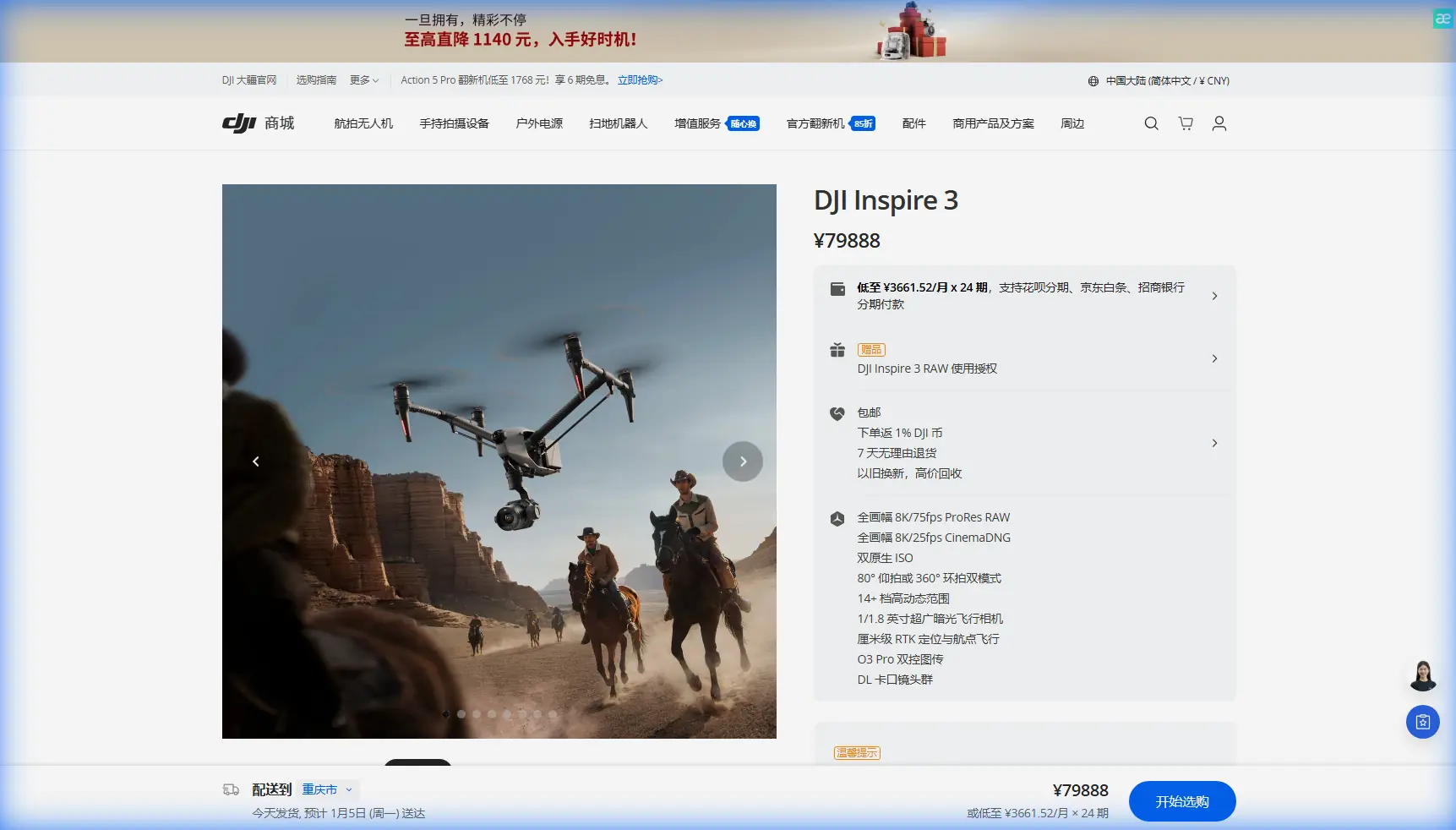
Inspire 3 in Low-Light Wildlife Survey Work: A Field Report on Timing, Control, and Clean Signal Discipline
META: A field report on using Inspire 3 for low-light wildlife survey missions, with practical insight on response timing, transmission discipline, antenna setup, redundancy thinking, and why simulator-grade control behavior matters in the field.
Pre-dawn is where wildlife survey work gets honest.
That window before sunrise, when contrast is weak and terrain features flatten into gray layers, is exactly when a drone platform reveals whether it is merely impressive on paper or genuinely usable for field data collection. For operators considering the Inspire 3 for low-light wildlife missions, the real question is not whether it can fly beautifully in ideal conditions. The real question is whether the aircraft, crew, and signal chain behave predictably when the visual scene is ambiguous, the pilot is working from subtle cues, and every delayed response compounds uncertainty.
I’ve spent enough time around survey crews to know that “image quality” is rarely the only bottleneck. In low light, control feel, timing, transmission stability, and procedural discipline often matter just as much as the sensor package. That may sound abstract until you connect it to what aviation design literature has emphasized for decades: the human operator needs system response that remains aligned, measurable, and timely across the full chain of inputs and outputs.
One reference point that stands out is the requirement in aircraft simulation work for pitch, roll, and yaw responses to occur within a tightly bounded time window, often 150 ms and in some cases 300 ms, without the system appearing to move before the aircraft itself would have responded. That is not just a simulator certification footnote. It expresses a principle that becomes very practical in Inspire 3 operations at dawn or dusk: when the pilot makes a short, decisive control input, the aircraft response, the displayed view, and the operator’s physical expectation need to stay synchronized closely enough that confidence is preserved.
In wildlife survey work, confidence is not a soft concept. It determines whether you hold altitude smoothly over a treeline edge, whether you reframe gently over a river bend without overshooting, and whether you can maintain a planned photogrammetry line while scanning for thermal signature anomalies nearby. If the aircraft reacts one way, the displayed image updates another way, and the pilot’s sense of motion lags behind both, even a skilled crew starts introducing correction inputs that degrade data quality.
That is why Inspire 3 conversations should go deeper than camera specs. The platform’s value for low-light survey work is tightly linked to how well the entire operational loop stays coherent: pilot input, aircraft behavior, downlink image, and crew interpretation.
Why response timing matters more in low light
When there is abundant daylight, the pilot can often tolerate small imperfections in timing because the visual environment supplies constant reference information. Horizon lines are stronger. Obstacles pop. Ground texture is easier to parse. In low-light conditions, much of that passive help disappears.
Now think back to the aviation benchmark mentioned above: response windows of 150 ms or 300 ms for dynamic system behavior, with visual changes occurring within that same bounded envelope and not preceding motion onset. The operational significance is straightforward. In a wildlife survey mission, your perception of where the aircraft is going must remain married to what your hands are commanding. If that relationship loosens, the crew spends energy validating the aircraft instead of surveying the subject.
This matters especially during short control inputs. A lot of wildlife work is not cinematic orbiting. It is restrained, repetitive correction. A slight yaw adjustment to hold a game trail in frame. A brief pitch input to settle into the next corridor. A tiny lateral correction to maintain overlap for photogrammetry after the aircraft crosses a patch of low-contrast grassland. These are exactly the moments where delayed or uneven response causes cumulative error.
For Inspire 3 crews, the lesson is practical: build your workflow around response verification before the mission begins. On site, I recommend a quick control-and-view synchronization check at safe altitude. Don’t just confirm that the aircraft moves. Confirm that your visual downlink, aircraft motion, and operator interpretation feel united during brief inputs in yaw, roll, and pitch. In low light, that short preflight exercise pays back immediately.
The hidden connection between survey quality and redundancy logic
A second reference from flight-control system design is equally relevant, even though most drone buyers never think about it. In the control system literature, redundancy management is not treated as an optional luxury. It includes synchronized computers, output command monitoring, fault isolation, voted sensor inputs, bus management, and recovery logic that can keep real-time tasks running even while faults are handled in the background.
For an Inspire 3 operator, you do not need to become an avionics engineer to benefit from that philosophy. What you do need is to think like one.
Low-light wildlife surveying stresses the information chain. Your aircraft is gathering navigation and imaging data while the crew is often working from weaker visual references. That makes disciplined signal management essential. If the system architecture detects, validates, and monitors its own signals before acting on them, the operational result is not academic elegance. It is steadier behavior when conditions are least forgiving.
The reference material specifically describes input voting and monitoring for redundant signals, fault-channel isolation, and output instruction monitoring. Operationally, that translates into a principle every Inspire 3 crew should adopt: trust systems that verify themselves, and mirror that discipline in your field setup.
Here is how that looks in practice:
- Treat every data path as mission-critical, not just the camera feed.
- Verify control links before takeoff, not after the first weak transmission warning.
- Keep logging, telemetry review, and post-flight fault review as standard procedure.
- Use repeatable checklists so human inconsistency does not become the weakest link.
- Separate signal problems from piloting problems. They are not the same.
That mindset becomes even more useful if your wildlife mission involves longer standoff distances, complex vegetation, or planning for future BVLOS workflows where permitted. The farther your operation stretches, the more you benefit from redundancy thinking, monitored outputs, and disciplined communication paths.
Antenna positioning advice for maximum range
This is where many field teams leave performance on the table.
If you are flying Inspire 3 in low light over open habitat, marshland, forest edge, or broken terrain, antenna positioning can decide whether the mission feels effortless or irritating. Operators often focus on aircraft altitude and forget that the ground end of the link deserves equal attention.
For the best practical range and stability with O3 transmission, keep the controller antennas oriented so their broadside faces the aircraft rather than pointing the antenna tips directly at it. Think of the useful energy pattern as fanning outward from the sides, not shooting like a laser from the ends. That alone corrects a very common mistake.
A few more field rules matter:
Maintain line of sight wherever possible.
Trees, vehicles, embankments, and even your own body can interfere more than people expect, especially in low-light missions when crews bunch close together around screens.Raise the operator position if terrain is uneven.
A small elevation gain at the pilot station can clean up the link dramatically over tall grass, brush, or shallow ridges.Do not stand under metal shelter edges or beside large vehicles.
Reflections and partial shielding can create inconsistent behavior that pilots misread as aircraft-side trouble.Re-aim during long lateral tracks.
Wildlife survey lines often carry the aircraft across a wide sector. Antenna orientation that was ideal at launch may be mediocre three minutes later.Keep crew electronics organized.
A clutter of additional radios, tablets, hotspots, and chargers around the pilot station can complicate an otherwise strong setup.
If your mission profile is more complex and you want a field-specific setup review, send your route sketch and habitat notes through this Inspire 3 mission planning chat before deployment.
The reason this matters is simple: a clean transmission link preserves pilot trust. That trust supports smoother control inputs. Smoother control inputs preserve overlap consistency for photogrammetry, reduce unnecessary battery waste, and keep disturbance around wildlife lower because the aircraft is not repeatedly corrected or repositioned.
Low-light wildlife survey is not just imaging
Many crews approach dawn surveys as if the assignment starts when the camera records. It starts earlier.
If the goal is wildlife counting, habitat monitoring, or repeatable environmental documentation, the mission has to produce usable geography, not merely visually striking footage. That is where photogrammetry thinking enters even if your primary task includes observing thermal signature patterns or low-contrast animal movement.
The challenge is that low light can reduce visible texture and complicate tie-point generation. An Inspire 3 crew that wants reliable mapping outputs should compensate operationally rather than hoping software will rescue weak capture. That means slower, more disciplined line planning, stable aircraft behavior, and attention to GCP strategy where the project requires geospatial rigor. In marginal light, any instability in aircraft response or transmission confidence increases the chance of uneven overlap, blurred frames, or route drift. Those problems are expensive because they are often discovered after the field window has closed.
This is where the earlier 150 ms and 300 ms response discipline becomes meaningful again. Tight human-machine timing helps the pilot hold a cleaner path. Cleaner paths support better dataset consistency. Better consistency improves downstream reconstruction and analysis. A design principle from aircraft simulation ends up affecting whether your wildlife survey can stand up to technical review.
Security and signal integrity are part of field professionalism
Low-light missions sometimes happen in sensitive conservation areas, private estates, or research zones where data handling expectations are high. In those environments, transmission security is not a marketing side note. It is part of operational credibility.
That is why features associated with protected links, including AES-256, matter in civilian survey operations. Not because crews are trying to sound technical, but because wildlife location data, land-use imagery, and research recordings can be sensitive in their own right. A secure transmission posture supports responsible handling of field intelligence, especially when dealing with endangered species locations or privately managed ecological assets.
Security, though, should be paired with signal discipline. Encrypted transmission is valuable, but it does not compensate for sloppy antenna geometry, poor line-of-sight planning, or a badly chosen pilot station. Good operations stack advantages. They do not rely on one.
Battery continuity changes how you plan the survey window
Low-light wildlife work is often compressed into short periods when animal behavior and environmental conditions line up. Missing that window because of a clumsy turnaround is painful.
This is where hot-swap batteries affect real operations. The significance is not convenience alone. It is tempo. If the aircraft can be turned efficiently between sorties, crews can preserve continuity in survey coverage and stay aligned with dawn or dusk activity peaks. That matters for repeated transects, moving herd observations, and comparative habitat passes where timing consistency strengthens the dataset.
I advise crews to think of battery handling as part of survey design, not just logistics. Build your mission blocks around likely animal movement periods, expected light transition, and turnaround discipline. If one team member is responsible for media checks and another for battery rotation, the pilot can remain focused on aircraft state and route continuity.
Again, this echoes the control-system reference in a subtle way. In well-designed flight-control logic, monitoring and recovery happen systematically rather than chaotically. Strong field crews should do the same. Every repetitive task, from battery exchange to link verification, should reduce variability instead of introducing it.
What I would watch first on an Inspire 3 low-light wildlife mission
If I were assessing an Inspire 3 crew on its first serious dawn wildlife survey, I would not begin by judging the footage. I would watch these five things first:
- How quickly the pilot establishes stable, minimal control corrections after takeoff.
- Whether the downlink remains easy to interpret during small yaw and roll inputs.
- How the team positions antennas as the aircraft moves across the survey sector.
- Whether route discipline holds when visual contrast drops over low-detail terrain.
- How efficiently the crew resets between sorties without rushing the checklist.
Those observations tell me more about likely mission success than a short highlight clip ever will.
The larger lesson for Inspire 3 operators
The best Inspire 3 wildlife survey results usually come from crews that respect the aircraft as part camera platform, part control system, and part information network.
That is why the reference details from aircraft design manuals matter here. A requirement that system responses stay within 150 ms or 300 ms windows is really about preserving human trust in dynamic operation. A control-system architecture that monitors outputs, synchronizes channels, manages buses, and isolates faults is really about preserving function when conditions are imperfect. Both ideas map directly onto low-light drone survey work.
When you fly Inspire 3 at the edge of daylight, you are asking the whole system to stay coherent under stress. Not dramatic stress. Professional stress. The kind that shows up as slight lag, weak contrast, route drift, uncertain control feel, or a downlink that is technically alive but operationally unhelpful.
Crews that understand this tend to work differently. They preflight the control-view relationship. They manage antennas actively. They think in terms of validated signals, not assumptions. They use hot-swap battery capability to protect the survey window. They plan for secure data handling. And they fly in a way that serves the dataset, not the ego.
That is what makes Inspire 3 useful in this niche. Not just its capability ceiling, but how well a disciplined team can turn that capability into repeatable field performance when the light is poor and the mission still has to be right.
Ready for your own Inspire 3? Contact our team for expert consultation.