
DJI Inspire 3 for Urban Coastline Tracking
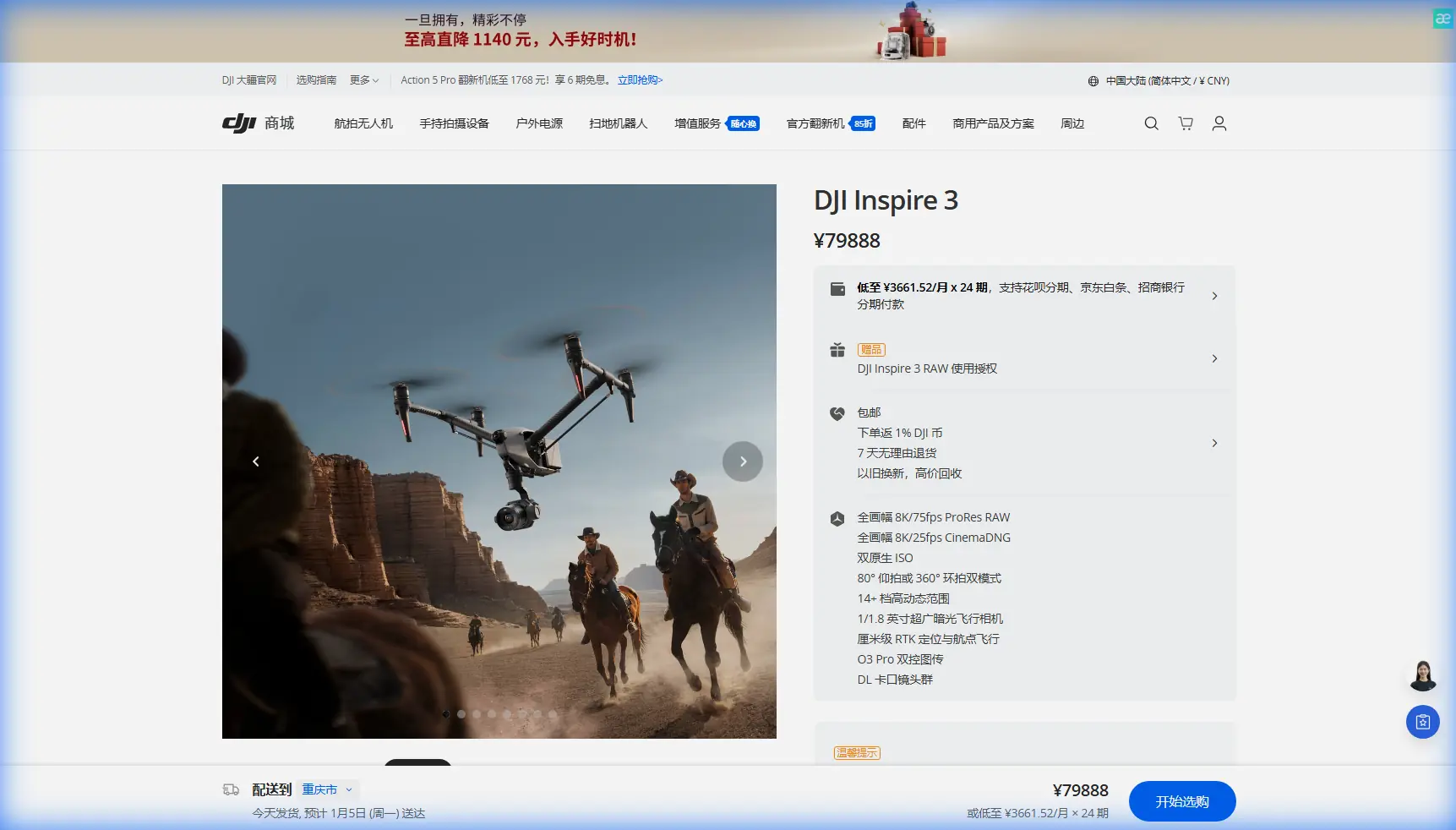
DJI Inspire 3 for Urban Coastline Tracking: A Field Report from the Edge
META: Expert field report on using the Inspire 3 for urban coastline tracking, covering O3 transmission, AES-256 security, hot-swap batteries, photogrammetry workflow, and practical operational lessons.
Urban coastline work looks simple on a map. In the field, it rarely is.
You are dealing with reflective water, vertical infrastructure, wind shear around towers, intermittent GNSS challenges near dense construction, and a narrow margin for missed data. Add public-facing operations into the mix and the aircraft stops being just a flying camera. It becomes part survey tool, part risk-management platform, part production machine.
That is where the DJI Inspire 3 earns its place.
I have used larger and smaller aircraft for shoreline documentation, infrastructure observation, and urban-edge visual capture. The Inspire 3 sits in a very specific lane. It is not the platform I reach for when I need the smallest footprint, and it is not a substitute for a dedicated high-end mapping rig built around payload flexibility. But for tracking coastlines in urban environments—especially when the mission combines repeatable visuals, geospatial context, and production-quality imagery—it is unusually well balanced.
This field report is built around that exact scenario: coastal edges in city zones, where seawalls, promenades, drainage outlets, construction interfaces, marinas, roads, and public structures all meet moving water.
Why the Inspire 3 fits this kind of work
A coastline in a dense urban setting changes in layers. There is the shoreline itself. Then there is the built environment immediately behind it: retaining walls, access roads, rooftop runoff patterns, temporary works, mooring areas, pedestrian corridors, and erosion indicators that only become obvious when captured consistently over time.
The Inspire 3 matters here because it combines high-end imaging with the kind of flight continuity that keeps a complicated job moving. One of the most operationally significant details is its hot-swap battery design. On paper, that sounds like a convenience feature. In practice, it changes how you manage a shoreline corridor.
If you are documenting a stretch of coast at a fixed tide window or trying to maintain consistent light across multiple passes, stopping for a long turnaround is expensive in a way that has nothing to do with aircraft cost. You lose environmental consistency. Water texture changes. Reflections shift. Vessel traffic interrupts the scene. Construction crews move barriers. A hot-swap workflow keeps the aircraft ready while preserving momentum for the mission team. For repeat shoreline capture, that continuity is not a luxury. It is operational discipline.
The other standout is O3 transmission. Urban coastlines are noisy environments in every sense: radio congestion, signal reflections from glass and steel, and plenty of line-of-sight interruptions as the aircraft transitions past buildings, marine structures, or elevated roads. Reliable video and control link performance is not just about pilot comfort. It affects decision-making at the exact moment you are trying to judge wave impact against a wall, inspect a drainage discharge point, or maintain clean visual framing around busy public spaces.
When a platform carries O3 transmission into that environment, it gives the team a more stable operational picture. That matters for both safety and data quality. A mission is only useful if you can trust what you are seeing in real time.
The security piece people skip too quickly
One of the less glamorous but more serious details in the Inspire 3 ecosystem is AES-256. A lot of public discussion around drone choice gets stuck on sensors and flight time. For urban coastline projects, especially those involving critical infrastructure, port-adjacent assets, municipal documentation, or confidential development sites, secure transmission deserves more attention than it usually gets.
AES-256 is not a marketing footnote in this context. It has real significance when flights involve sensitive project imagery, restricted construction activity, or client data that should not be casually exposed through weak handling practices. If your job includes documenting shoreline reinforcement, waterfront redevelopment interfaces, or erosion conditions near strategic utilities, the security model around your airborne data stream matters.
That does not replace good operational practice. It supports it. Secure links still need disciplined team procedures, controlled data handling, and clean post-flight workflow. But it is one of the reasons the Inspire 3 makes sense for professional coastal operations in cities rather than purely recreational or lightweight capture.
What actually changes along the coast when you fly this platform
The reason people underestimate urban coastal missions is that they assume the objective is simply “get footage of the shoreline.” That is not the real job.
The real job is usually one of four things:
- Establishing visual change over time
- Creating a location-accurate record of built and natural interfaces
- Supporting photogrammetry for planning or maintenance review
- Capturing cinematic but operationally useful imagery for stakeholders
The Inspire 3 is strongest when at least two of those happen in the same mission.
For example, if a project team needs a monthly record of a seawall, adjacent drainage outfalls, and pedestrian access conditions, the aircraft can capture repeatable oblique perspectives that make structural changes easier to spot. If the same team also needs material suitable for investor briefings or engineering review decks, the Inspire 3 can produce imagery that does not feel like an afterthought.
That blend is rare. Many aircraft are efficient but visually limited. Others create beautiful footage but are less practical when repeatability and field efficiency become non-negotiable.
Photogrammetry in the real world, not the brochure version
The Inspire 3 is not usually the first name brought up in conversations dominated by dedicated mapping platforms. That said, for coastline tracking in urban areas, photogrammetry is often only one part of the mission. The client may not need a pure survey block every time. They may need a mixed-output workflow: broad visual inspection, repeat image baselines, and selected geospatial products.
This is where field planning matters more than spec-sheet debates.
If I am using the Inspire 3 in a photogrammetry-supporting role, I care about control, overlap discipline, angle consistency, and site referencing. GCPs—ground control points—become especially relevant near seawalls, promenades, and reclaimed edges where urban geometry can trick the eye and distort assumptions about scale. Without disciplined control, coastal models can look persuasive while hiding alignment errors that matter during engineering review.
That is the operational significance of GCP integration: it turns an attractive visual model into something stakeholders can interrogate with more confidence.
In coastal city work, there is also the issue of reflective surfaces. Water is a poor partner for clean reconstruction. So the strategy is usually to capture the stable interface zones well: revetments, wall lines, stairs, access ramps, rock armor transitions, outfalls, edge barriers, and adjacent paved surfaces. The Inspire 3 is well suited to that kind of hybrid mission because it handles the image-capture side with enough sophistication to keep both technical and presentation teams happy.
Thermal signature: where the conversation needs honesty
The phrase “thermal signature” comes up often in coastal work, but it needs a practical framing. The Inspire 3 is known first for its imaging and production pedigree, not as a dedicated thermal inspection aircraft. So when people talk about thermal signature in an Inspire 3 workflow, the smarter interpretation is not to force a thermal-only mission onto the wrong platform. It is to understand where the aircraft fits in a broader asset-inspection stack.
For urban coastlines, thermal context can be useful around drainage discharge anomalies, moisture migration near structures, or post-event site assessment when another aircraft or payload class is handling temperature-specific data. The Inspire 3 can complement that workflow by delivering the precise visual record that explains what the thermal team found. That separation of roles is often more efficient than pretending one airframe should do everything.
The best field teams are not obsessed with one-aircraft purity. They are obsessed with decision-quality data.
A third-party accessory that made a measurable difference
One accessory improved our coastal output more than expected: a high-quality third-party monitor hood and sun-shade system for the ground display setup. It is not glamorous, and it does not bolt onto the airframe in a dramatic way, but on bright waterfront sites it changes how well the pilot and visual observer can read fine scene detail.
That matters when you are trying to distinguish water staining from surface damage on a vertical wall, or confirm whether a dark patch near a drain outlet is shadow, moisture, or debris accumulation. On reflective urban shorelines, screen readability is not a comfort issue. It affects flight judgment and capture quality.
I have also seen teams benefit from premium transport and quick-deployment case systems from third-party manufacturers. When a mission requires moving between promenade access points, rooftop launch positions, and marina edges, setup friction becomes a hidden cost. Accessories that reduce turnaround time often deliver more value than accessories that merely add complexity.
Working near the edge: signal, wind, and public space
Urban coastlines create a peculiar kind of pilot workload. Wind coming off the water behaves differently once it collides with towers, terminals, bridges, and stepped building lines. A calm launch point can hide an ugly working layer fifty meters out. That is another reason stable transmission and predictable aircraft response matter so much.
The Inspire 3 gives a professional crew enough confidence to keep a mission organized when conditions start introducing friction. Not reckless confidence. Useful confidence.
This matters especially when operating near public walkways or active waterfront roads. The aircraft must stay part of a controlled process, not become a distraction. In a city-edge environment, the team is managing far more than aircraft position: pedestrian awareness, marine traffic context, changing wind direction, reflective glare, and a moving background full of visual traps.
And if your project team is exploring advanced corridor workflows or future BVLOS planning under the appropriate local rules and approvals, having a platform built around dependable transmission and disciplined operational architecture makes the transition easier. BVLOS is never just a checkbox. It is the result of layered planning, airspace understanding, communications reliability, and regulator-compliant procedures. The Inspire 3 does not remove those obligations, but it fits better into a serious professional framework than many aircraft chosen only for convenience.
What clients actually notice
Clients do not usually talk about codec depth or transmission protocol by name. They notice something else.
They notice when shoreline change is easy to understand from one reporting period to the next. They notice when the footage is steady enough to support engineering discussions instead of just looking attractive. They notice when a waterfront development update feels coherent because the visuals, geography, and chronology line up.
That is where the Inspire 3 delivers its strongest value in urban coastline tracking. It closes the gap between operational capture and boardroom-ready output.
A port consultant, civil engineering team, coastal planner, or urban redevelopment stakeholder often needs a single flight operation to satisfy multiple audiences. Site supervisors want accurate visual condition records. Communications teams want usable imagery. Decision-makers want evidence of progress or deterioration that makes sense at a glance.
The Inspire 3 can do that without making the mission feel stitched together from compromises.
Practical workflow notes from the field
For this type of work, I recommend thinking in passes rather than single flights.
Start with a broad orientation pass that establishes the relationship between the waterline and the built environment. Then move into repeatable obliques for structure tracking. After that, capture targeted details around outfalls, wall joints, access points, and any visible erosion or settlement indicators. If photogrammetry is part of the brief, establish your GCP strategy before the first battery goes in, not halfway through the job when the tide has already shifted.
Battery management should support continuity, not just endurance. That is why hot-swap capability is so useful on the Inspire 3. It helps maintain the mission rhythm that coastal documentation demands.
And on bright shoreline sites, invest in the small things that improve operator clarity. A proper display shading accessory, disciplined checklists, and a well-planned launch position will often improve results more than another round of spec-sheet comparison.
If your team is refining an Inspire 3 workflow for waterfront or urban shoreline operations, I’ve found that direct mission planning discussions save time; you can start that conversation here: https://wa.me/85255379740
The bottom line
The Inspire 3 is at its best in urban coastline tracking when the mission needs more than one kind of answer.
It is strong when visual quality matters, when secure transmission matters, when repeatability matters, and when battery workflow has a direct effect on data consistency. O3 transmission supports control and situational awareness in cluttered waterfront environments. AES-256 supports the kind of data handling that professional infrastructure and development work increasingly demands. Hot-swap batteries keep the mission moving when timing and consistency are critical. And when paired with disciplined use of GCPs, the platform becomes far more useful for photogrammetry-adjacent workflows than many people assume.
That does not make it the answer to every coastal task. It makes it a serious aircraft for teams that understand what the job really is.
Urban coastlines are messy. The right tool is the one that keeps that complexity manageable without flattening the quality of the output. The Inspire 3 does exactly that.
Ready for your own Inspire 3? Contact our team for expert consultation.