
Inspire 3 on a Dusty Coastline: What Mid
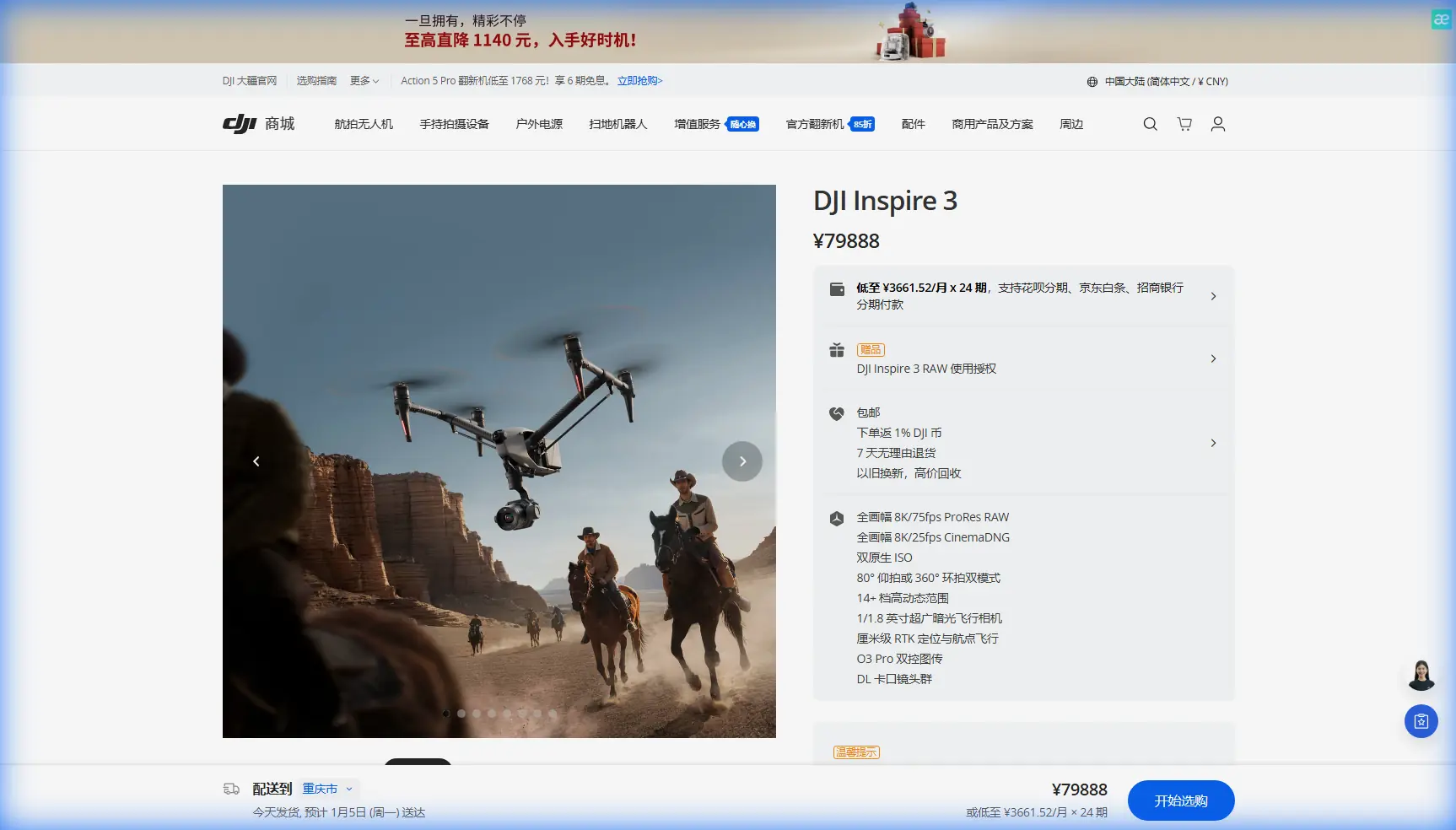
Inspire 3 on a Dusty Coastline: What Mid-Flight Stability Really Looks Like
META: A field-based Inspire 3 case study for dusty coastal tracking, connecting aircraft balance, control-system discipline, hot-swap endurance, O3 transmission, AES-256 security, and changing weather performance.
There is a big difference between flying a drone in clean demo conditions and flying one along a working coastline where the wind shifts, salt hangs in the air, and dust gets everywhere. The Inspire 3 earns its reputation in that second category.
This case study is built around a civilian shoreline-tracking job: repeated passes along a dusty coastal corridor to document erosion patterns, surface change, and thermal contrast near man-made structures and natural rock formations. The mission combined photogrammetry with selective thermal signature review, and the brief was straightforward: keep the data consistent even if the weather stopped cooperating.
That last part mattered more than expected.
The mission profile: not dramatic, just demanding
Coastal work sounds simple until you actually do it. You are dealing with layered air. Sea breeze at one altitude. Warmer, dusty crossflow coming off the land at another. Fine particulate that tests every exposed interface. A route that may look open on a map but often forces repeated headings, oblique angles, and careful line spacing if the output needs to support useful analysis later.
For this mission, Inspire 3 was chosen not because it is flashy, but because consistency beats novelty when the deliverable is time-series evidence. The aircraft needed to hold predictable lines for photogrammetry, maintain stable transmission over a stretched shoreline, and handle a flight day that was expected to degrade.
It did.
About halfway through the sortie window, the weather changed in a way most field teams know well. The wind did not just increase; it rotated. Dust lifted from the inland side, the light flattened, and the aircraft began encountering uneven airflow on turns back toward the coast. This is where people tend to talk vaguely about “flight performance.” That phrase misses the point. What matters is how the aircraft’s design logic shows up in the footage, in the telemetry, and in the decision-making options available to the crew.
Why balance matters more than most operators realize
One of the most useful ideas from classical civil aircraft design is that weight and balance are not administrative details. They define how much operational flexibility you actually have.
The reference material on civil aircraft layout makes a sharp point: the empty center of gravity has a major effect on loading balance, and aircraft with a wing-mounted configuration tend to be easier to keep in balance because the usable cabin volume center stays close to the empty-weight center of gravity. The same source also notes a meaningful numerical difference in CG behavior between layouts: a wing-mounted engine arrangement may place the empty CG roughly in the 20% to 25% mean aerodynamic chord range, while an aft-mounted layout may sit much farther back, around 35% to 40%.
Now, Inspire 3 is not a transport aircraft, and no serious operator should pretend otherwise. But the design lesson absolutely carries over. A platform that keeps its effective mass distribution disciplined, especially around payload and battery states, is easier to fly accurately when conditions stop being polite. That operational significance is real. It shows up as less surprise in pitch response during acceleration and braking, cleaner hold behavior during mapping legs, and more confidence when repeating lines after a weather interruption.
On this coastal mission, that translated into something practical: after the wind shift, the Inspire 3 was still able to resume line work without the pilot having to “relearn” the aircraft on every turn. That matters in photogrammetry because reconstruction quality depends on regularity. If the aircraft’s attitude and path control become inconsistent, overlap quality degrades, GCP matching gets less efficient, and the downstream model starts absorbing avoidable error.
Stable balance is not glamorous. It is the reason a long day remains usable.
Mid-flight weather change: what the crew actually saw
The first part of the job was smooth. The aircraft ran parallel shoreline segments, gathering high-overlap imagery for surface modeling and selected thermal views around structures where heat retention differences were relevant. O3 transmission was particularly useful here because coastal geography can be deceptive; even when the route appears visually open, terrain contours, low infrastructure, and reflective surfaces can create moments where link confidence matters psychologically as much as technically. A robust transmission backbone calms the workflow. You spend less energy second-guessing the connection and more on the mission.
Then the weather turned.
The sea side stayed comparatively clear, but inland gusting started pushing suspended dust across the route. The pilot noticed the change first on the aircraft’s return legs. The drone was not being overpowered, but it was working in mixed air. The gimbal remained composed, yet the body corrections were visibly more active in telemetry. This is where Inspire 3’s control-system maturity becomes more important than any marketing summary.
The second reference source, focused on flight-control and hydraulic system design, emphasizes something engineers understand instinctively but operators often only appreciate under pressure: control performance depends on the precision of the full chain, from digital command through conversion, filtering, amplification, monitoring, and fault logic. The source explicitly calls out accuracy requirements for the D/A converter, filter models and parameters, servo amplifier gain in both normal and fault states, maximum output current accuracy, output load, and current monitoring. It also highlights built-in self-test measures and the importance of interface definition between the actuator and the flight-control computer, including both analog and discrete I/O.
Why does that matter for a civilian Inspire 3 mission on a dusty coast?
Because in ugly air, “stable” is not a simple trait. It is the result of thousands of tiny corrections executed through a disciplined signal path. If those command, monitoring, and interface layers are poorly managed in a system, the aircraft may still fly, but it flies with less grace, less repeatability, and less trustworthiness when conditions become noisy. In the field, that difference appears as wobble on line transitions, delayed correction in gusts, inconsistent stopping behavior at waypoints, or overworked footage that needs too much stabilization in post.
On this mission, the Inspire 3 handled the change the way a professional platform should: not by pretending the air was smooth, but by absorbing the disturbance without turning the data capture process into chaos.
Dust is not just an airframe problem
People tend to think dust only threatens motors, cooling, and exposed surfaces. The reference material on control-system interfaces points to another layer: connectors and signal integrity. It notes that connector choice directly affects signal quality and should be defined carefully for every equipment unit, especially in environments with strong vibration, sand, moisture, difficult access, and repeated installation/removal demands.
Again, we are not transplanting military specifications into a civilian drone article. The useful takeaway is broader and absolutely relevant: harsh environments punish weak interfaces first. On a coastline with dust and salt in circulation, mechanical fit, electrical consistency, and system self-monitoring all become operational concerns, not lab concerns.
That is one reason experienced crews are so disciplined about preflight inspection after transit and before relaunch. A shoreline mission often means frequent setup, battery handling, payload checks, and transport exposure. If a system is going to reveal connector sensitivity, contaminated contact behavior, or intermittent signal oddities, a dusty coast is a very efficient place for it to do so.
The Inspire 3’s value here is not that it somehow escapes physics. It is that the aircraft is built for serious production work, where repeat deployment, high data confidence, and controlled behavior matter more than novelty. Pair that with sensible field hygiene and you get a platform that stays productive in conditions that wear down casual workflows quickly.
Hot-swap batteries changed the tempo of the day
The weather interruption did not end the mission, but it did force a reset. The team paused, reviewed line integrity, waited for a better gap, and then relaunched. This is where hot-swap batteries stop being a convenience feature and start becoming a mission design advantage.
When the environment is unstable, every minute of unnecessary downtime carries a hidden penalty. The shoreline light changes. Thermal contrast shifts. Wind direction may drift again. Ground control points remain valid, but the scene itself starts moving away from your first capture conditions. Hot-swap support helps crews preserve continuity. You can turn the aircraft around faster, maintain the mission rhythm, and recover the interrupted section before the environmental delta becomes too large.
For erosion tracking and photogrammetry, consistency across passes matters almost as much as the absolute quality of a single pass. The fewer unnecessary interruptions you introduce, the less likely you are to create a data patchwork.
In this case, the Inspire 3’s battery workflow kept the mission from splitting into two different jobs with two different atmospheres.
O3 transmission and secure handling were not side notes
Long coastal corridors put pressure on communications. Even where regulations and operational procedures keep the aircraft within approved limits, the route geometry can still challenge confidence. O3 transmission helped the crew keep control and situational awareness steady during the weather shift, which reduced decision lag. That was especially valuable when deciding whether to continue, pause, or shorten a segment.
There is also the matter of data protection. Shoreline projects often involve industrial edges, private sites, or infrastructure-adjacent terrain. AES-256 matters because secure transmission is not abstract anymore. If a team is documenting assets, construction impacts, or environmental change near sensitive commercial locations, protecting the command and data path is part of professional practice.
Security in drone operations is often discussed only in enterprise procurement language. In the field, it is much simpler than that: clients expect discretion, and serious operators should be able to explain how they support it.
Thermal signature work benefited from the platform’s discipline
This was not a pure thermal mission, but thermal signature review was part of the brief. Coastal surfaces can hold and shed heat unevenly. Rock, concrete, shallow standing water, wet sand, and recent mechanical activity all tell different stories. The trick is not merely capturing thermal imagery. The trick is capturing it in a way that allows valid comparison across adjacent passes.
That comes back to stability, repeatability, and timing.
When the wind shifted and dust reduced the visual crispness of the scene, the Inspire 3 still kept the mission workable enough to preserve comparative thermal observations in the target zones. That kind of output is useful for inspection and environmental documentation because it helps distinguish transient visual clutter from actual thermal anomalies.
If you have ever tried to compare thermal frames gathered before and after a weather wobble, you know how quickly unstable acquisition can turn interpretation into guesswork. This mission avoided that trap.
What this means for BVLOS planning and advanced workflows
BVLOS is often discussed as if the aircraft alone decides the issue. It does not. Regulatory approvals, detect-and-avoid strategy, command-and-control reliability, operational risk assessment, and mission design all sit above the platform itself. Still, when teams build toward more advanced corridor operations, they naturally gravitate toward aircraft that show disciplined behavior in harder-than-ideal conditions.
That is where Inspire 3 becomes interesting beyond cinema. A platform that can hold repeatable routes, preserve link confidence, support secure operations, and recover quickly after interruptions is useful in the training ladder that leads toward more sophisticated inspection and mapping programs.
It is not a shortcut. It is a credible stepping stone.
The real lesson from this shoreline job
The mission succeeded because the aircraft did not become unpredictable when the environment did. That sounds obvious, but it is exactly where weaker systems start leaking time, quality, and operator confidence.
Two details from the reference material illuminate why.
First, the weight-and-balance source highlights how center-of-gravity position influences loading flexibility, with a notable numerical spread between forward and aft CG layouts—20% to 25% versus 35% to 40% of mean aerodynamic chord. Operationally, that matters because balanced aircraft behavior is easier to preserve across changing mission states. For drone crews, that translates into cleaner route repetition and more dependable handling during stop-start mapping work.
Second, the flight-control reference stresses that performance is only as good as the precision of the chain from digital command to monitored actuator output, including converter accuracy, filter behavior, servo amplifier characteristics, and interface discipline. Operationally, that matters because gust response, hold quality, and fault tolerance are not magic features. They are engineered outcomes. On a dusty coastline, they are the difference between “we got the job” and “we need to explain the missing section.”
If you are evaluating Inspire 3 for real coastal documentation, inspection-adjacent imaging, or high-consistency photogrammetry, look past headline specs. Ask how the aircraft behaves when the air gets mixed, when you need to relaunch quickly, when the route stretches your link, and when the client needs secure handling of sensitive location data.
That is where the platform proves itself.
If you want to compare mission setups or discuss a shoreline workflow in practical terms, you can message an Inspire 3 specialist here.
Ready for your own Inspire 3? Contact our team for expert consultation.