
Expert Tracking With Inspire 3 Along Mountain Coasts
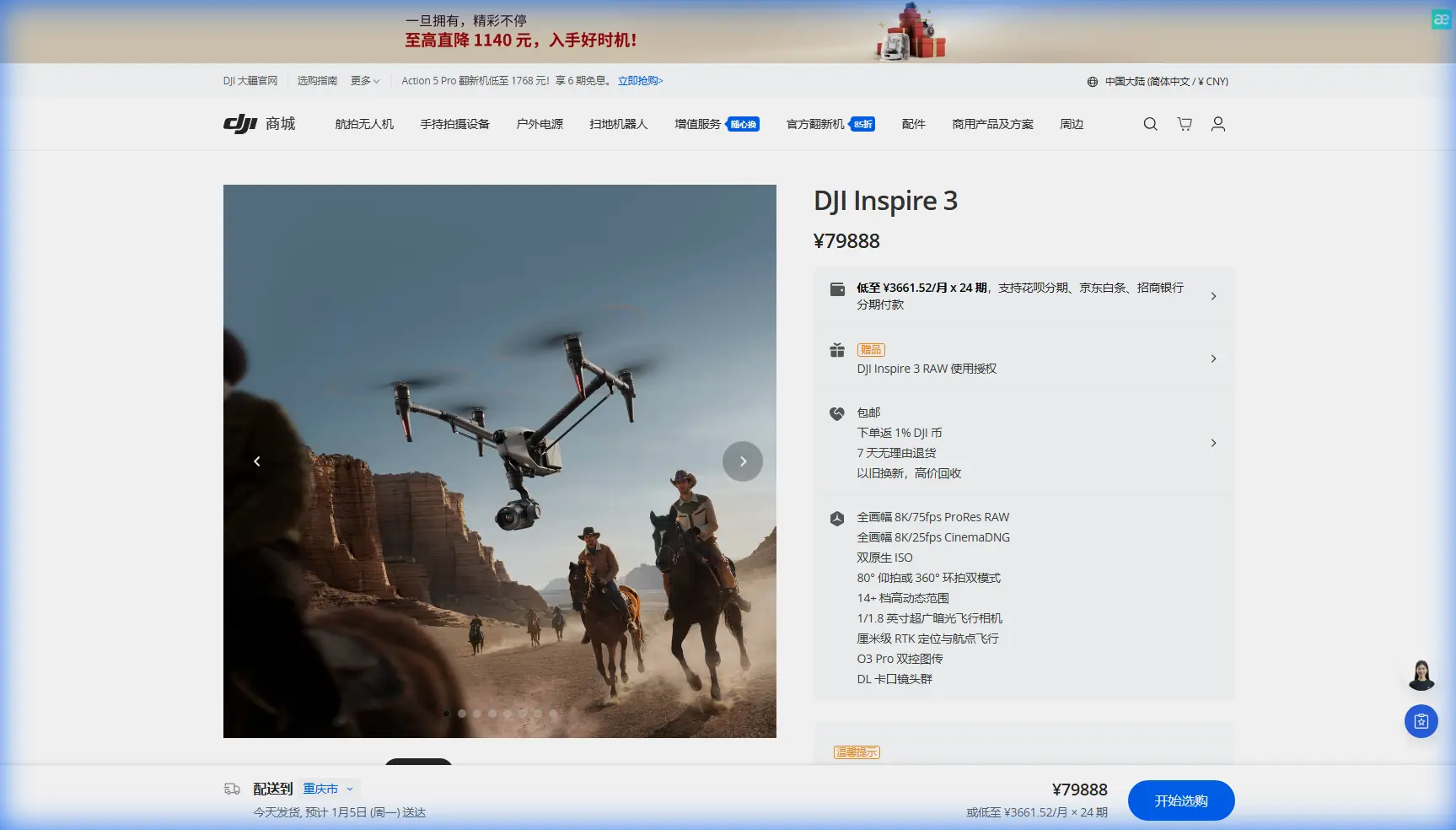
Expert Tracking With Inspire 3 Along Mountain Coasts
META: A technical review of Inspire 3 for coastline tracking in mountain terrain, with insights on stability, transmission, corrosion-aware field practice, and mission reliability.
Mountain coastlines punish weak drone workflows.
The air changes by the minute. Salt hangs in the moisture. Cliffs distort line of sight. Temperature swings create haze in one pass and sharp visibility in the next. If you are trying to document erosion, inspect shoreline infrastructure, or build a repeatable photogrammetry dataset across rugged coastal terrain, the aircraft matters—but the workflow matters more.
That is where the Inspire 3 becomes interesting. Not because it is simply powerful, but because it sits at the intersection of flight precision, imaging discipline, and field survivability. For coastline tracking in mountain environments, that combination is what separates attractive footage from usable operational data.
I approach this as a technical review, not a brochure. The real question is simple: how well does the Inspire 3 hold up when the mission involves repeated flights over wet, wind-broken, elevation-changing terrain where image continuity and system resilience matter?
Why mountain coast tracking is harder than it looks
A mountain coastline creates three problems at once.
First, the geometry is messy. You are not surveying a flat beach. You are dealing with steep relief, broken rock faces, narrow inlets, vertical surfaces, and changing light angles. That affects overlap, camera angle, route planning, and the quality of any downstream photogrammetry.
Second, the environment is corrosive. Salt fog and wind-driven moisture do not need dramatic rainfall to create trouble. Condensation can form during early-morning setup, during ascent from warm ground air into cooler layers, or after landing when equipment sits exposed near breaking surf.
Third, signal reliability becomes more than a convenience issue. Ridges, coves, and abrupt terrain masks can interrupt clean control links even when the aircraft is not especially far away. If the mission is long-baseline shoreline tracking, stable transmission and careful contingency planning become operational essentials.
The Inspire 3 is well positioned for this kind of work because it is not just a camera platform. It is a system built for disciplined flying, repeatable imaging, and professional mission execution.
The hidden lesson from aircraft design manuals
Oddly enough, two ideas from traditional aircraft engineering are highly relevant to an Inspire 3 working the coast.
One comes from structural dynamics. In the reference material, a constrained structure loses degrees of freedom, and with r + 1 constraints it yields n - r - 1 eigenvalues. In plain terms, every added constraint changes how the structure can move and respond. That sounds abstract until you think about drone operations in mountain terrain. Every real-world constraint—wind funneled through a saddle, a cliff wall blocking route options, a no-go buffer around a lookout, a fixed GCP alignment requirement—reduces how freely you can design the mission. The Inspire 3 earns its keep when those constraints stack up, because controlled flight behavior and route repeatability become more valuable as operational freedom shrinks.
The second idea comes from corrosion control in aircraft design. The material handbook is blunt about the causes: prevent rainwater and contaminants from entering systems, design to avoid liquid collection and retention, and manage condensation caused by temperature differences between ground and flight environments. That is not academic. It is exactly the environmental logic coastal drone crews should borrow. If you fly Inspire 3 near mountains and sea spray, your post-flight handling routine becomes as important as your camera settings. Salt intrusion rarely announces itself on day one. It shows up later as intermittent contacts, oxidized connectors, sticky fasteners, or degraded accessory performance.
So yes, this is a review of Inspire 3. But it is also a review of whether your field discipline is good enough to let the aircraft perform.
Flight behavior where cliffs and surf meet
For coastal tracking, smoothness is not only aesthetic. It affects data continuity.
When you are tracing a coastline against mountain contours, you often need long, coherent passes that preserve framing while maintaining safe offset from terrain. The Inspire 3’s professional flight character helps here because it supports controlled directional movement without the twitchy feel that can creep into lighter platforms under coastal gusting. On a practical level, that means cleaner edge definition in rock strata, more consistent oblique passes over revetments, and better alignment between repeated missions.
That matters if you are comparing shoreline changes over time. It also matters if your deliverable includes both cinematic context and measurable surface reconstruction. A drone that can fly beautifully but cannot repeat an angle with discipline is less useful than many people admit.
For mountain coast work, I would treat every route as two missions layered together: one visual narrative path and one measurement path. The Inspire 3 is strong precisely because it can serve both, provided the operator separates those intents during planning.
O3 transmission and the reality of broken terrain
One of the most operationally significant features in this scenario is O3 transmission. On paper, transmission capability always sounds like a simple range discussion. In the mountains, that is the wrong way to think about it.
The real benefit is link stability across complex terrain, especially when coastal ridgelines and recesses create partial masking. Even when you maintain conservative visual and procedural boundaries, a clean and resilient transmission system reduces interruptions in framing, command timing, and confidence during terrain-following segments. For shoreline infrastructure checks, cliff face imaging, or environmental monitoring, that smoother control relationship translates directly into fewer compromised passes.
If your project has any BVLOS planning component under lawful and approved frameworks, robust transmission architecture matters even more. Not because it replaces risk mitigation—it does not—but because weak link performance compounds risk quickly in mountainous coastal geography.
The same applies to security. If your work involves sensitive industrial sites, utilities, or proprietary survey datasets, AES-256 transmission security is not a minor footnote. It is part of the chain of custody for the imagery and mission telemetry. Commercial operators working with engineering firms, insurers, coastal asset managers, or environmental consultants should care about that.
Imaging value: photogrammetry, thermal context, and repeatability
The Inspire 3 is often discussed through a cinematography lens, but for coastline tracking it becomes much more interesting when paired with survey logic.
For photogrammetry, the challenge on mountain coasts is not simply getting enough images. It is getting usable overlap across irregular topography while keeping perspective distortion under control. This is where disciplined route segmentation, terrain-aware altitude planning, and GCP placement strategy matter. Ground control points along coastal access paths, retaining walls, or stable man-made reference surfaces can significantly improve reconstruction confidence when cliff geometry tries to confuse the model.
The aircraft’s image quality and controlled flight path make it viable for hybrid outputs: visual assessment, orthomosaic support, and change tracking. That is particularly useful for coastal erosion studies, drainage path reviews, road cut monitoring, or documenting rockfall-prone sections above shoreline corridors.
The mention of thermal signature in this context is also worth unpacking carefully. Thermal is not native to every Inspire 3 workflow, but the concept matters operationally for adjacent inspection planning. In mountain coastal environments, temperature differentials can reveal moisture intrusion, drainage anomalies, and uneven heat behavior in built assets such as retaining structures or rooftops near the shoreline. I have seen teams extend Inspire 3 mission value by pairing visual passes with a third-party thermal workflow on complementary platforms, using the Inspire 3 for the high-detail mapping and cinematic situational layer.
A practical enhancement here is a third-party high-bright monitor hood and anti-salt landing pad system, which sounds mundane until you use it on exposed bluffs. Better screen readability helps the pilot hold framing against glare off water, while a landing pad reduces rotor wash contamination from gritty, damp surfaces. Accessories like that do not make headlines, but they often improve results more than people expect.
Battery strategy is not just about endurance
The Inspire 3’s hot-swap batteries are a serious advantage in coastal field operations.
On a mountain shoreline assignment, windows of clean light and manageable wind can be painfully short. If the aircraft can stay mission-ready while batteries are swapped efficiently, you preserve route continuity and reduce reset time between passes. That matters when you are trying to capture matching tidal states, shadow positions, or sea conditions across adjacent sectors.
There is also a reliability angle. The longer equipment sits open and exposed on a damp bluff edge, the more time it has to accumulate salt moisture and condensation. Fast, orderly turnaround helps. In difficult coastal weather, reducing ground handling time can be almost as valuable as adding airborne minutes.
The aircraft engineering reference on condensation is directly relevant here. It specifically highlights moisture formation due to day-night temperature changes and the shifts that occur between ground and higher-altitude conditions. For Inspire 3 crews, that means batteries, connectors, lenses, and screens should not be treated as if dry weather alone guarantees a dry system. Condensation can form even when there is no rain. If you launch before sunrise from a sheltered car park and climb into cooler marine air over a ridge line, you have created the exact kind of transition that deserves caution.
Corrosion-aware operating practice for Inspire 3 near the sea
This is the part many reviews skip, and it is a mistake.
The aircraft material reference emphasizes three defensive design principles: keep water and pollutants out, provide ventilation to reduce condensation, and avoid conditions where liquid collects and remains trapped. Those ideas translate neatly into field practice for Inspire 3.
For coastal mountain missions, that means:
- Avoid packing the aircraft immediately into a sealed case if it has moved from cool air into a warmer humid vehicle interior.
- Wipe down exposed surfaces after salt-air flights, especially landing gear contact areas, battery interfaces, and accessory mounting points.
- Let the aircraft ventilate in a controlled dry environment before long-term storage.
- Inspect mixed-metal accessory interfaces. The source material warns that contact between dissimilar metals can accelerate corrosion when electrochemical potential differs. In practice, aftermarket mounts, screws, and brackets deserve scrutiny if they live in marine air.
- Pay attention to drainage and residue pathways. If moisture accumulates in small recesses, it tends to stay there long after the airframe looks dry.
That last point is not theoretical. Coastal crews often focus on the camera glass and ignore the rest of the aircraft. Salt rarely rewards that habit.
If you are building a serious Inspire 3 coastal workflow and want a practical conversation about field setup, this direct WhatsApp line is useful: message our flight team here.
Where Inspire 3 fits best in civilian coastal work
Inspire 3 is especially strong when the mission needs one or more of the following at the same time:
- repeatable shoreline documentation
- high-grade visual storytelling for environmental or infrastructure stakeholders
- stable route execution around relief-heavy terrain
- secure data handling
- efficient battery turnover in narrow weather windows
Typical civilian use cases include erosion monitoring, coastal road and retaining wall assessment, resort and marina site documentation, cliffside construction progress tracking, watershed outfall observation, and environmental reporting support.
It is less about one headline feature and more about how the platform behaves under layered constraints. That idea mirrors the structural reference in a useful way: once you add operational constraints, weak systems reveal themselves quickly. Strong systems preserve options.
Final assessment
For mountain coastline tracking, the Inspire 3 is at its best when treated as a disciplined professional tool rather than a flying camera.
Its transmission architecture supports confident work in terrain that breaks ordinary workflows. Its hot-swap battery design protects narrow mission windows. Its imaging stability supports both beautiful passes and serious photogrammetry planning. And when you combine it with corrosion-aware habits drawn from full-scale aircraft practice—controlling moisture ingress, watching for condensation, and managing mixed-material contact—you get a platform that can keep delivering in one of the harshest civilian drone environments.
That is the real story. Not hype. Not specs recited in isolation.
The Inspire 3 makes sense on mountain coasts because the aircraft is only part of the equation, and it is built well enough to reward operators who understand the rest.
Ready for your own Inspire 3? Contact our team for expert consultation.