
Inspire 3 in Complex Terrain: What Rotor Dynamics Teach Us
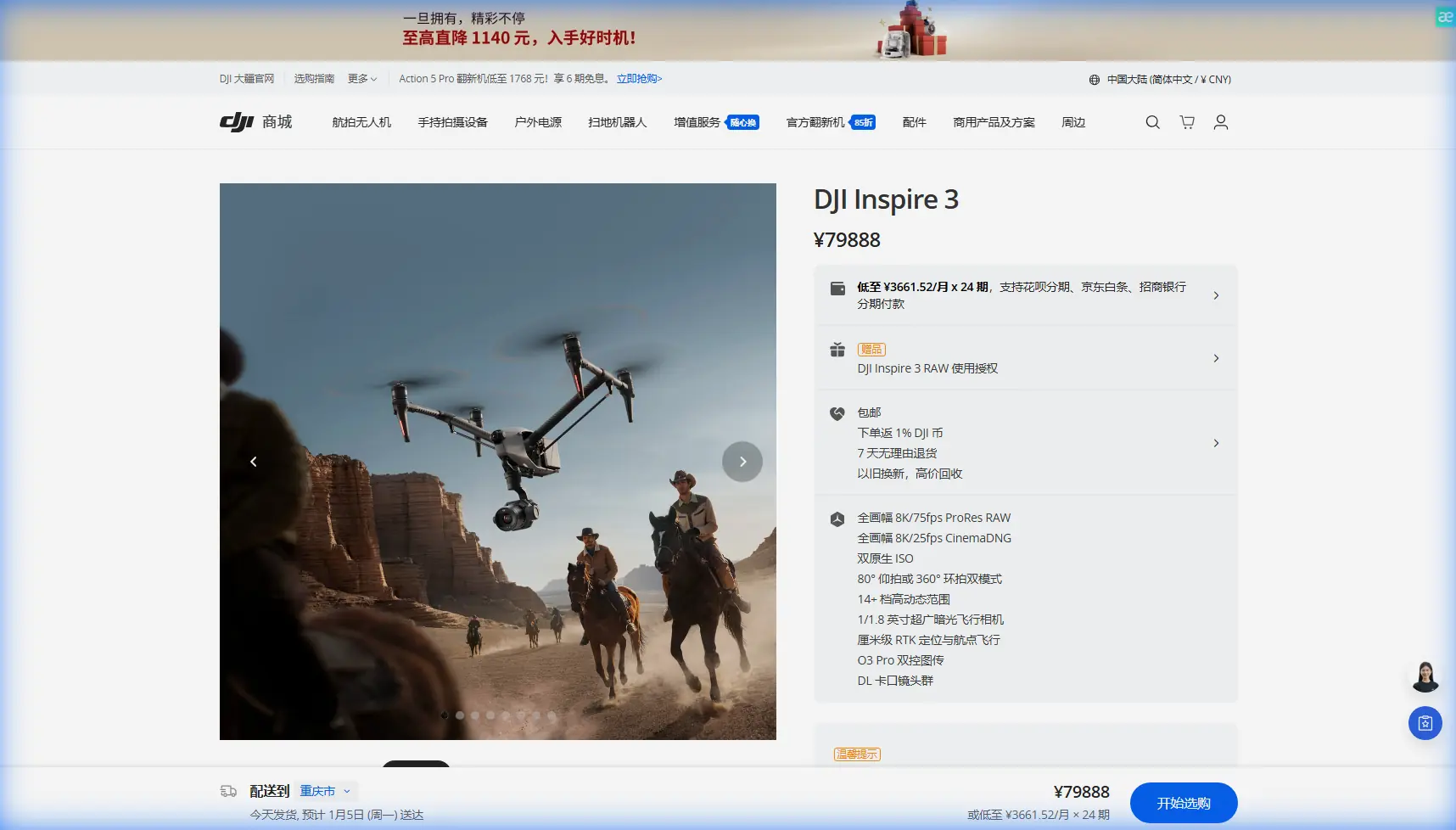
Inspire 3 in Complex Terrain: What Rotor Dynamics Teach Us About Smarter Field Tracking
META: A field-focused expert analysis of Inspire 3 tracking in complex terrain, using rotor stability testing and control-system logic to explain better thermal, photogrammetry, transmission, and battery workflow decisions.
Tracking fields in broken terrain is where polished marketing claims usually fall apart. Wide, open farmland is easy. Terraced slopes, drainage cuts, tree lines, uneven wind, and patchy thermal contrast are not. That is where the Inspire 3 starts to become interesting—not because it was built as an agriculture drone, but because its flight platform, imaging workflow, and transmission architecture can be adapted by disciplined operators who understand what instability looks like before it becomes a problem.
That last point matters more than most buyers realize.
A useful way to think about complex-terrain tracking with the Inspire 3 is through an older body of rotorcraft engineering. One of the reference materials here, a helicopter design text, focuses on hover and ground-operation stability testing. It describes how rotor systems can develop unstable motion when blade flapping, lagging, and torsion begin to couple under aerodynamic loading. It also discusses “ground resonance” as a mechanical instability created when blade lag motion interacts with fuselage movement through the landing gear. Those details come from a very different aircraft class, but the operational lesson carries straight into civilian drone work: when a flying platform is asked to hold precision in disturbed air and awkward ground environments, hidden interactions matter.
For an Inspire 3 crew tracking fields in complex terrain, that lesson translates into three practical questions:
- How stable is the aircraft when wind and terrain induce small but repeated disturbances?
- How quickly can the crew detect low-quality data before the mission becomes expensive to redo?
- How robust is the workflow when takeoff points, landing zones, and battery changes are less than ideal?
The problem with “just fly the grid”
In flat cropland, a neat grid often gets the job done. In complex terrain, that same mindset can create bad data while still producing a mission report that looks complete.
Field tracking in valleys or stepped elevations introduces inconsistent stand-off distance from the crop surface. That affects thermal signature interpretation, image scale, overlap reliability, and confidence in plant-stress comparisons from one section to another. A north-facing slope can hold moisture and cooler temperatures differently from a ridge a few hundred meters away. Add shifting airflow over tree breaks or berms, and the platform is constantly compensating.
The helicopter reference highlights something experienced flight crews already know intuitively: instability rarely announces itself with one dramatic event. It often begins as coupled motion. In the source text, the concern is the interaction between blade motions under aerodynamic force. In Inspire 3 operations, the equivalent risk is not literal rotor flutter, but a chain of smaller field variables interacting at once—gust loading, terrain-induced downdrafts, changing visual texture, fluctuating radio geometry, and rushed repositioning between takeoff points.
That is why the Inspire 3 is most effective here when treated less like a casual camera drone and more like a disciplined data aircraft.
Why transmission quality becomes a mapping variable
Most people treat transmission as a pilot comfort feature. In complex terrain, it becomes a data integrity issue.
With O3 transmission in the workflow, the practical gain is not just maintaining a live view. It is maintaining decision-making continuity while the aircraft moves behind subtle terrain features, across uneven crop elevation, or along field edges where line-of-sight geometry degrades. For tracking missions, this matters because the operator often needs to verify not only framing, but thermal separation, surface coverage, and whether low-contrast zones are real agronomic signals or just poor collection angles.
When the terrain gets complicated, link confidence reduces hesitation. Hesitation sounds harmless, but in field work it creates stop-start flying, uneven path discipline, and inconsistent image capture geometry. That is how a mission that looked efficient in planning becomes messy in processing.
AES-256 also has a practical place in this discussion. Not because encryption changes image quality, but because commercial field tracking increasingly involves sensitive location and yield-adjacent data. Large growers, research plots, and managed estates often want strict control over operational media and telemetry handling. Secure transmission is not a luxury feature in that environment. It is part of why an Inspire 3 can fit higher-trust workflows around crop documentation, environmental monitoring, and land-management reporting.
Hover precision is not glamorous, but it decides your margins
The helicopter source spends significant attention on hover and ground-running stability. That is a clue. Hover is where many dynamic problems reveal themselves first.
For Inspire 3 users, hover performance in complex terrain is not about cinematic elegance. It is about whether the platform can hold consistent collection geometry while the operator confirms thermal anomalies, checks edge overlap, or reorients over a contour break. If the aircraft has to work harder in disturbed air, tiny corrections accumulate. Those corrections can influence image consistency, especially when the mission requires revisits or mixed sensor use.
This is where third-party accessories can genuinely elevate capability, rather than just dressing up the aircraft. One of the most useful additions I have seen for this kind of work is a high-bright monitor hood or sun-shield setup on the ground station. It sounds minor. It is not. In difficult midday conditions, being able to read subtle tonal separation in a thermal-adjacent workflow or check fine surface detail without screen washout can save an entire sortie. Another practical upgrade is a terrain-friendly landing pad system with stronger anchoring and visual contrast, which helps on dusty, sloped, or stubbled field edges where quick battery swaps would otherwise become sloppy.
That connects directly to another Inspire 3 strength: hot-swap batteries.
Hot-swap batteries matter more on broken sites
Battery swaps on uneven ground are where professional rhythm either holds together or unravels.
In segmented terrain, the aircraft may need several short launches from different vantage points rather than one long mission from a perfect central location. Hot-swap batteries reduce reset friction. The aircraft can stay ready while the crew cycles power units, preserving mission momentum when light, wind, and thermal contrast are changing by the minute.
This is not just a convenience point. It is operationally significant because field tracking often depends on temporal consistency. If one section of a slope is collected under one heat pattern and the next section twenty minutes later under another, comparison quality can drop. A fast turnaround keeps the dataset tighter.
The helicopter handbook’s test logic offers an interesting parallel here. It notes that for identifying dynamic characteristics, using the early segment of free-response data tends to improve recognition accuracy, while later data quality is often worse. The exact math in the text centers on a least-squares solution and an error-squared evaluation approach, but the field takeaway is simple: cleaner data usually comes earlier, before drift, noise, and degraded conditions stack up.
That is a smart principle for Inspire 3 agricultural tracking. Get the high-value sections first. Fly the most thermally sensitive or terrain-distorted blocks when the environmental window is strongest, not after multiple interruptions. Hot-swap capability supports that sequencing.
Photogrammetry over complex terrain: the GCP discipline most crews skip
If the mission includes photogrammetry, terrain complexity punishes lazy planning.
On flat sites, crews can sometimes get away with broad assumptions about overlap and control. On slopes, embankments, and irregular field geometry, image scale changes quickly. That makes GCP placement more than a box-ticking exercise. Ground control points need to reflect elevation diversity across the site, not just perimeter convenience. Otherwise, reconstruction may look acceptable from altitude while carrying subtle warping in exactly the places where agronomic interpretation matters most.
The Inspire 3 is not automatically a dedicated survey aircraft in the way some mapping teams structure their fleets, but in expert hands it can still contribute strong terrain-aware visual datasets. The key is to stop thinking in terms of one mission and start thinking in layers:
- a reconnaissance pass to understand wind behavior and occlusion,
- a primary capture planned around contour behavior,
- a GCP layout that respects height changes,
- and a verification pass to catch weak areas before leaving the site.
That verification step is where the operator’s understanding of stability and response becomes valuable. If a section required repeated correction because wind rolled over a ridge face, do not assume the resulting imagery is equal to the rest of the mission. Mark it, review it, and if needed, recollect it immediately.
Thermal signature tracking: terrain changes the story
Thermal work over fields is often oversimplified into “hot equals stress.” Real terrain does not cooperate with that kind of shortcut.
A thermal signature can shift because of moisture retention, canopy density, sun angle, sheltering wind, exposed rock, irrigation inconsistency, or simple elevation-driven microclimate differences. In complex terrain, those factors overlap. That means the aircraft’s role is not merely to collect images, but to support controlled interpretation.
The Inspire 3’s usefulness here comes from repeatable flight behavior, stable visual monitoring, and efficient turnaround more than from any single headline specification. Good thermal tracking requires repeat passes from comparable geometry and timing. If the aircraft’s handling, transmission, or field workflow introduces irregularity, the thermal layer becomes harder to trust.
This is also where pilot and payload operator coordination matters. A skilled crew will call out changing contrast quality in real time, especially when crossing from shaded cuts into exposed slopes. They will note where vegetation texture begins to mask thermal differentiation. They will log when altitude adjustments were made because terrain forced a change. Those details become essential later when the map is reviewed against actual field conditions.
What the control-manual reference quietly reinforces
The second reference, a Futaba T8FG radio manual, seems unrelated at first glance. It discusses flap setup for fixed-wing and glider models, including separate adjustment of multiple flaps, offset points, and mixed control between inner and outer flaps in a 4-flap configuration. That may sound far removed from Inspire 3. It is not.
Its real value is conceptual: serious aircraft control systems benefit from segmented tuning, not one-size-fits-all inputs.
The manual’s mention of independently adjusting outer flaps 1 and 2 and inner flaps 3 and 4 reflects a broader truth in flight operations. Different surfaces, zones, or functions often need separate treatment to achieve stable overall behavior. Apply that mindset to field tracking, and your Inspire 3 missions improve quickly. The north terrace is not the same as the low wet corner. The ridge line is not the same as the orchard edge. The shaded drainage channel is not the same as the exposed southern slope. If the site has four distinct terrain behaviors, treat them like four different control zones, not one uniform block.
That is how experienced operators build reliable datasets in difficult landscapes. They divide the problem intelligently.
A better Inspire 3 workflow for complex terrain
If I were planning an Inspire 3 mission for field tracking in broken topography, I would structure it like this:
Start with a short reconnaissance flight to observe actual wind behavior over the contours. Do not trust the forecast alone.
Set GCPs across elevation changes rather than clustering them near easy access points.
Use the strongest early environmental window for the sections where thermal interpretation will matter most. The rotorcraft reference’s emphasis on early, cleaner response data is a good reminder here.
Keep the aircraft turnaround tight with hot-swap batteries so the dataset stays temporally coherent.
Monitor link quality as a mission variable, not just a convenience metric. O3 performance can determine whether the operator catches collection issues in time.
Log every terrain-driven deviation. If a pass was flown differently because of rotor wash interaction with a slope edge or because the aircraft had to hold position longer over a low-contrast section, that note belongs with the data.
And if the site involves remote teams or a grower who wants immediate field coordination, send mission notes through a direct channel such as this field support contact while observations are still fresh.
The real value of Inspire 3 here
The Inspire 3 is not valuable in complex terrain because it magically removes complexity. It is valuable because, in the hands of a disciplined crew, it gives enough stability, transmission confidence, imaging control, and field efficiency to manage complexity without pretending it is flat.
That distinction matters.
A lot of failed field tracking comes from forcing a simplified workflow onto a site that does not deserve simplification. The better approach is to borrow thinking from serious aircraft dynamics: assume coupled effects exist, watch for instability early, trust data quality over mission speed, and tune the operation section by section.
When you work that way, Inspire 3 becomes more than a high-end drone. It becomes a platform for repeatable observation in places where terrain, airflow, and crop behavior are constantly trying to fool you.
Ready for your own Inspire 3? Contact our team for expert consultation.