
Field Report: Tracking Remote Highways With the DJI Inspire
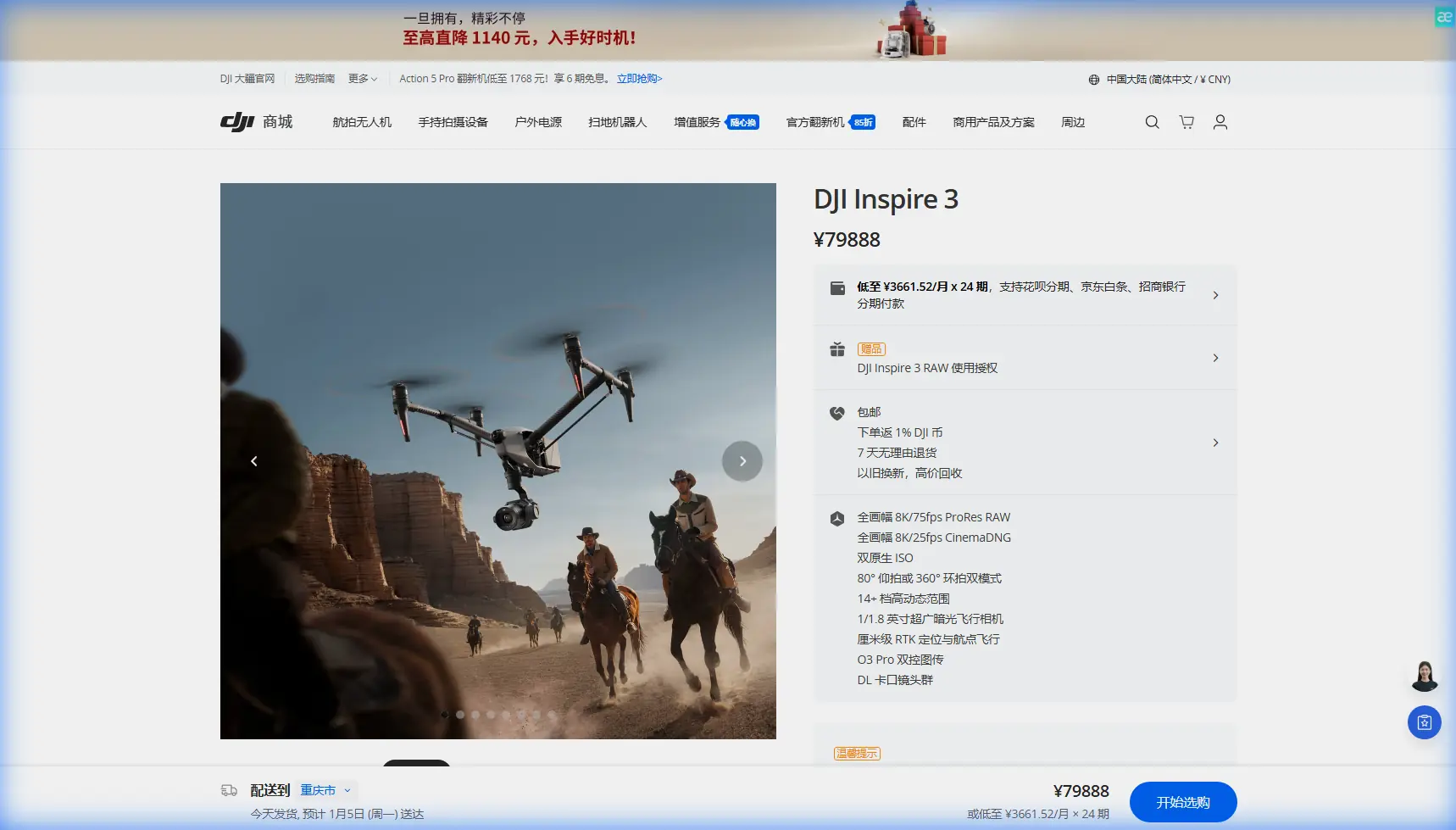
Field Report: Tracking Remote Highways With the DJI Inspire 3
META: A practical expert field report on using the Inspire 3 for remote highway tracking, corridor mapping, signal reliability, battery workflow, and operational data security.
Remote highway work exposes weaknesses fast.
You can have a capable flight crew, a clean mission plan, and solid weather margins, then lose time to the things that rarely show up in glossy product summaries: unstable video links along long corridors, battery swaps that interrupt coverage windows, inconsistent overlap for photogrammetry, or a data chain that makes infrastructure clients nervous. That is why the Inspire 3 is interesting in this role. Not because it is simply “high end,” but because several very specific design choices reduce friction in the field when you are trying to document long stretches of road far from support.
I have worked jobs where the hard part was not flying. The hard part was keeping the operation smooth for six, eight, or ten hours while covering remote pavement, embankments, bridge approaches, drainage assets, and access roads without introducing small errors that become expensive later in processing. On those days, the Inspire 3 feels less like a camera drone and more like a practical corridor-survey platform with cinema-level control layered on top.
The old highway problem: interruptions
A remote highway mission usually starts with a simple brief: track the route, document current conditions, capture problem areas, and gather imagery useful for progress reporting or reconstruction planning. In practice, that expands into a mixed-output assignment. One client wants visually clean progress footage for stakeholders. Another wants image sets suitable for photogrammetry. The field supervisor wants quick checks on culverts, shoulders, temporary traffic controls, and slope stabilization. Sometimes the engineering team needs repeatable routes for change detection.
That mix is where lesser systems start forcing compromises.
On older setups, we would often break the day into chunks because battery downtime would create natural pauses. The crew would lose rhythm. Light conditions would shift. A segment flown before noon might not match what was captured later in the afternoon. If the route was remote enough, every reset felt longer than it should. A short interruption on paper can turn into a real coverage gap on a live corridor job.
The Inspire 3 changes that rhythm with hot-swap batteries. That sounds like a small feature until you use it on a long road assignment. Operationally, it matters because the aircraft can remain powered during battery replacement, which reduces reboot cycles, cuts launch delay, and helps crews stay on planned route sequencing. On remote highway tracking, that translates directly into more consistent capture windows and fewer avoidable breaks between segments. The value is not abstract. It is the difference between a stop-start field day and a steady one.
Why transmission quality matters more on highways than many crews expect
Highway tracking is not a point inspection. It is a corridor problem.
Corridor work pulls crews into awkward geometry. The aircraft may move farther along a linear route while ground teams reposition. Terrain undulates. Tree lines, cut slopes, utility structures, and roadside construction staging can all interfere with line quality. If your downlink gets unreliable, your pilot and camera operator stop making proactive decisions and start flying defensively.
This is where O3 transmission earns its keep. The operational significance is straightforward: more stable image transmission gives the crew stronger situational awareness across long roadway runs, especially where terrain and distance would otherwise increase uncertainty. On remote highway jobs, that means cleaner coordination between navigation, framing, and safety monitoring. When you are trying to maintain overlap for mapping passes or hold a repeatable visual line on a reconstruction corridor, confidence in the link is not just a comfort feature. It supports mission discipline.
I have seen crews underestimate this. They assume transmission strength only matters for cinematic work. In fact, corridor mapping depends on consistency. If the pilot loses confidence in the downlink, speed and spacing tend to change. That can affect image quality and downstream processing, especially if you are building a photogrammetry dataset intended to support measurement, progress tracking, or terrain review.
Photogrammetry in the real world: the road is not the whole site
When people talk about highway mapping, they often picture a ribbon of asphalt. The useful dataset is usually broader than that. You need shoulders, ditches, access points, nearby grading, drainage patterns, signage zones, staging areas, and interfaces with surrounding terrain. If you only capture the lane surface well, you miss the context that engineering and construction teams actually need.
The Inspire 3 is not marketed as a pure survey drone, yet it can fit into photogrammetry workflows effectively when the mission is planned properly. The key is discipline in route design, overlap, altitude selection, and control strategy. GCP placement still matters. Ground control points are what anchor aerial imagery to a reliable spatial framework, especially when clients expect consistent measurements across repeated site visits. The aircraft can collect excellent imagery, but the real deliverable quality still depends on survey logic.
That distinction matters. Good photogrammetry is not produced by a drone model alone. It is produced by a system: aircraft stability, repeatable flight execution, image consistency, GCP discipline, and sane processing expectations. The Inspire 3 helps because it keeps the capture side predictable. For remote highways, predictability is a serious advantage. You are often working over long distances with limited staging access, so re-flying a missed section can cost far more than it would on a compact urban site.
Thermal signature: useful, but only when the mission actually supports it
The term “thermal signature” gets thrown around too casually in infrastructure conversations. On remote highway work, thermal analysis can be relevant, but only in the right context. It may help crews understand drainage anomalies, moisture patterns, heat variation around certain assets, or contrast conditions during specific inspection windows. It is not a magic layer that instantly reveals every issue in a road corridor.
For most Inspire 3 highway tracking assignments, the more realistic value is not that the aircraft becomes a dedicated thermal platform, but that teams familiar with thermal workflows can integrate visually rich route documentation with broader site intelligence. In practical terms, that means the Inspire 3 often serves as the backbone for premium visual capture and repeat route work, while thermal tasks are assessed separately according to sensor requirements and project scope.
That separation is healthy. It keeps the mission honest. If a client says they need thermal signature data, the first question should be what decision they expect to make from it. That answer determines whether the Inspire 3 is the main aircraft, part of a mixed-fleet workflow, or best used for the visual corridor record that complements other sensor passes.
Security is not a side note on infrastructure jobs
Road and highway projects involve sensitive information even when they are entirely civilian. Route progress, construction sequencing, access layouts, contractor workflows, and infrastructure condition records can all be commercially sensitive. Some operators focus so heavily on image quality that they forget the client may care just as much about how the data is protected.
This is where AES-256 becomes relevant in plain operational terms. For infrastructure and industrial clients, strong encryption in the transmission and data environment helps support trust. That matters when teams are documenting remote transport corridors, contractor compounds, utility crossings, or pre-opening road sections. The significance is not theoretical cybersecurity language. It is the practical ability to say that the mission pipeline was built with modern protection standards in mind.
On some jobs, that assurance smooths approvals faster than another spec-sheet talking point ever will.
A past challenge that the Inspire 3 would have shortened
A few years ago, I was part of a team covering a remote road improvement project where the route crossed uneven terrain and patchy vegetation for miles. The brief sounded manageable. The field reality was not. We lost time to battery turnover, had to split certain runs more than planned, and spent too much energy protecting link quality instead of refining the dataset. Nothing catastrophic happened, but the day had that familiar texture of avoidable inefficiency.
If I map that experience onto the Inspire 3, three features stand out immediately.
First, hot-swap batteries would have reduced dead time between sections and preserved momentum for repeated route passes.
Second, O3 transmission would have improved confidence along the corridor, especially in sections where terrain and distance made the crew conservative.
Third, AES-256 would have strengthened the client conversation around secure handling of site imagery and route documentation.
Those are not glamorous wins. They are field wins. They save minutes, reduce hesitation, and help crews maintain consistency over the kind of long linear mission where small disruptions multiply.
Where BVLOS enters the conversation carefully
BVLOS is one of those terms that gets used loosely, and it should not be. For remote highway tracking, beyond visual line of sight operations can expand efficiency dramatically, but only within the applicable regulatory framework, approvals, risk assessments, and operational controls. It is not something to assume just because the corridor is remote.
The Inspire 3 is relevant here because the platform characteristics that support corridor work in general, especially stable transmission and efficient battery handling, also make it easier to design robust workflows for approved long-route operations. But the real lesson is procedural: if your team is exploring BVLOS for highway tracking, the aircraft is only one part of the answer. Airspace review, detect-and-avoid strategy, crew roles, communications planning, and client expectations all carry equal weight.
In other words, the Inspire 3 can support an advanced corridor workflow, but it does not replace operational governance.
The footage question: why visual quality still matters on engineering jobs
Some readers hear “Inspire 3” and think of filmmaking first. That is fair. But on remote highway projects, strong visual quality is not cosmetic. It can make technical communication far more effective.
Construction managers, consultants, transport authorities, and stakeholders often do not interpret raw map outputs the same way they interpret clean, stable, high-resolution visual documentation. Aerial footage that clearly shows grade transitions, shoulder condition, drainage paths, staging impacts, and project progress can shorten meetings and reduce ambiguity. It becomes easier to align engineering observations with what decision-makers can actually see.
This is where the Inspire 3 has an edge in mixed-purpose missions. It can help produce route documentation that is technically useful and also immediately understandable to non-specialists. That matters more than many crews realize. Sometimes the best dataset in the world still struggles if the client cannot quickly translate it into action.
Field discipline still decides the outcome
No aircraft, however capable, fixes weak field habits.
For remote highway tracking with the Inspire 3, the best results still come from boring fundamentals done well: preplanned corridor segmentation, clear battery rotation procedures, conservative weather thresholds, verified GCP layout where mapping outputs matter, redundant storage practices, and clean file naming from the start. If thermal signature work is part of the wider project, define that scope separately and avoid pretending one aircraft covers every sensing need equally well. If BVLOS is relevant, treat compliance and risk management as part of the mission design, not an afterthought.
That is the mature way to use a platform like this. Not as a miracle machine, but as a tool that removes enough friction to let a disciplined team perform at a higher level.
If you are evaluating whether the Inspire 3 fits a remote highway workflow, the right question is not “Is it powerful?” It is “Does it reduce the failure points that usually slow corridor operations down?” In my experience, the answer is yes. Especially when transmission reliability, secure data handling, and battery continuity are what stand between a decent field day and a very efficient one.
If you want to compare corridor setups or talk through a remote-road workflow, this direct project chat is the simplest way to do it.
Ready for your own Inspire 3? Contact our team for expert consultation.