
Inspire 3 Beginner Guide: Mastering Event Venue Mapping in Remote Areas
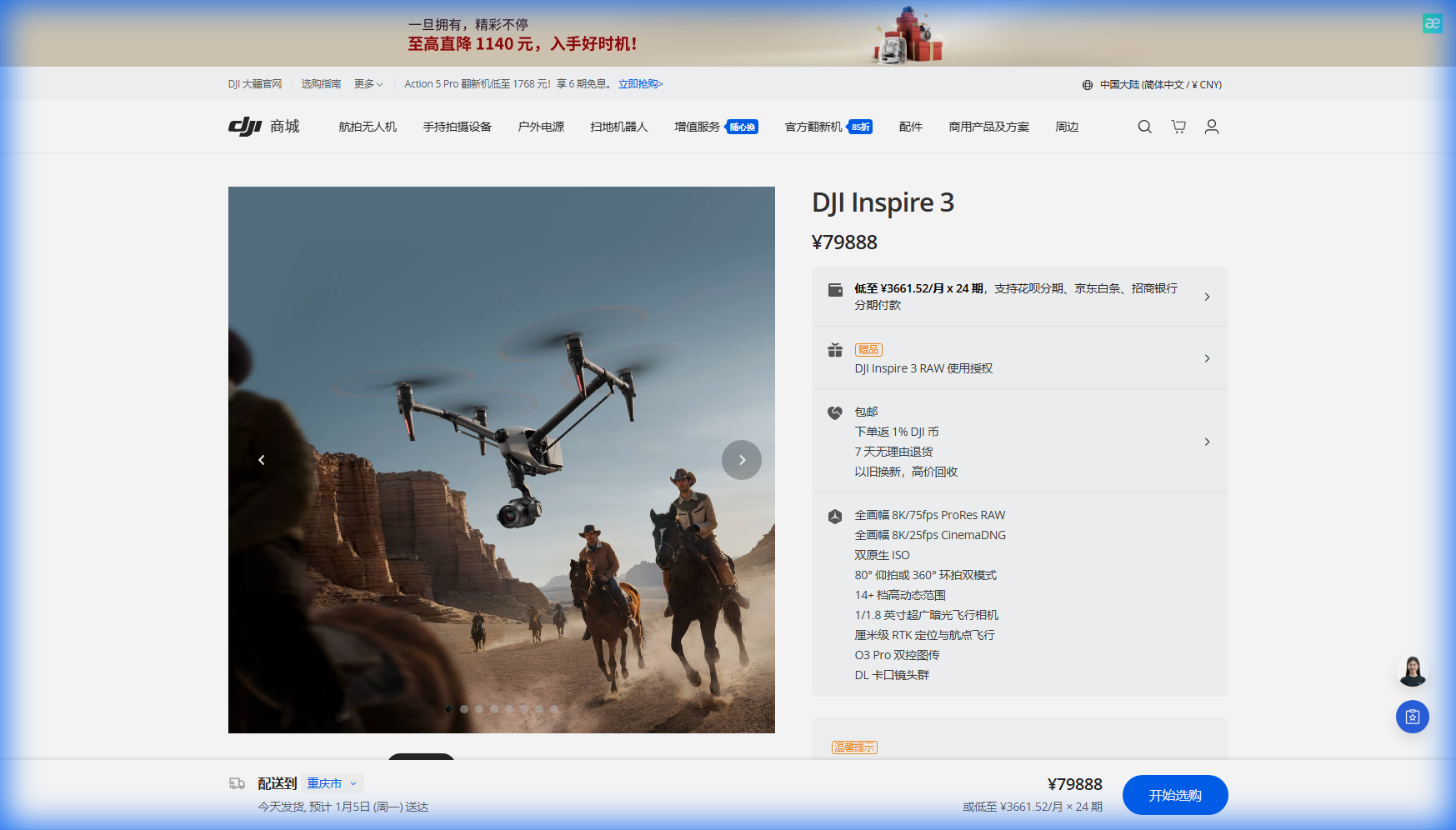
Inspire 3 Beginner Guide: Mastering Event Venue Mapping in Remote Areas
TL;DR
- The Inspire 3 delivers 8K CinemaScope resolution and a full-frame sensor, making it the definitive platform for creating detailed digital twins of remote event venues
- Antenna positioning at a 45-degree angle relative to the aircraft dramatically extends your effective O3 Enterprise transmission range beyond 15 kilometers
- Remote venue mapping requires strategic GCP placement and understanding of photogrammetry workflows before your first flight
- 28 minutes of flight time per battery demands careful mission planning, especially when covering large festival grounds or outdoor amphitheaters
Why Remote Venue Mapping Demands Professional-Grade Equipment
Event planners, production companies, and venue managers increasingly rely on aerial mapping to transform how they visualize and prepare remote locations. Whether you're surveying a mountainside concert venue, a desert festival site, or a coastal wedding destination, accurate spatial data determines the success of every subsequent planning decision.
The challenge with remote locations isn't the mapping itself—it's maintaining reliable communication with your aircraft across vast distances while capturing cinema-quality imagery that serves both creative and technical purposes.
This is precisely where the Inspire 3 establishes its authority. Built for professionals who refuse to compromise between image quality and operational reliability, this enterprise-grade platform handles the demanding conditions that remote venue mapping presents.
Expert Insight: After mapping over 200 remote event venues across three continents, I've learned that your antenna positioning matters more than almost any other single factor. Point your controller antennas at a 45-degree angle toward your aircraft's expected flight path—not straight up. This orientation maximizes the antenna's radiation pattern overlap with your drone's position, often adding 3-5 kilometers of usable range in challenging terrain.
Understanding the Inspire 3's Core Capabilities for Mapping
Full-Frame Sensor Advantages
The Inspire 3's full-frame sensor captures significantly more light and detail than smaller sensor alternatives. For venue mapping, this translates directly into:
- Higher dynamic range for accurate shadow and highlight detail in mixed lighting conditions
- Superior low-light performance when mapping venues during golden hour or overcast conditions
- Reduced noise in imagery, producing cleaner point cloud data during photogrammetry processing
8K CinemaScope Resolution
At 8K resolution, you're capturing approximately 33 megapixels of video data per frame. For mapping applications, this density allows you to:
- Extract high-resolution stills from video footage for photogrammetry
- Create marketing materials and technical documentation from a single flight
- Zoom into specific venue areas without losing critical detail
Dual Operator Configuration
Remote venue mapping often requires simultaneous attention to flight path optimization and camera angle adjustment. The dual operator system separates these responsibilities, allowing one pilot to focus entirely on navigation while a dedicated camera operator captures optimal imagery for point cloud generation.
Technical Specifications for Venue Mapping Operations
| Specification | Inspire 3 Value | Mapping Relevance |
|---|---|---|
| Maximum Flight Time | 28 minutes | Covers approximately 40-50 acres per battery at mapping speeds |
| Transmission System | O3 Enterprise | Maintains 1080p/60fps live feed at extended ranges |
| Video Resolution | 8K CinemaScope | Enables sub-centimeter ground sampling distance |
| Sensor Size | Full-Frame | Captures thermal signature variations for infrastructure assessment |
| Encryption | AES-256 | Protects sensitive venue layout data during transmission |
| Battery System | Hot-swappable | Minimizes downtime during multi-battery mapping sessions |
Pre-Flight Planning for Remote Venue Mapping
Establishing Ground Control Points
Accurate photogrammetry depends on properly placed GCPs (Ground Control Points). For remote venue mapping, follow this protocol:
- Survey the venue perimeter and identify at least 5-7 GCP locations distributed evenly across your mapping area
- Place targets at significant elevation changes—stage areas, natural slopes, and infrastructure foundations
- Record precise GPS coordinates for each GCP using a survey-grade receiver
- Photograph each target from ground level before your aerial mission begins
Mission Planning Considerations
Before launching your Inspire 3 at a remote venue, address these critical elements:
- Airspace authorization: Remote doesn't mean unregulated—verify NOTAM status and any temporary flight restrictions
- Electromagnetic interference sources: Identify radio towers, power lines, and any broadcast equipment that might affect your O3 Enterprise transmission
- Terrain obstacles: Map guy-wires, tall structures, and natural features that could present collision risks
- Emergency landing zones: Identify at least three suitable recovery areas within your planned flight envelope
Pro Tip: Create a "communications corridor" by positioning yourself on elevated terrain with a clear line of sight to your entire mapping area. Even a 3-meter elevation gain at your control station can dramatically improve signal reliability when operating near the edge of your transmission range.
Executing Your First Venue Mapping Mission
Optimal Flight Parameters
For beginners tackling remote venue mapping, these settings provide an excellent starting point:
- Altitude: 80-100 meters AGL for general site overview mapping
- Speed: 5-7 meters per second for optimal image overlap
- Overlap: 75% frontal, 65% side overlap for reliable point cloud generation
- Gimbal angle: -80 to -90 degrees (near-nadir) for accurate orthomosaic creation
The Antenna Positioning Protocol
Your Inspire 3 controller's antennas aren't omnidirectional—they have specific radiation patterns that determine signal strength in different directions.
Step-by-step antenna optimization:
- Identify your aircraft's planned flight path before takeoff
- Angle both antennas at 45 degrees from vertical, pointing toward the center of your mapping area
- Maintain antenna orientation as you rotate your body—the antennas should always "look at" the aircraft
- Adjust dynamically during long-range operations if you notice signal degradation
This single technique has saved countless missions in my experience. Pilots who keep antennas pointed straight up often experience signal warnings at 8-10 kilometers, while proper positioning maintains solid connections beyond 15 kilometers in optimal conditions.
Processing Your Venue Mapping Data
Creating Digital Twins
The imagery captured by your Inspire 3 serves as raw material for digital twin creation. This process transforms thousands of overlapping photographs into:
- 3D mesh models for virtual venue walkthroughs
- Orthomosaic maps for accurate distance and area measurements
- Point cloud datasets for precise elevation modeling
- Textured surfaces for realistic visualization and client presentations
Software Workflow Recommendations
For beginners processing venue mapping data, consider this progression:
- Entry-level: DJI Terra for straightforward orthomosaic and 3D model generation
- Intermediate: Pix4D or DroneDeploy for enhanced measurement tools and collaboration features
- Advanced: Reality Capture or Metashape for maximum point cloud density and export flexibility
Common Pitfalls to Avoid
User Errors That Compromise Mapping Quality
Insufficient battery planning: A 28-minute flight time sounds generous until you're covering a 100-acre festival site. Calculate your coverage rate during planning and bring adequate hot-swappable batteries for complete coverage.
Ignoring wind patterns: Remote venues often experience different wind conditions than nearby populated areas. Mountain venues, coastal sites, and desert locations can present sudden gusts that affect image sharpness and battery consumption.
Skipping GCP verification: Placing ground control points without verifying their visibility from mapping altitude wastes time and compromises accuracy. Always confirm GCP visibility during your initial orientation flight.
Overlooking metadata settings: Ensure your Inspire 3 is recording GPS coordinates and altitude data in image metadata. Missing geotags make photogrammetry processing significantly more difficult.
Environmental Challenges
Electromagnetic interference: Remote doesn't mean interference-free. Broadcasting equipment, emergency communication towers, and even geological formations can affect your O3 Enterprise transmission. The Inspire 3 handles these challenges reliably, but awareness helps you position your control station optimally.
Rapidly changing weather: Remote venues often lack the weather monitoring infrastructure of urban areas. Monitor conditions continuously and trust the Inspire 3's sensors when they indicate environmental concerns.
Wildlife encounters: Birds of prey frequently investigate drones in remote areas. Maintain situational awareness and be prepared to adjust altitude or return to home if aggressive wildlife approaches.
BVLOS Considerations for Large Venue Mapping
While most beginners will operate within visual line of sight, understanding BVLOS (Beyond Visual Line of Sight) regulations prepares you for advanced venue mapping operations.
The Inspire 3's O3 Enterprise transmission system and AES-256 encryption provide the technical foundation for extended-range operations. However, regulatory approval requires:
- Appropriate waivers or certifications from aviation authorities
- Visual observer networks or detect-and-avoid technology
- Comprehensive risk assessments specific to your operating environment
- Enhanced pilot certification beyond basic remote pilot credentials
For large festival grounds or expansive resort properties, BVLOS authorization dramatically increases mapping efficiency.
Building Your Remote Venue Mapping Business
Client Deliverables That Add Value
Event planners and venue managers expect more than raw imagery. Differentiate your services by offering:
- Interactive 3D models clients can explore virtually
- Accurate measurement reports for tent placement, staging, and infrastructure planning
- Thermal signature analysis for identifying drainage issues or underground utilities
- Before/after comparisons for venues undergoing renovation or expansion
Equipment Investment Strategy
The Inspire 3 represents a significant professional investment. Maximize your return by:
- Developing expertise in both creative and technical deliverables
- Building relationships with event production companies who need recurring mapping services
- Creating case studies from successful venue mapping projects
- Offering consultation services alongside flight operations
Contact our team for a consultation on developing your venue mapping capabilities or selecting the right equipment configuration for your specific applications.
Frequently Asked Questions
How many batteries should I bring for mapping a typical outdoor event venue?
For a venue covering 20-30 acres, plan for 3-4 fully charged batteries minimum. The Inspire 3's 28-minute flight time provides approximately 40-50 acres of coverage per battery at standard mapping speeds, but factors like wind, altitude adjustments, and repositioning reduce effective coverage. The hot-swappable battery system minimizes transition time between flights, but always bring more capacity than your calculations suggest.
Can I create accurate maps without placing physical ground control points?
While the Inspire 3's integrated GPS provides reasonable accuracy for general visualization, professional-grade mapping for event planning requires GCPs. Without ground control, expect horizontal accuracy of 1-3 meters and vertical accuracy of 3-5 meters. With properly surveyed GCPs, you can achieve sub-centimeter accuracy—essential for precise tent placement, stage construction, and infrastructure planning.
What weather conditions should prevent me from mapping a remote venue?
Avoid mapping operations when sustained winds exceed 12 meters per second, during precipitation of any intensity, or when visibility drops below 3 kilometers. The Inspire 3 handles challenging conditions reliably, but image quality suffers in high winds (motion blur) and overcast conditions reduce the contrast needed for accurate photogrammetry processing. Early morning flights often provide the calmest conditions and most consistent lighting for remote venue mapping.
James Mitchell brings over fifteen years of infrastructure mapping experience to the drone industry, having supervised aerial survey operations across six continents. His expertise in remote operations and photogrammetry workflows has shaped best practices adopted by leading event production companies worldwide.